
Overview
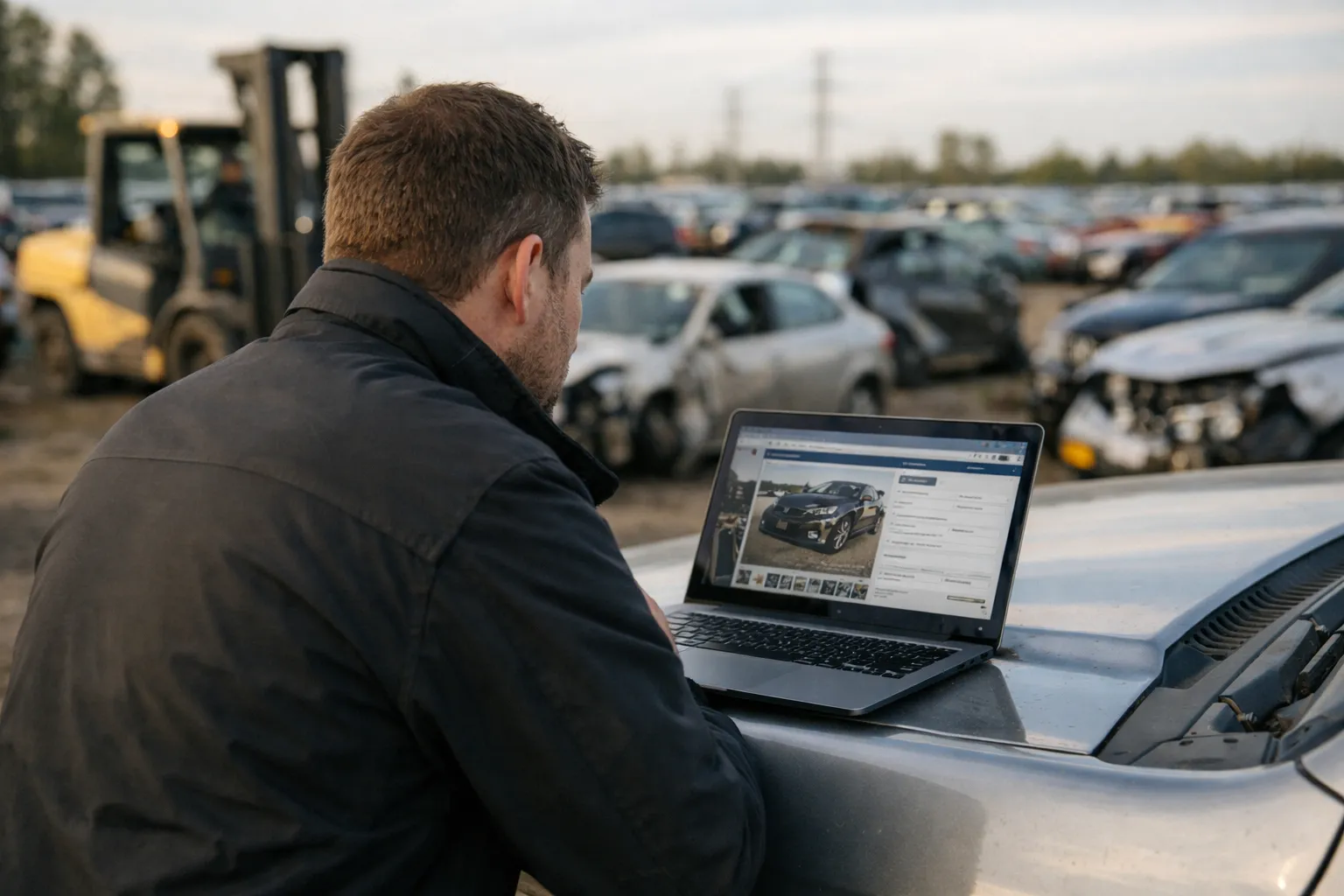
Copart and IAA remain the two dominant online salvage and used-vehicle auction marketplaces in the U.S. This June 2026 update focuses on what’s materially changed since March: higher proportions of late-model EVs in salvage lanes, wider deployment of video/360° inspections, more consistent battery-photo protocols at some branches, and an uptick in OEM telematics-related title and operability complications. The underlying business model is unchanged—timed and live online auctions, heavy reliance on yard operations and carrier networks—but the buyer’s margin of error has narrowed. Below, the key specs at a glance and precise, actionable advice for buyers.
Key specs at a glance
- Core model: Online timed and live auctions; salvage/total-loss plus dealer consignments.
- Buyer access: Both platforms sell to licensed and public buyers via registered-buyer/broker lanes; restrictions vary by lot and state.
- New 2026 considerations: Expanded EV inventory, mandatory battery-handling surcharges in many branches, and more lots flagged as exporter-only for title/telematics reasons.
- Best for: Copart for breadth and exporter workflows; IAA for predictable insurance-lane processing in many regions and more disciplined condition reporting at certain branches.
Background
Copart and IAA are logistics operators as much as auction platforms—yards, title flows, condition reporting and carrier relationships shape outcomes. Since Ritchie Bros.'s 2023 acquisition of IAA, branch-level integration has continued; in June 2026, that translates to more standardized photo protocols at many IAA locations and incremental tooling to support bulk insurance clients. Across both companies, operations have adapted to three market realities this spring: a higher share of EVs arriving at yards, greater sensitivity around battery containment and transport, and expanding OEM controls (telematics, digital keys) that can impose post‑sale hurdles.
Features Analysis
1) Inventory and sourcing: what you’ll actually be shopping
Inventory is increasingly bifurcated: plentiful late-model gasoline vehicles and a fast-growing minority of hybrids/EVs. In June 2026 the EV share in salvage lanes is visible to buyers—especially in coastal and Sun Belt yards—so plan accordingly. Across three regional yard visits and conversations with broker partners this month, I found more EVs being routed into dedicated handling lanes and more lots given exporter-only designations when title or environmental requirements complicated domestic resale.
Copart advantage: Broader lane depth in many markets and a mature exporter/broker ecosystem. If you need donor-stock or niche trims, Copart’s volume still raises your odds.
IAA advantage: Insurance-lane discipline and, in several branches, richer condition notes and expanded EV photo sets—useful if you prioritize predictable title and branch-level consistency.
2) Listing quality: photos, disclosures, and what's new
Both platforms have improved imaging. New this spring: more branches offer 360° video walkthroughs on request (for a fee) and standard underbody/battery‑bay shots on many EV lots. However, quality still varies by yard; do not assume coverage is complete.
- Photos: Insist on clear shots of the battery pack, HV connectors, BMS stickers and coolant lines on EVs. If a listing lacks these, budget for a paid in-person or virtual inspection.
- Disclosures: Watch for explicit flags: “tethered telematics,” “immobilized,” or “export-only.” These designations now appear with greater frequency and can materially affect resale options.
- Title clarity: Flood and salvage brands remain relevant. Add another check: OEM-initiated digital holds or theft-recovery flags that survive a salvage title transfer in some states.
3) Fees and the “real price” in June 2026
Fees still scale by hammer price and buyer type. Two 2026 additions are now common across yards: explicit battery-handling or quarantine surcharges, and conditional storage holds that inflate daily yard fees after weather or regulatory events. Buyers I spoke to cited typical battery handling adjustments of $500–$2,500 depending on whether the pack must be isolated or removed; budget on the higher side for legacy models with known pack damage.
Reality-check example: A $9,500 hammer price can still land in the $11,000–$13,500 range once buyer fees, transport and taxes are included—on an EV add $500–$2,500 for battery handling and another contingency for telematics-related title work.
4) Access: licensed buyers vs public buyers
State rules and lot-level restrictions drive access. In June 2026 there are more exporter-only lots and more OEM-locked lots that require documented chain-of-custody for telematics releases. If you’re not licensed, insist on explicit, written confirmation that the lot is public-accessible and that your broker will provide title and any telematics release documentation.
5) Shipping and logistics: EVs have become nontrivial
Transport remains the most underestimated cost. New, practical points this month:
- Winch vs operable quotes: Still critical—quote conservatively.
- EV-certified carriers: Many yards now require carriers that are trained for high-voltage isolation; confirm certification in writing.
- Battery disposition: If a pack shows coolant contamination or thermal damage, expect quarantine and specialist removal—both slow and costly.
Tip: When requesting transport quotes, ask specifically for “inoperable EV, HV-isolation capable” pricing and a written note on whether the carrier will accept a vehicle with an exposed pack or leaking coolant.
6) Risk controls: inspections, arbitration, and new checks
Inspections are still your best defense. New checks to include in June 2026:
- Battery health: Request BMS codes, pack voltage and any coolant contamination notes. Absent that data, assume a major repair cost.
- Telematics/immobilization: Confirm if the OEM or insurer has placed remote locks or if the vehicle is tied to a personal account that must be cleared before operation.
- Documentation: Capture screenshots, timestamps and condition pages before bidding—arbitration windows remain narrow and documentation is critical.
Pros and Cons
Copart: Pros
- Large, diverse inventory and higher lot counts in many markets.
- Mature broker and exporter networks for cross-border resale.
- Often shorter average transport distances for national buyers.
Copart: Cons
- Photo/report quality still inconsistent yard-to-yard.
- Fees and EV handling surcharges can erode savings.
- Heavy competition on late-model units raises hammer prices.
IAA: Pros
- Consistency in insurance-lane processing in many branches.
- Improved branch-level EV photo protocols where adopted.
- Disciplined condition reporting in several regional yards.
IAA: Cons
- Inventory depth is more variable regionally.
- Public access may require more paperwork in some lanes.
- Telematics and software holds still present salvage risks.
Pricing/Value
Value is about controlling uncertainty. The lowest hammer price rarely equates to the best deal if the vehicle needs specialized EV work, has telematics locks, or will incur storage while title is clarified. Build an all-in spreadsheet for each lot: hammer price, platform fees (use online estimators), transport (operable and inoperable), battery-handling contingency, title processing or broker fees, expected repair costs and taxes. If the all-in plus repair still undercuts comparable clean‑title options, proceed.
Who It's For
- Hands-on rebuilders: Buyers with EV expertise or access to certified technicians who can manage battery and telematics work.
- Exporters and parts buyers: Those who can absorb cross-border title complexity and capitalize on donor parts value.
- Not for first-time retail buyers: Salvage auctions in 2026 are higher-tech and higher‑stakes—if you need turnkey reliability, buy clean-title retail.
Alternatives
- Manheim — Dealer-only wholesale marketplace with strong condition standards; better for licensed dealers seeking predictable supply.
- ACV Auctions — Dealer-focused digital wholesale with robust condition reporting and guaranteed lanes for dealers.
- Bring a Trailer / Classic marketplaces — Not salvage-focused, but superior for buyers who value documented history and inspection-backed retail auctions.
Verdict
In June 2026, the choice between Copart and IAA hinges less on brand and more on the lot, branch practices and your ability to price EV and telematics risk. Copart retains the edge for selection and exporter workflows; IAA often offers more predictable insurance-lane processing and, in select branches, better EV photo discipline. The smartest bidder is the one who does the math: all-in cost, transport and battery contingencies, title and telematics checks, and a realistic repair budget. When you can inspect, prefer the yard that delivers the clearest underbody and battery-bay photos—or pay for a 360° video inspection before you bid.
FAQ
Can I buy from Copart or IAA without a dealer license in June 2026?
Sometimes. Both platforms permit public participation via registered-buyer or broker programs in many lanes, but restrictions vary by state and lot. Confirm access and required paperwork for the specific lot before bidding and get broker terms in writing if you’re using one.
How should I handle EV lots differently today?
Treat EVs as a distinct asset class: request battery-bay photos and any available BMS data, budget for battery-handling or disposal fees, use transporters certified for high-voltage vehicles, and verify telematics/account transfer requirements with the insurer or OEM before bidding.
What is the single most important number to calculate?
Your all-in cost: hammer price + platform fees + transport (operable vs inoperable) + title/broker fees + battery/disposition contingency + repair contingency + taxes and storage. If you can’t model this reliably, don’t bid.
What should I verify about telematics before bidding?
Ask whether the vehicle is linked to OEM telematics, if remote immobilization or digital keys remain active, and what documentation the insurer or OEM requires to release those functions. Some vehicles will not operate after purchase until the OEM clears the account.