Advanced driver-assistance systems (ADAS) — lane-keeping, adaptive cruise, automatic emergency braking and the sensor suites that support them — have moved from luxury options to near-universal fitment on mainstream models. That shift is reshaping how buyers, dealers and insurers value used cars in 2026.
Why ADAS matters for used-car pricing
Three forces make ADAS a pricing factor today:
- Complexity and repair cost: ADAS depends on cameras, radar (or lidar), wiring harnesses and control modules. A seemingly minor repair — a windshield replacement, bumper scuff or collision repair — can require sensor recalibration or module replacement that is materially more expensive than equivalent repairs on non-ADAS vehicles.
- Functional uncertainty: Buyers cannot tell from a visual inspection whether sensors are correctly calibrated or whether software updates have altered behavior. That uncertainty is priced as a discount unless verified by documentation or warranty.
- Software and service policies: OEMs increasingly push safety-critical updates via over-the-air (OTA) or dealer-only procedures. When manufacturers tie feature activation or updates to accounts, subscription status, or require dealer-only tools for recalibration, the buyer’s post-purchase leverage and total cost of ownership shifts.
How this shows up in the market
Observers in 2026 see three distinct market effects:
1. Larger price gaps for cars with documented ADAS service histories
Vehicles with full-service records showing sensor calibrations, windshield replacements performed by OEM-certified shops, and recent safety-related OTA patches command higher prices. Savvy buyers and brokers now routinely ask for these records in the same way they once requested timing-belt receipts.
2. A new “repair friction” discount for cars with unknown or recent bodywork
Listings that disclose recent bodywork, even cosmetically minor repairs, often carry a de facto discount to account for the risk that ADAS components were disturbed. Private-party sellers who lack calibration receipts find themselves negotiating down to offset buyers’ inspection and recalibration costs.
3. Regional differences based on service access
In metro areas with dense dealer networks and independent calibration shops, buyers pay closer to market value because a post-purchase recalibration is feasible and affordable. In rural regions where access to calibrated shops or OEM tools is limited, ADAS-equipped cars suffer steeper discounts.
Key cost buckets buyers should know
Repair and verification costs vary by vehicle and system sophistication, but common categories are:
- Windshield replacement and camera recalibration: Many vehicles require camera recalibration after a windshield change. Costs typically range from modest (a diagnostic recalibration, $100–$300) to several hundred dollars if OEM equipment or alignment targets are needed.
- Radar sensor replacement: Radar modules—often integrated behind bumpers—can cost from a few hundred dollars in parts to $1,000+ when factoring in labor and alignment, depending on make and model.
- Module replacement and software updates: Replacing a control module and having it programmed by a dealer can add $500–$2,000, especially when dealer-only tools or subscription verifications are required.
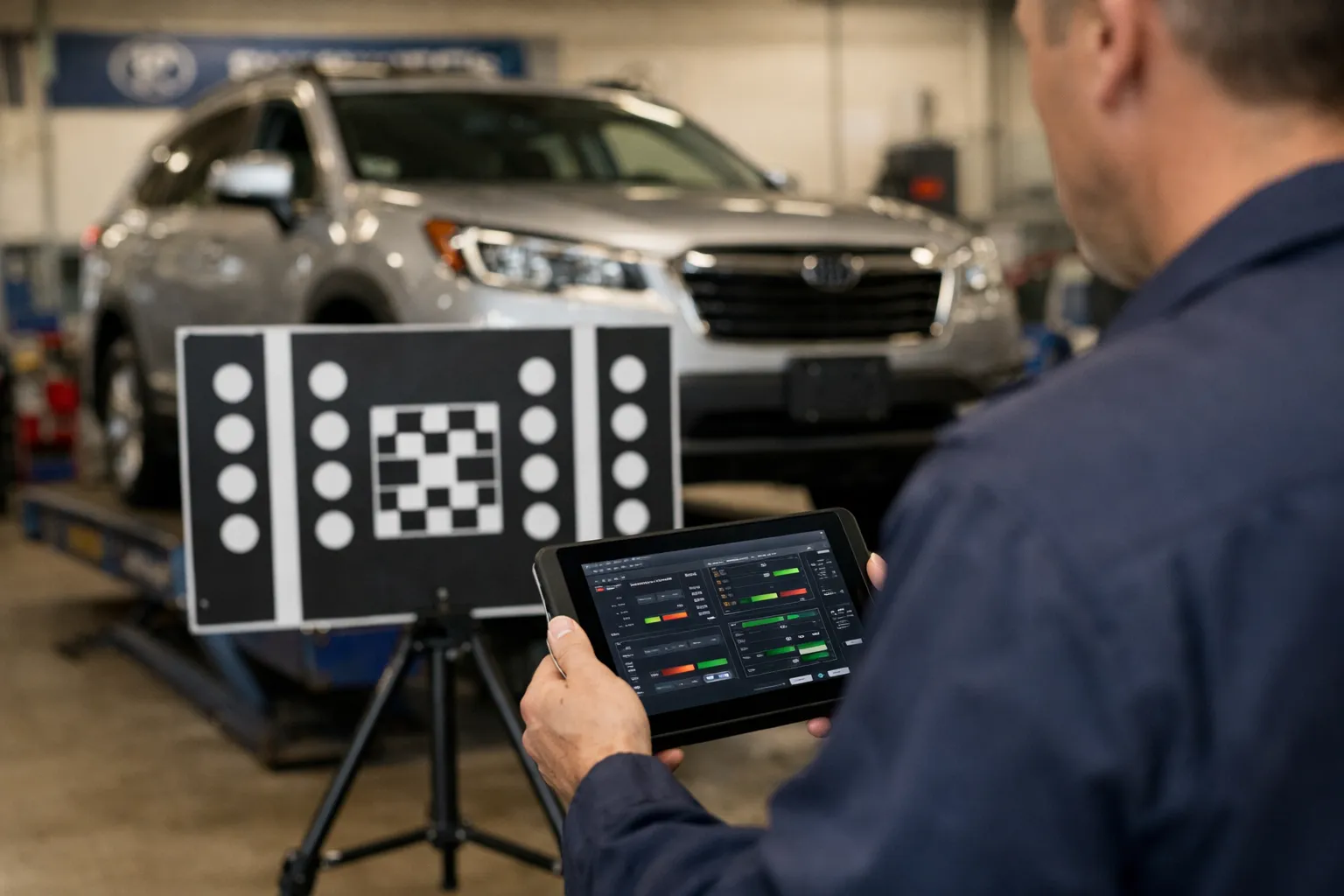
- Calibration labor: Some calibrations require vehicle lifts, optical targets and a technician trained on the OEM procedure; labor can add $150–$600 per calibration event.
Note: those ranges are illustrative. Buyers should get written quotes from local shops and dealers for the specific model year and ADAS suite under consideration.
Inspection and negotiation: a practical checklist
To translate ADAS complexity into concrete buying practices, treat these steps as standard pre-purchase due diligence.
- Ask for ADAS service documentation: Request receipts for windshield replacements, sensor recalibrations, and any post-collision repairs. A certified calibration receipt materially reduces uncertainty.
- Run a live demonstration: During the test drive, exercise each ADAS function (AEB testing requires care — simulate with low-speed brake checks and clear road conditions). Verify lane-keeping responds predictably and adaptive cruise engages and disengages smoothly.
- Verify software and feature status: Ask whether the vehicle is on the owner’s account, whether key safety features are subject to subscriptions, and whether the vehicle has pending OTA safety updates. If the seller cannot answer, treat that as a negotiation lever.
- Obtain a targeted independent check: Book a pre-purchase inspection with a shop that explicitly includes ADAS sensor health and calibration verification in the scope. If unavailable, budget for a dealer inspection or recalibration after purchase.
- Factor in recalibration quotes: If the vehicle has recent body or glass work, get a recalibration quote and use it to negotiate a price reduction or require the seller to complete the work before sale.
Comparing buyer strategies
Buyers today follow three practical approaches depending on risk tolerance and budget:
- Conservative buyers: Pay a premium for documented ADAS service and remaining OEM warranty coverage. They favor dealer-certified pre-owned units or models known for simpler ADAS architectures (fewer sensors, more camera-reliant systems that are easier to calibrate).
- Value-focused buyers: Target older models where ADAS is present but not mission-critical, and accept cars with limited history while budgeting for potential recalibration. They prioritize thorough independent inspections and line-item cost negotiation.
- Hands-on buyers: Those comfortable using independent shops and aftermarket calibration tools seek cars at larger discounts and arrange recalibration themselves. This route yields savings but requires local access to qualified technicians.
How dealers and insurers are adapting
Dealers have begun to institutionalize ADAS disclosure and repair verification. Some franchise groups now include calibration receipts as part of certified pre-owned packages; others list ADAS features explicitly in window stickers with a note on recent calibration status.
Insurers are also shifting claims processes: carriers increasingly require calibrated-sensor certification for total-loss or structural repairs and may adjust premiums for cars with complex ADAS suites if repair access is limited in a buyer’s ZIP code.
The policy and OEM angle
Regulators and OEMs affect resale dynamics in a few ways. Safety-related recall repairs and required OTA updates, when clearly documented and easy to apply, reduce uncertainty and support higher used values. Conversely, OEM policies that tie features to owner accounts, require paid subscriptions to enable functionality, or restrict independent recalibration tools make buyers discount vehicles to hedge potential future costs.
What buyers should do next
If you plan to buy a used car in 2026, treat ADAS as a defined risk category rather than an abstract safety bonus. Practical steps:
- Demand documentation. No papers? Assume a recalibration cost and negotiate accordingly.
- Get an ADAS-aware inspection. Not every mechanic includes sensor health checks—ask specifically.
- Budget for calibration and software work. Even “clean” cars sometimes need updates after a dealer completes a pre-sale check.
- Prefer vehicles where recalibration can be done by trusted local shops unless you are comfortable relying on dealer-only service.
Bottom line
By 2026, ADAS is a standard element of price discovery in the used-car market. The combination of hardware sensitivity, software control and uneven service access means buyers who verify sensor health and software status pay less unexpected cost and secure better value. For sellers and dealers, the way to protect residual value is straightforward: document calibrations, disclose repairs and make post-sale service easy. For buyers, knowledge and documentation — not just a flashy feature list — separate a good buy from an expensive surprise.