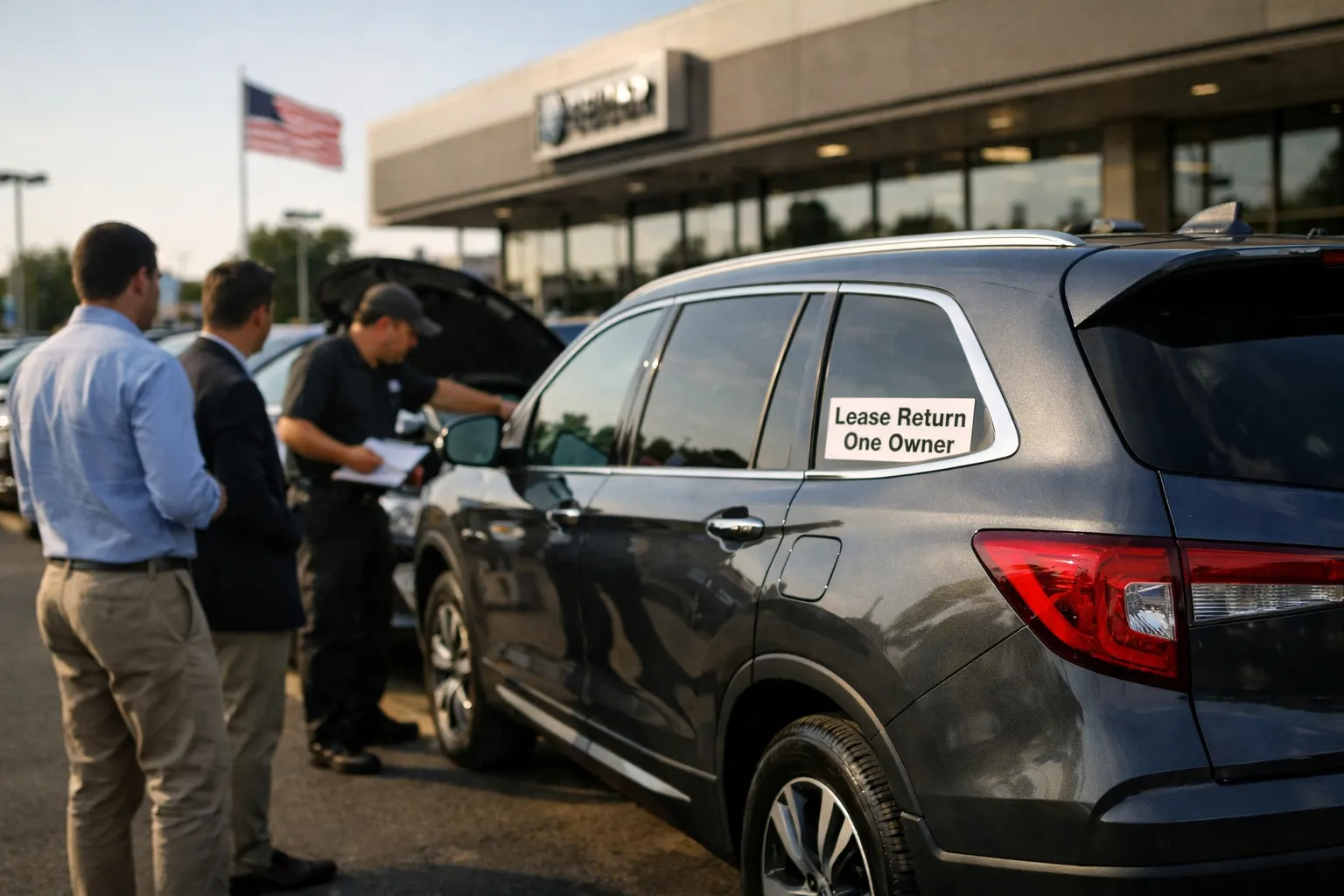
Lease‑return vehicles remain an important source of late‑model, well‑maintained cars for buyers who want equipment and remaining warranty at lower cost than new. This updated August 2026 guide walks car‑buying enthusiasts through the exact steps to find, evaluate, negotiate and close on a lease‑return car today — including fresh marketplace dynamics, EV‑specific checks now common in dealer workflows, and digital tools that affect bargaining power.
Who this guide is for and why it matters
This guide is for informed buyers who want a late‑model vehicle with predictable condition and warranty coverage but need to understand the paperwork, title chain and pricing dynamics unique to lease returns. In 2026, more lease returns are available than in prior years, and dealers and online retailers are using new diagnostics and disclosure workflows — which changes both opportunity and risk. You’ll learn practical, step‑by‑step actions you can take during search, inspection and closing so you can buy with confidence.
Prerequisites / Context: what’s changed by August 2026
Key market and technology shifts to keep in mind:
- Inventory and pricing: After the pandemic‑era volatility that peaked in 2021–2022, used values have generally moderated through 2024–2026. Industry trackers such as Manheim and Cox Automotive reported easing values and a return toward more typical seasonal patterns through mid‑2026, increasing consumer choice among late‑model used vehicles.
- Lease volume: Leases originated in 2022–2024 matured in 2025–2026, increasing supply of low‑mileage lease returns, especially in compact SUVs and crossovers.
- EVs and diagnostics: Manufacturers and large dealer groups now commonly provide battery state‑of‑health (SOH) reports and diagnostic printouts at point of sale. Third‑party tools and mobile apps that read EV battery data are more widely available, but availability varies by make and model.
- Digital retailing and disclosure: Dealers increasingly use online inspection reports, video walkarounds and third‑party certified pre‑owned platforms. That improves transparency but also standardizes pricing tactics — you must still verify key documents.
Overview: The 8 steps to buy a lease‑return car (updated for 2026)
- Decide whether a lease‑return fits your needs
- Find lease‑return listings and compare comps using auction and retail data
- Confirm the lease buyout, title chain and any floor‑plan liens
- Inspect the car: mechanical, cosmetic and EV battery diagnostics where relevant
- Run VIN history, recall checks and auction comps
- Negotiate price using objective levers and digital market data
- Complete purchase paperwork, tax, title transfer and warranty transfer
- Perform immediate post‑purchase checks and establish service plan
1. Is a lease‑return the right vehicle for you?
Lease returns typically offer low‑to‑moderate annual mileage (commonly 10k–15k miles per year), full service history when lessees followed maintenance schedules, and higher‑spec trims. Choose a lease‑return if you want:
- Late‑model features (safety tech, infotainment) and remaining factory warranty
- Predictable condition with limited unknown accident history
- A vehicle that needs minimal immediate maintenance
Consider private‑party or older vehicles if you prioritize the absolute lowest price or want to avoid dealer fees; consider certified pre‑owned (CPO) if you want an extended warranty even if it costs more.
2. Where to find lease‑return vehicles in 2026
Sources have broadened and gone more digital. Search these channels:
- Franchise dealer websites: Many list vehicles as “lease return” or “one‑owner” with inspection reports and dealer‑provided SOH output for EVs.
- Manufacturer CPO programs: Increasingly include lease returns with standardized reconditioning and extended coverage; useful for buyers prioritizing warranty.
- Online retailers and marketplaces: Carvana, CarMax, Cars.com, CarGurus, and regional dealer networks publish VIN‑level reports and video walkarounds. Use filters and search keywords “lease return” and “one owner.”
- Wholesale and brokered auctions: Dealers still source many lease returns from wholesalers. Consumer access via broker services or dealer‑accessible auction platforms can yield lower purchase baselines if you have a broker.
- Local credit unions and captive finance repos: Finance companies sometimes sell directly or through dealer consignment; request the buyout/residual disclosure.
3. Confirm the lease buyout and title chain
This remains a critical step. Ask for two documents before negotiating seriously:
- Lease buyout / residual amount: The exact amount the lessor accepted to take the car back from the lessee. It’s often on the lease contract or available from the lessor’s customer service portal.
- Current title holder and lien status: Some returns are still titled to the captive lender; others are retitled to a dealer or floorplan lender. Ask the seller to document the path and expected timing for lien release.
Why it matters: the buyout is the baseline of dealer cost. If the dealer paid the lessor $18,000 and lists the car at $24,000, request a line‑item reconditioning estimate to justify the markup. In digital retail workflows, dealers often provide a summary but you should still get a written confirmation of buyout and any outstanding liens.
4. Inspect thoroughly — mechanical, cosmetic, and EV checks
Lease returns often receive reconditioning, but you must verify condition. Updated 2026 checks:
- Hire a pre‑purchase inspection (PPI): Expect $125–275 for an independent mobile or shop PPI. Use technicians experienced with the model and powertrain (EV or ICE).
- Request dealer diagnostics: For EVs, request a battery SOH report, onboard diagnostic printout and adaptive systems calibration logs. Insist the report shows pack capacity percentage and any cell replacements or module repairs.
- Check for even tire wear, matching tire brand/size, and recent tire replacement receipts. Uneven wear can indicate alignment or suspension issues.
- Look for paint meter readings or photographic evidence of panel refinishing. Dealers increasingly include high‑resolution photos and UV lighting images for online listings; ask for them if not posted.
- Test all driver aids and infotainment features on a 15–30 minute drive. Adaptive cruise, blind‑spot monitoring and lane‑keep systems can have software calibration notes; capture video if you see issues.
5. Run VIN history, auction comps and recall checks
Obtain a vehicle history report (CARFAX, AutoCheck) and cross‑reference auction sale records where possible. Also:
- Check NHTSA and manufacturer sites for open recalls and note whether recall repairs were completed.
- Look up recent auction sales of the same year/mileage/trim to build a comp range; many wholesale platforms publish realized prices to subscribers or via broker summaries.
- Verify service records: date, mileage and dealer vs independent shop entries. Consistent oil changes and scheduled services are strong indicators of careful use.
6. Negotiation tactics: concrete levers to use in 2026
Dealers increasingly use one‑price listings and digital checkout, but you still have bargaining power:
- Use the buyout as your baseline. Subtract a realistic reconditioning estimate ($500–$2,000 depending on vehicle) plus normal dealer overhead to set a target offer.
- Bring comps: three local retail listings and one auction realized price provide a defensible range. State you will buy elsewhere if the dealer won’t match market comps.
- Negotiate add‑ons separately: documentation fees, aftermarket warranties and protection packages are where dealers reclaim margin; request itemized fees and decline optional services you don’t want.
- Time your offer: month‑end and quarter‑end still matter when dealers chase targets. Also watch local inventory days‑supply: higher local supply increases leverage.
- Ask for specific deliverables: immediate inclusion of any reconditioning items (new tires, software updates, detailing) in writing rather than a price concession — that improves resale value.
7. Closing the deal — paperwork, taxes and title transfer
Before paying, confirm these items in writing:
- Bill of sale: Exact sale price, included accessories, and any warranty commitments.
- Title and lien release plan: A clear timeline for when the lender will release the lien and how the title will be transferred. Consider escrow arrangements if a delay could prevent registration.
- Sales tax and registration: Confirm the out‑the‑door price including state sales tax and registration; in some states tax is calculated differently on lease buyouts vs dealer sales — ask the clerk for the math.
- Warranty transfer and CPO documents: If the vehicle is CPO or has remaining factory warranty, get the exact terms and transfer process in writing, including effective date and any required dealer notice.
- Odometer disclosure and lemon law notice: Ensure required disclosures are completed accurately for your state.
8. After purchase: immediate checks and service
Within the first 500–1,000 miles:
- Confirm that any dealer‑promised reconditioning work was completed. Get receipts.
- Change consumables if the service history shows uncertainty (engine oil, cabin filter). For hybrids and ICE cars, a fresh oil/service can reset your maintenance timing.
- For EVs: set up manufacturer account, ensure software is up to date, and schedule an OEM or experienced independent battery health recheck if you did not obtain a detailed SOH before purchase.
- Register the vehicle immediately and confirm insurance and toll account transfers. Delays in title release can complicate registration; keep lien‑release documentation handy.
Special considerations for EV lease‑returns in 2026
EV lease returns are now a significant share of late‑model used inventory. Do these extra checks:
- Request a manufacturer‑grade battery SOH and calendar/cycle data where available. A pack SOH under ~80% materially affects range and resale value; many manufacturer warranties use similar thresholds.
- Ask for charging history if available: repeated DC fast‑charging events or signs of thermal incidents should be disclosed in service records.
- Confirm transferability of battery and driveline warranties. Some programs require registration with the manufacturer within a window after purchase for warranty transfer.
- Verify included charging hardware and adapter compatibility with your home or public charging routine.
- Consider third‑party EV inspection services that can log a short‑term charging session and interpret SOH output if the dealer cannot provide clear data.
Common mistakes and how to avoid them
- Assuming “one‑owner” equals no damage — always obtain a PPI and VIN report.
- Overlooking lien timing — insist on a documented lien‑release plan or use escrow to protect your funds.
- Failing to verify EV battery data — accept only a printed or digital SOH report from the dealer or manufacturer.
- Accepting vague warranty promises — get warranty transfer steps and dates in writing.
- Letting online “instant” pricing replace comparison shopping — use digital convenience but still confirm comparables and buyout cost.
Pro tips
- Bring a printed spreadsheet with the buyout, three local retail comps and one auction comp to negotiations — facts reduce sticker shock and anchor a rational offer.
- Use an independent escrow service if a dealer cannot produce a clear lien‑release timeline; it protects both parties and is standard practice in some states.
- For EVs, arrange a short charging session with a technician present; record the charger type and ambient conditions to contextualize SOH results.
- If a dealer won’t disclose buyout, ask to see the original lease contract redacted for PII; refusal is a red flag and reduces bargaining leverage.
- Consider a 90‑day used‑car warranty or short certified warranty when buying high‑miles lease returns — it often costs less than an unexpected repair.
Example negotiation (illustrative, August 2026)
Vehicle: 2024 compact EV crossover, MSRP $43,000, dealer asking $30,900, lease buyout recorded at $26,000, mileage 21k. Dealer provides a battery SOH printout showing 88% pack capacity and completed recall repairs.
- Buyer researches local comparable retail prices at $29–32k and auction realized prices near $25k.
- Buyer offers $26,750 (buyout + modest reconditioning). Dealer counters $29,500 citing software updates and included home charger package.
- Buyer requests new front tires and a 90‑day limited warranty; dealer agrees. Final out‑the‑door price including taxes/fees: $29,900.
Takeaway: battery SOH and documented buyout anchored the negotiation, and including specific reconditioning items closed the deal without a big price fight.
Checklist: what to bring to viewings and closing
- Driver’s license and proof of insurance
- Printed comps, buyout figure and recent auction result if available
- List of questions for service history and battery diagnostics
- Deposit method (certified check or card) and calculator for out‑the‑door math
- Contact info for your mechanic or PPI service
Final advice
Lease‑return vehicles in August 2026 can offer late‑model equipment, remaining warranty and good value — particularly as used prices continue to normalize. The essentials remain unchanged: verify the title path, insist on a documented buyout, perform a comprehensive inspection and base your offer on documented comps. For EVs, battery SOH and warranty transferability are now pivotal. Use the digital reports dealers provide, but demand paper (or PDF) proof. Follow the steps in this guide and you’ll be equipped to turn the seasonal abundance of lease returns into a smart purchase.
Do I need to see the original lease contract to buy a lease‑return?
No — you don’t always need the full original lease contract. What you do need is a verifiable lease buyout number and a clear statement of who currently holds title or the lien. Ask the seller for a redacted lease summary showing the residual/buyout and contact info for the lessor. If the dealer cannot produce proof of buyout or title status, treat that as a negotiating disadvantage or a red flag.
How important is battery state‑of‑health (SOH) for EV lease‑returns?
Very important. SOH is the primary indicator of remaining usable capacity and directly affects range and value. Many manufacturers and dealer groups now provide a printed SOH report; if they cannot, consider a third‑party EV diagnostic or insist on an OEM check. Packs under ~80% SOH will reduce real‑world range materially and should be reflected in price or disclosed in writing.
Can dealers negotiate down to the buyout price?
Rarely will dealers sell at the buyout price because they incur reconditioning, transport, retail overhead, and profit. However, the buyout sets a floor for negotiation. Use it to push the dealer to justify their markup with documented reconditioning line items or to include tangible reconditioning deliverables instead of price concessions.
What if the title release is delayed after I pay?
Insist on a documented timeline before payment. If the title release is delayed, use escrow or have the sale conditional on lien release. Some buyers retain proof of payment in escrow until lien release clears; others require a written commitment from the dealer to cover registration penalties or to provide a temporary registration. Avoid paying the full out‑the‑door amount without clear title‑transfer steps.