Overview — What we’re reviewing
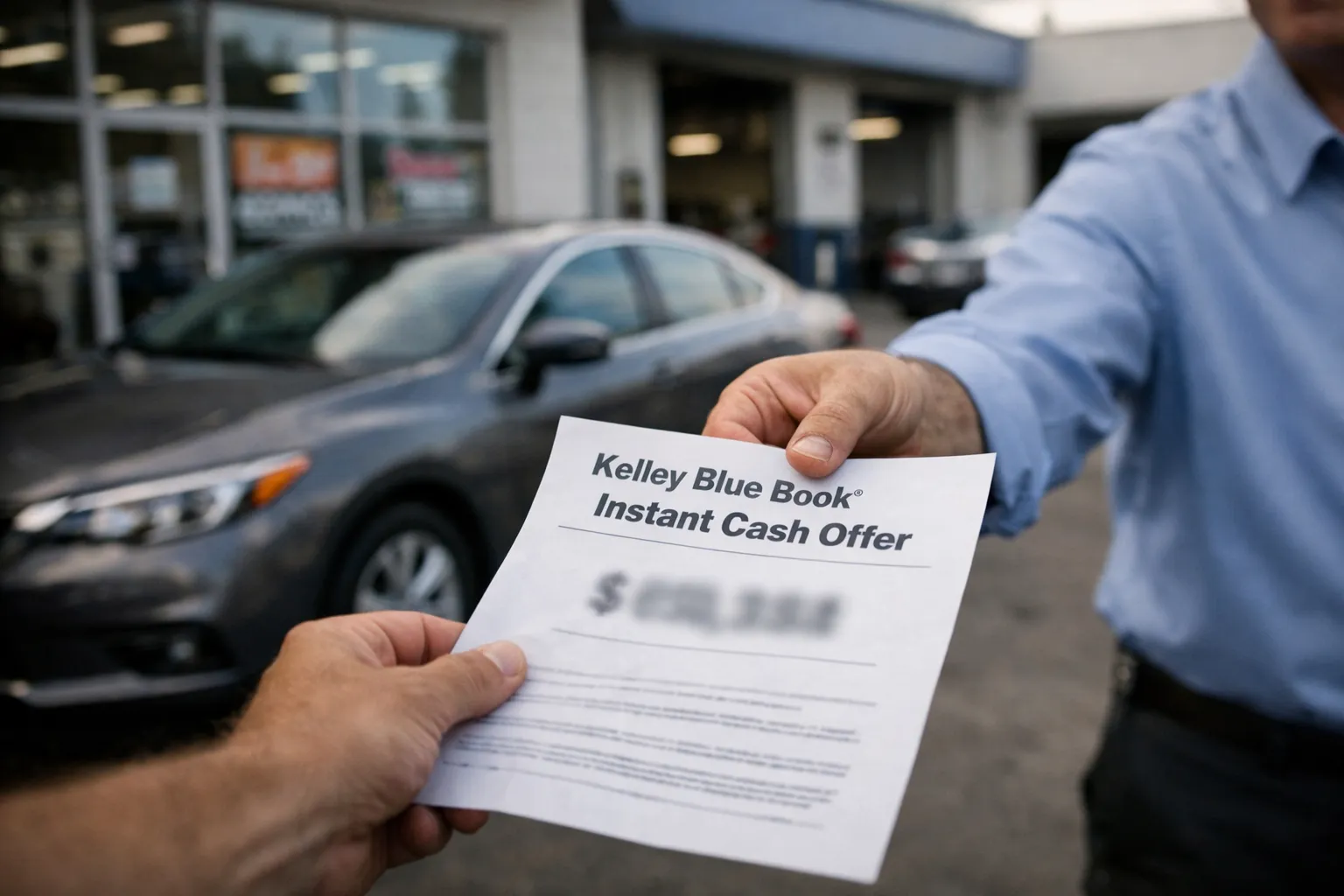
This article updates our June 2026 appraisal of Kelley Blue Book’s Instant Cash Offer (ICO) with fresh, October 2026 context. ICO is a VIN-driven online appraisal that issues a dealer-backed offer for trade‑ins or quick sales. Key specs at a glance:
- Provider: Kelley Blue Book (Cox Automotive brand)
- Input: VIN or year/make/model + mileage + condition questions + recent photos in many markets
- Output: Printable/digital, dealer-backable offer (commonly 7–10 days; variable by market)
- Redemption: Participating dealer inspects and finalizes; offer remains conditional on inspection
- Cost to seller: Free to generate
Background — Who makes ICO and why it matters
Kelley Blue Book, owned by Cox Automotive, operates ICO as a bridge between online valuations and dealer transactions. ICO’s positioning hasn’t changed: it’s designed for sellers who want a documented, dealer-ready price they can use as trade-in credit or a quick sale. What is different in 2026 is how dealers and online platforms approach valuation risk, especially for electrified vehicles and software-tethered features. ICO continues to matter because it converts online curiosity into a transaction-ready document that most franchised dealers recognize and can process quickly.
Features analysis — What’s changed since mid‑2026
- Mandatory photo and data capture in more markets: By October 2026, many dealers require multi-angle photo uploads before issuing an ICO, and some redemption paths now require the same photo set at inspection. This reduces later surprises but raises the bar for sellers to present a clean, well-documented vehicle.
- Deeper EV battery scrutiny: ICO’s condition workflow and dealer inspections increasingly factor in battery state-of-health (SOH) and charging behavior. Dealers commonly request a battery diagnostic report (OEM or third‑party OBD reading) at redemption for BEVs and some hybrids; substantial range loss is now a routine adjustment trigger.
- Software and subscription checks: Dealers deduct value for non-transferrable subscriptions or disabled telematics/driving aids. Sellers are now routinely asked about active subscriptions, locked software features, and OEM accounts tied to the VIN.
- Faster dealer validation but tighter buffers: KBB’s deeper integrations with dealer management systems and appraisal apps speed validation in urban markets, often producing same‑day inspection appointments. At the same time, dealers are building larger inspection buffers into offers to manage wholesale volatility.
- Greater regional variability: Participation density has improved in many metros, but rural acceptance remains uneven; some dealers will only accept ICO as trade-in credit, not as a straight cash purchase.
Pros — Where ICO still shines
- Documented, dealer-ready offer: ICO supplies a printed/digital offer that simplifies counter conversations and reduces negotiation friction when buying from the same dealer.
- Streamlined title and payoff workflows: Because ICO is structured for dealer processing, handling of payoffs, title transfers and tax calculations is usually faster and clearer than coaching a private-party buyer through these steps.
- Better EV transparency than earlier years: The updated ICO flow flags battery and software issues in the appraisal process, so sellers get earlier warnings about potential reductions—useful for EV owners who previously saw unexpected write-downs at inspection.
- Quick option for time-sensitive sellers: When you need a rapid, low-hassle resolution (moving, lease-end deadlines, or buying another car same day), ICO remains a reliable route.
Cons — Limitations and notable pitfalls
- Inspection-driven reductions remain common: Offers are conditional. Many dealers still reduce headline ICO amounts when post-acceptance inspections reveal damage, mechanical defects, title complications, or diminished EV battery capacity.
- Generally not top dollar: Private-party sales or targeted consignment/auction channels usually yield higher net proceeds for highly desirable or low-mileage models.
- Dealer acceptance and terms vary: Even within the same metro, one dealer may honor ICO as a straight buy while another accepts it only as trade-in credit toward a retained sale.
- Greater documentation demands: The increased photo and data requirements mean unprepared sellers are more likely to see reductions; accurate, complete disclosures are now more important than ever.
Pricing and value — What using ICO costs you
Generating an ICO is free. The quantifiable cost is the opportunity cost: the difference between ICO and the highest net price reachable through private sale, consignment, or competitive bidding. For many mainstream vehicles in 2026, that gap commonly ranges from a few hundred to a few thousand dollars depending on condition, local demand, and whether the seller takes advantage of sales‑tax offsets when trading into another vehicle. ICO’s explicit value proposition remains speed, simplicity and a dealer-ready paper trail—not maximizing absolute proceeds.
Who it’s for — Use cases that make sense in October 2026
- Deal shoppers trading in: If you’re buying from a dealer and want a fast, documented trade-in credit to apply toward the purchase, ICO is a straightforward choice.
- Time-constrained sellers: People with tight timelines (moving, job change, lease returns) who prioritize certainty and speed should use ICO as part of a rapid-close strategy.
- Owners with straightforward vehicles: Clean, well-documented cars with full service history—especially non-modified, non-collector vehicles—fit the ICO model best.
Who should avoid ICO
- Owners of highly desirable, collectible, or rare models — private-party or consignment channels often extract premiums that ICO won’t match.
- Sellers of heavily modified or niche-market cars — ICO’s standardized models typically don’t price aftermarket or custom modifications favorably.
- Sellers in thinly served rural markets where dealer competition is minimal — ICO leverage is weaker without multiple participating dealers.
Alternatives — Specific competitors and when to use them
- Private sale: Best for maximum net proceeds on desirable cars; requires more time, safety precautions for meetups, and hands-on negotiation.
- Direct buyers (CarMax, Carvana, Vroom and similar): These firms provide quick online estimates and a firm in-person offer in many markets. Shop them alongside ICO for a second data point.
- Marketplace instant offers (Cars.com, CarGurus): These services route dealer bids to sellers and are useful comparators—sometimes they produce higher offers where dealer competition is strong.
- Consignment and auction houses: For collector or high-mileage trucks, targeted consignment or specialized auctions can yield a stronger price than ICO or general marketplaces.
Practical tips — How to get the best result with ICO in October 2026
- Answer condition questions conservatively and upload clear, recent photos that match your description—discrepancies are the most common cause of post-inspection reductions.
- For EVs, obtain a recent battery SOH or range test from the dealer or a reputable OBD/diagnostic tool; bring charging history and any remaining battery warranty documentation.
- Document software/subscription status: logins, transferability, and whether features like subscription-based navigation or advanced driver-assist packages are active or permanently disabled.
- Request itemized dealer inspection notes in writing if the offer changes; ask for a line‑item explanation of each adjustment and compare it against your pre-inspection photos.
- Always get at least two competing data points—one ICO plus one direct-buyer and a private-party price—before accepting, especially for higher-value vehicles.
- If trading toward another vehicle, calculate the sales‑tax benefit in your state: applying trade-in credit to purchase price often reduces upfront sales tax, which can narrow the net difference versus private sale.
Verdict
As of October 2026, Kelley Blue Book’s Instant Cash Offer remains a practical, low-friction tool for sellers who prioritize speed, documentation and dealer-ready offers. ICO has evolved to demand more upfront documentation—multi-angle photos, clearer condition disclosures and EV battery data—so sellers who prepare those materials typically see fewer post-inspection reductions. The core trade-off holds: faster, simpler transactions for potentially less than private-party proceeds. Use ICO as part of a quick comparison toolkit—particularly if you’re trading at a dealer or need a fast close—but pursue private sale or consignment when maximizing net proceeds is your primary objective.
Frequently asked questions
Is the ICO offer guaranteed?
No. ICOs are conditional and subject to dealer inspection and verification. Dealers commonly adjust or rescind offers for undisclosed damage, title issues, mechanical problems, or diminished EV battery capacity. Accurate photos and full disclosure reduce the chance of adjustments.
How long is an ICO valid?
Most ICOs specify a time window—commonly 7–10 days—but validity varies by market and dealer. In volatile wholesale periods dealers may shorten the window or require in-person inspection sooner. Always read the offer terms when you generate it.
Will ICO get me more than a private sale?
Usually not. Private-party sales and targeted consignment often produce higher net proceeds for desirable vehicles. ICO’s advantage is speed, reduced hassle and simplified trade-in processing—choose it when those priorities outweigh extracting the absolute top dollar.
What should EV sellers bring to the ICO inspection?
Bring a recent battery state-of-health or range diagnostic (dealer or third-party readout), charging/fast‑charge logs if available, warranty documents, and documentation of any battery repairs. Disclose known range loss or battery faults up front to minimize inspection surprises.
What if the dealer reduces the ICO at inspection?
Ask for a written, line-item inspection report explaining each reduction. If you disagree with the findings, you can request a second appraisal at another participating dealer, compare direct-buyer offers, or pursue a private sale—don’t feel pressured to accept the first adjusted number without documentation.