
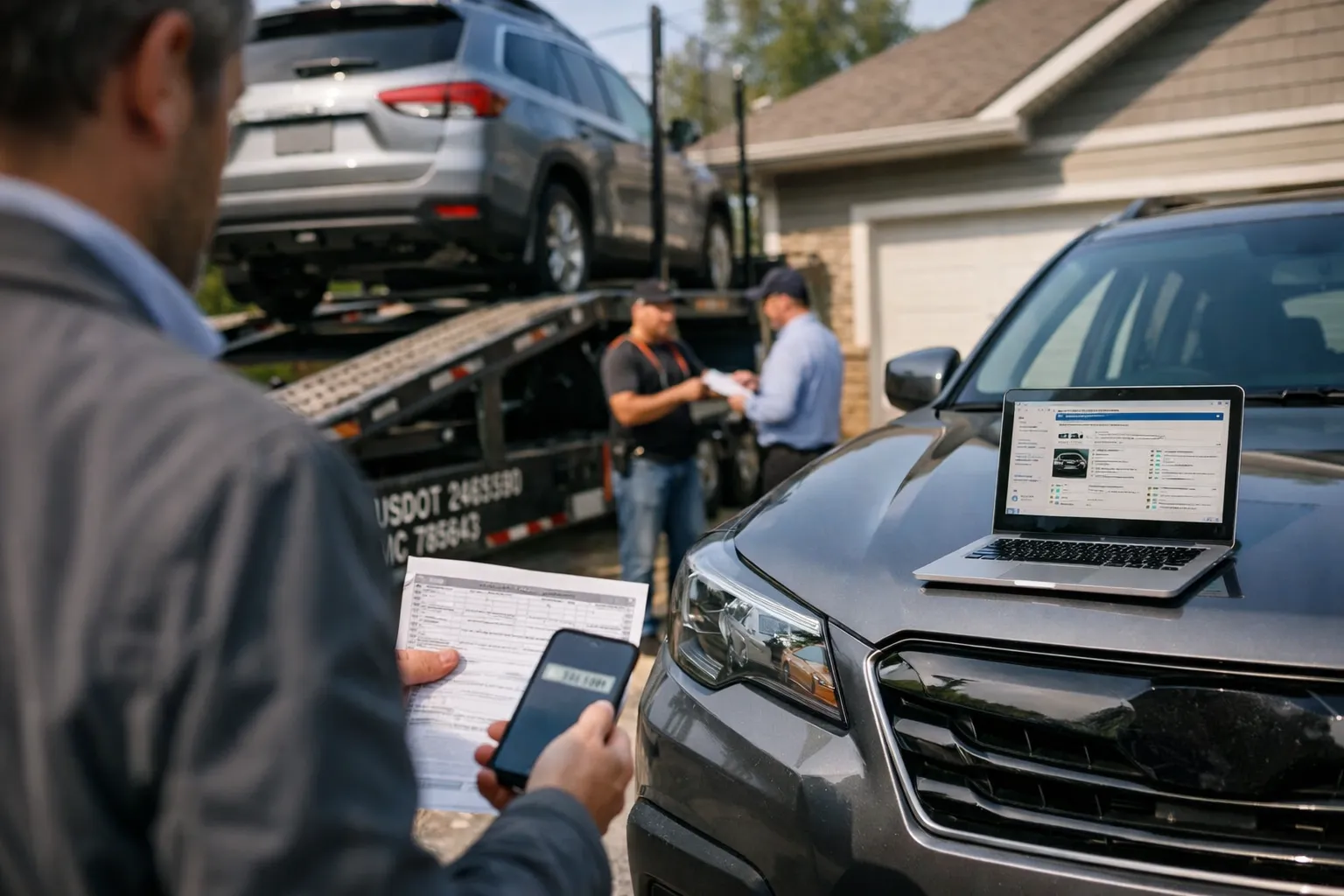
Introduction — What you’ll learn and who this is for
If you’re shopping outside your state for price, model or availability, this updated August 2026 guide tells you exactly what to do to close the deal without surprises. This is written for private buyers and enthusiasts who want clear, legal-first steps: how to verify title and liens, avoid the latest AI-driven listing scams, handle EV software and account transfers, secure payment, move the car, and finish registration and tax duties at home. You’ll get specific documents to demand, sample contingency language, and a short timeline you can follow.
Prerequisites and context
Before you start, assemble these basics:
- Your state driver’s license and proof of residence (for registration).
- Access to VIN history services (NMVTIS is the federal baseline; supplement with AutoCheck or Carfax).
- A secure payment plan (bank, escrow service) and transport options.
- Knowledge whether the vehicle is ICE, hybrid or EV — each has different checks (battery SOH, account transfers).
Why this matters in August 2026: market activity has normalized since pandemic disruption, but new risks have grown. AI-assisted fake listings and VIN cloning remain active threats. More states use electronic titles and digital registrations, but procedures vary. The law still requires you to register and pay use/sales tax where you live — not where you buy. This guide prioritizes legal obligations and the practical safeguards you need now.
1. Research: VIN checks, pricing and state rules
- Run NMVTIS and at least one commercial vehicle history (AutoCheck or Carfax). NMVTIS is the federal resource for title brands; commercial reports can show service records and reported accidents.
- Compare regional pricing and include transport and tax costs in your total. Cross-country demand and seasonal patterns still move prices — budget for shipping and titling before you negotiate.
- Check both states’ DMV websites early. Confirm:
- Whether emissions/safety inspections are required before sale or only at registration.
- Whether the seller’s state and your state accept electronic titles, and how each handles cross‑state e-title transfers.
- Whether a bill of sale, odometer disclosure, or notarization is required.
Why: A missing smog certificate, required notarization, or an e-title incompatibility can delay titling and increase cost. Confirm requirements before you make an offer.
2. Verify the title, liens and seller identity
- Confirm the title is in the seller’s name. If the title is electronic, ask for the issuing state’s e‑title transfer instructions and a transfer confirmation or reference number.
- If a lien is listed, get a written lien release from the lienholder and verify by calling the lienholder using contact info you independently obtain (not what the seller gives you).
- Match IDs: compare the seller’s driver’s license or business license to the name and address on the title. For dealers, verify their license on the seller’s state DMV or dealer licensing board.
- Red flags: mismatched names, titles with multiple brandings (e.g., “salvage” vs “rebuilt”), obvious edits to documents, or sellers who refuse live verification.
Why: Title defects are the costliest problems buyers face. If anything looks off, pause the transaction and demand corrective documentation or walk away.
3. Inspection: in-person or trusted third-party
- Inspect in person when possible. Prioritize in-person checks for high-mileage, classic, or high-value cars.
- If you can’t travel, hire a certified third‑party inspector or local shop. Expect $150–$500 in 2026 depending on depth and region.
- Inspection checklist:
- VIN locations (dash, doorjamb, title) match and are untampered.
- Frame and undercarriage for collision repairs or hidden damage.
- For EVs: a battery state‑of‑health (SOH) diagnostic, charge port condition, and whether the vehicle has manufacturer recalls unresolved.
- Confirm removal/transfer of linked manufacturer accounts and digital keys during inspection.
- Demand a live, two‑way video test drive if you cannot see the car in person — the seller should display the VIN and a government ID in the same frame.
Why: Modern cars are software-heavy. You can buy the hardware but lose features if accounts remain linked or subscriptions are active. An inspection prevents surprises.
4. Payment safety and fraud protections
- Use an escrow service for remote private-party sales. Reputable vehicle escrow providers hold funds until title and possession conditions are met. Typical fees run 0.5–1.5% of sale price.
- Bank wires are fast but irreversible — use them only when you can verify title transfer simultaneously and you trust the seller.
- Cashier’s checks require in‑branch verification before releasing the vehicle; scammers can forge checks, so verify with the issuing bank.
- Never send cash or use anonymous person‑to‑person apps for full payment.
- Protect against AI-based listing scams: insist on a live, two‑way video showing the seller’s ID and VIN together; run reverse-image searches on listing photos; and be suspicious of deeply discounted listings that pressure you to send funds quickly.
Why: AI tools make fake listings more convincing. Escrow services and live verification materially reduce your risk.
5. Contract, title transfer and required documents
- Documents to collect at closing:
- Signed title (or electronic-transfer confirmation) with any required notarizations.
- Bill of sale showing sale price, vehicle description, VIN, date, and buyer and seller names and addresses.
- Odometer disclosure if required by state law.
- Written lien release if a lien existed, and relevant service/recall records.
- Proof of identity for seller and buyer (IDs), and proof of residence for registration.
- For EVs and connected cars: add a written clause requiring removal or transfer of manufacturer accounts and transferability of subscriptions. Ask the manufacturer in writing whether features or warranties transfer and retain that correspondence.
- Sample contingency clause:
“Sale conditioned on: (1) delivery of clear title, signed and notarized as required; (2) successful independent inspection within 72 hours; (3) written lien release if applicable; (4) written confirmation of removal or transfer of manufacturer-linked accounts and functional verification of primary vehicle features.”
Why: A clear written contract gives you remedies if the seller later claims the transaction completed cleanly but problems appear.
6. Temporary permits and insurance
- Get a temporary transit tag or permit to legally move the vehicle. Rules differ by state and whether the seller is a dealer.
- Contact your insurance company before pickup and add the vehicle at the moment you take possession — insurers commonly issue a temporary binder immediately.
- If hiring a carrier, confirm the carrier’s liability limits and get a certificate of insurance. Consider supplemental transport insurance for high-value vehicles.
Why: Driving without insurance or the correct temporary tag risks fines and leaves you uninsured for accidents during transport.
7. Transport choices and 2026 cost ranges
- Drive it home: lowest out‑of‑pocket carrier cost, but you assume wear-and-tear and travel time.
- Open carrier transport: the most common option. Typical 2026 cross‑country quotes range roughly $600–$1,500 depending on distance and pickup location.
- Enclosed transport: for higher‑value or collector cars. Expect roughly $1,200–$3,000+ for long hauls.
- Choose carriers with active DOT/FMCSA registration. Check the carrier’s complaint history on FMCSA and read independent reviews. Confirm pickup logistics (rural access, lift‑gate fees) before booking.
Why: Transport costs can erase a perceived bargain. Get three quotes and confirm insurance details before payment.
8. Registering, paying taxes and completing the title at home
- Title and register the car in your home state. The law generally requires payment of sales/use tax where the vehicle will be registered — not where you buy it.
- Bring to the DMV or follow your state’s online process:
- Signed title or e‑title transfer confirmation
- Bill of sale showing purchase price
- Proof of insurance and ID
- Odometer disclosure and emissions certificate if required
- Example math: on a $25,000 purchase at 7% tax, expect $1,750 due at titling (plus registration fees). Use your state’s calculator to estimate exact amounts.
- Timing: most states set a window (often 15–30 days) to title without penalty — check your DMV. Save all receipts and documents from the seller and escrow.
Why: Late registration can trigger fines and can complicate insurance claims if you drive unregistered.
9. Post-registration tasks and warranty issues
- Complete any state-required safety or emissions inspections within the specified window.
- If the vehicle has a manufacturer warranty, get written confirmation whether coverage is nationwide and whether it transfers to a new owner. Keep that paperwork with the title file.
- For EVs: verify battery-warranty transfer rules and retain the battery SOH diagnostic and any manufacturer correspondence about warranty status.
- Keep scanned copies of all purchase documents, inspection reports, transport insurance, and escrow records for resale or dispute resolution.
Common mistakes and how to avoid them
- Assuming listing photos prove possession — always insist on a live video showing seller ID and VIN at the same time.
- Skipping NMVTIS or title checks — salvage branding or hidden liens can cost thousands.
- Wire-transferring funds before title verification — prefer conditional escrow releases tied to title transfer or delivery.
- Overlooking software/account transfer on modern vehicles — you may lose remote features or face subscription charges unless accounts are cleared.
- Underestimating taxes, fees and registration windows — include them in your total cost and calendar before finalizing.
Pro tips
- Demand VIN photos from multiple locations (dash, doorjamb, engine bay) and run a reverse-image search on listing photos to spot recycled ads.
- If buying an EV, request the manufacturer or a dealer-run battery SOH report and a written statement on warranty transferability.
- When wiring funds for high-value purchases, meet at a branch of the seller’s bank or close through a licensed title company.
- Use an escrow service that supports conditional release tied to documented e-title transfer or presentation of clear paper title.
- Verify a carrier’s DOT registration and complaint history on the FMCSA portal before booking transport.
Your rights and next steps
Your rights: The law requires accurate title transfer and, in many states, disclosure of odometer readings and known defects. You are entitled to clear title (no hidden liens), full disclosure of salvage/rebuilt branding, and truthful statements about the vehicle’s condition. If the seller misrepresents the vehicle or title, you may have remedies under state consumer‑protection and fraud laws, including rescission, damages, and attorney fees in some jurisdictions.
Next steps:
- Run NMVTIS and a commercial history report before making an offer.
- Arrange a paid independent inspection if you can’t inspect in person.
- Use a written purchase agreement with explicit contingencies for title, inspection, and account/software transfer.
- Use escrow for remote payments and confirm transport insurance and carrier credentials before pickup.
- Register and title the vehicle in your state within the required window and keep all documentation.
If you encounter legal trouble — undisclosed liens, title defects, or clear fraud — consult a qualified attorney experienced in motor‑vehicle and consumer‑protection law in your state. These disputes often have strict deadlines and procedural steps that affect your rights.
Timeline checklist (updated August 2026)
- Day 0: Run NMVTIS and a commercial history report; request seller documents and a live video VIN/ID check.
- Day 1–3: Arrange inspection (in‑person or third‑party) and add contingencies to the purchase agreement.
- Day 3–7: Resolve inspection issues or cancel. Finalize escrow/payment arrangements.
- Day 7: Close sale. Confirm title transfer or escrow conditions are met before funds release.
- Day 7–21: Arrange transport and insurance. Receive vehicle and confirm condition matches inspection report.
- Within your state window (often 15–30 days): Register, title, and pay sales/use tax.
Practical example — August 2026
Buyer in Texas purchases a 2023 electric SUV from a private seller in California for $31,200:
- Buyer ran NMVTIS and AutoCheck — no salvage branding; title listed in seller’s name. Buyer also called the California DMV to confirm standard e‑title procedures.
- Paid $375 for a local independent inspection in California that included an EV SOH report (battery at 91%). Inspector verified VIN and saw no frame damage.
- Used a reputable vehicle escrow. Escrow release was conditioned on the California e‑title transfer confirmation and delivery confirmation from the carrier.
- Selected an open carrier for $1,200 and purchased $300 supplemental transport insurance after verifying the carrier’s DOT registration and liability limits on FMCSA's portal.
- On delivery, buyer confirmed the seller had removed their manufacturer account and the manufacturer emailed written confirmation that remaining warranty transferred to the new owner. Buyer titled and paid Texas use tax at the county tax office within the 30‑day window.
FAQ
Do I pay sales tax in the seller’s state or my state?
Generally you pay sales or use tax where you register the vehicle — your state of residence. Some states credit tax paid to another state, but that’s not common. Check your state DMV or tax authority before you buy and budget to pay tax when you title the vehicle.
Can electronic titles be transferred across state lines?
Yes, many states support e‑titles, but processes differ. If the seller’s state issues an e‑title, get explicit transfer instructions and a confirmation number before releasing funds. If either state doesn’t accept e‑titles for cross‑state transfers, insist on a paper title or use a licensed title agent.
What extra risks do EVs add to cross‑state purchases?
EVs add software, account and warranty issues: battery health, subscription features, and manufacturer-linked accounts (digital keys, remote services). Demand a battery SOH report, written confirmation about warranty transfer, and a clause in the contract requiring removal or transfer of linked accounts.
How can I protect myself from AI-assisted listing scams?
Insist on a live, two‑way video where the seller holds a government ID next to the VIN plate. Run reverse-image searches on listing photos, verify title with NMVTIS, use escrow, and be wary of sellers rushing payment or refusing live verification.
What if I discover an undisclosed lien after purchase?
Contact the lienholder and seller immediately. Document all communications. You may need a consumer‑protection attorney — lien disputes often require administrative or court action, and deadlines matter. Preserve all documents and escrow records; they’ll be evidence in any claim.
Buying across state lines in August 2026 is routine — but it still requires updated checks: live ID/VIN verification to combat AI scams, careful e‑title handling, and EV account and warranty confirmation. Follow these steps, protect your funds with escrow when appropriate, and consult a lawyer for title disputes or fraud. Your rights depend on correct paperwork and timely registration; don’t skip them.
— James Crawford, Legal Affairs Reporter