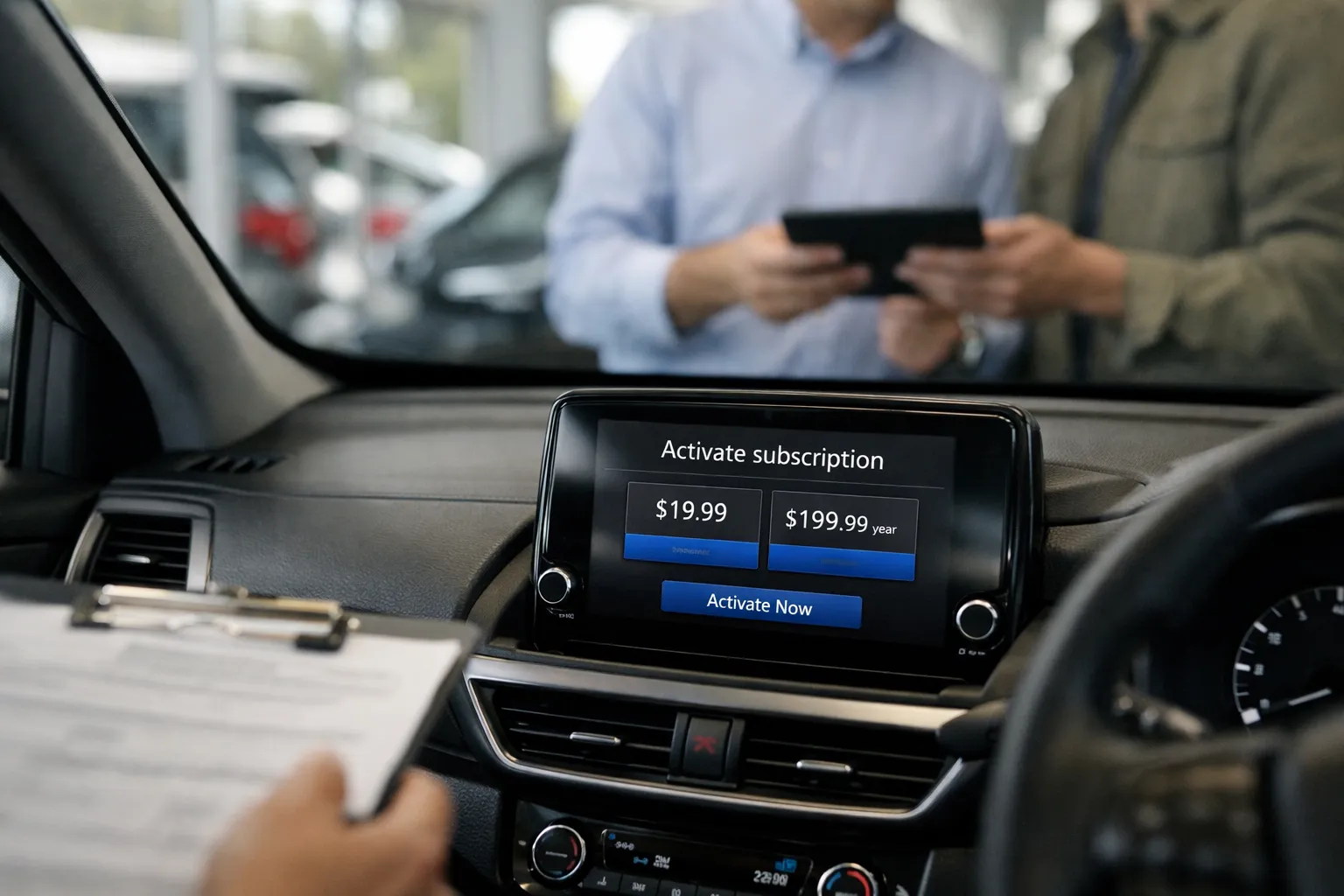
For car buyers hunting for a good deal this summer, a new wrinkle has entered the checklist: is the car’s software locked behind a subscription?
Why paywalled features matter now
Over the past three years automakers have increasingly shifted functions—from advanced driving assists to navigation, connected services and comfort amenities—behind recurring fees. That trend accelerated as original‑equipment manufacturers (OEMs) leaned on over‑the‑air updates and modular software to add recurring‑revenue streams without physical recalls or hardware changes.
What was largely a boutique concern for tech‑minded shoppers is now a mainstream issue for buyers of used vehicles. Cars with key features gated by subscriptions can show up at dealership lots, auctions and private‑party listings with identical hardware to unlocked examples — yet with materially different value to a buyer who wants those features to work without future payments.
Common paywalled functions
- Advanced driver assistance features (hands‑free or lane‑centering modes)
- High‑resolution navigation and live traffic or mapping services
- Connected‑car services (remote start, stolen‑vehicle tracking, concierge)
- Performance or software‑enabled driving modes
- Comfort items (heated seats, ventilated seats, ambient lighting) where activation is software controlled
How paywalls are changing used‑car pricing and listings
Buyers and dealers report a growing divergence between physical condition and perceived value. Two otherwise identical SUVs—same mileage, paint and service history—can trade at a price gap when one requires a subscription for its advanced driver assist package and the other has it enabled without ongoing fees.
That gap is not just theoretical. Independent remarketers and wholesale buyers increasingly factor subscription status into their offers. For private buyers, the economic hit may be more subtle: a monthly fee of $15–$25 to enable a formerly standard feature, or a larger one‑time activation charge if the automaker requires it for a change of owner.
Marketplace response
- Some online classifieds and auction platforms have begun adding fields to show whether key software features are transferable, active, or gated — though implementation varies.
- Dealers facing buyer pushback are more frequently disclosing subscription status upfront or offering temporary activation as part of the sale negotiation.
- Smaller buyer protections—such as return windows tied to demonstration of promised features—are appearing in dealer contracts in some markets.
What buyers should check, and how to verify it
Because subscription status can dramatically change your ownership experience and cost, inspect and document it before signing money over. Practical steps:
- Ask the seller (dealer or private party) to demonstrate the feature in front of you, showing the infotainment screen and any subscription prompts.
- Request that the seller log into the vehicle’s account (or show an app) to prove which services are active and whether any trial periods remain.
- Confirm transferability: some OEM subscriptions are tied to a VIN and can transfer; others are tied to the original purchaser’s account and may not.
- Demand written confirmation in the purchase contract describing which features are active, which are paywalled and who will be responsible for payment after sale.
- Check owner forums and model‑specific resources for typical costs and whether third‑party unlocking (dealer or service provider) is possible.
Negotiation and contract tips
If you find a desirable car with paywalled features, you can:
- Ask the seller to activate the subscription for a defined post‑sale period (30–90 days) so you can evaluate whether you want to pay for continued access.
- Negotiate a price reduction based on the present value of the subscription (monthly fee × estimated months you would need to pay).
- Request a credit or escrow hold if the seller claims to be able to transfer a subscription but must complete paperwork after the sale.
What to watch from regulators and automakers
Consumer advocacy groups have raised concerns about transparency and hidden "ongoing costs" tied to vehicle ownership. Regulators who have previously scrutinized junk fees and digital transparency in other industries are likely to keep a close eye on automakers’ disclosure practices. In the marketplace, that pressure can turn into clearer listing standards and contractual language even without formal regulation.
Separately, some dealerships and software providers are exploring technical solutions to ease transfers—either by building transfer protocols into OEM accounts or offering temporary activations at time of sale. Automakers’ policies vary widely and are central to whether paywalled features become a long‑term valuation factor for used cars.
Bottom line for buyers
Software‑gated features are a growing line item in the true cost of a used car. For enthusiasts who care about driver aids, connectivity or software‑defined performance, a seemingly small monthly fee can accumulate into hundreds or thousands of dollars of ownership cost. For those who don’t want ongoing fees, the presence of paywalled functionality can be a negotiating lever.
Before you buy: verify active features, get transfer commitments in writing, and treat subscription status as you would vehicle history or title condition. In 2026, software is as important as service records when assessing value.