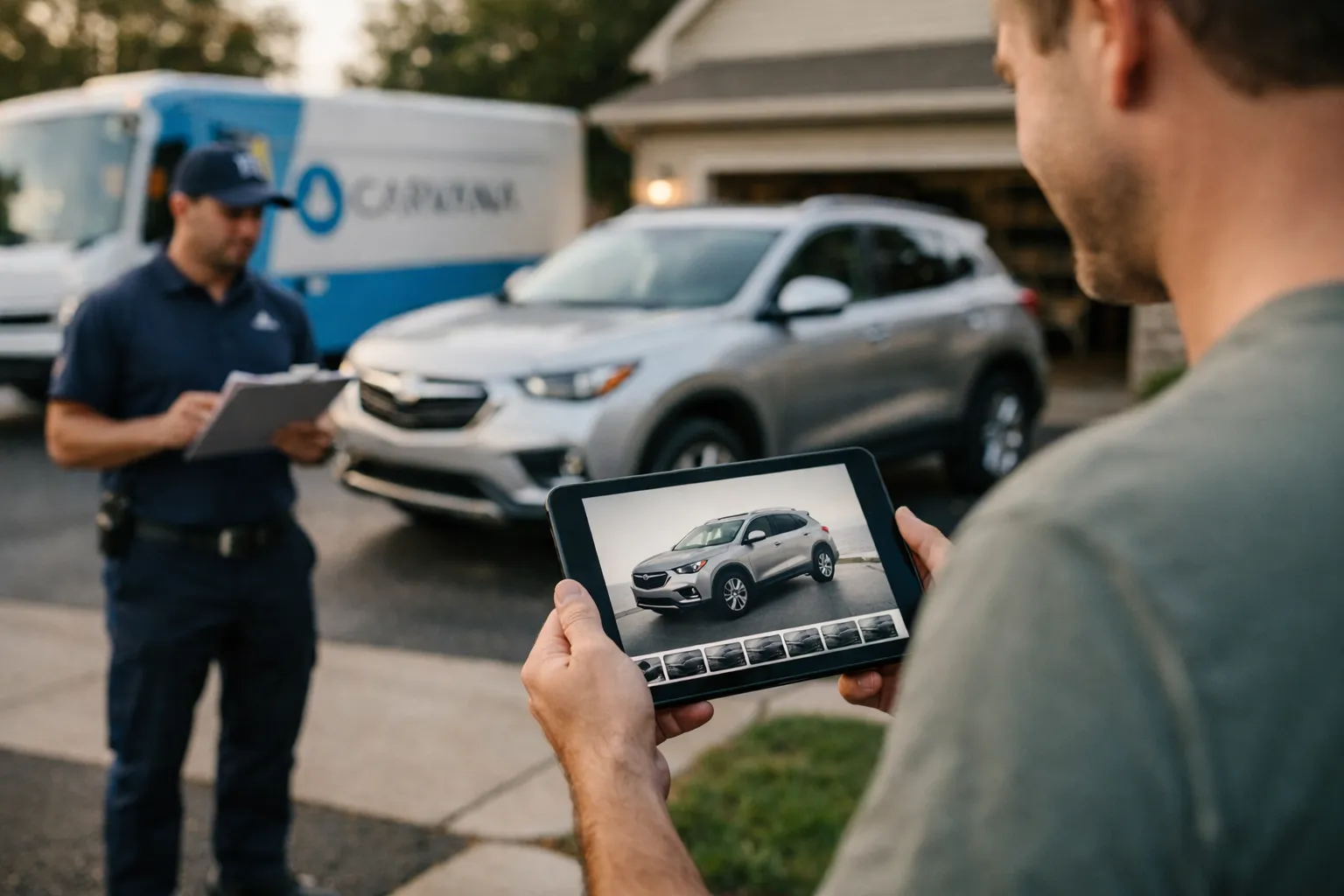
Carvana remains one of the most visible online used‑car retailers in October 2026. This update looks at what’s changed since mid‑2026 and what buyers should know right now: inventory and listing accuracy, EV and ADAS-specific inspection issues, the reality of financing in an elevated‑rate environment, delivery logistics and the 7‑day return trial, and whether Carvana still delivers value versus dealers and other online retailers.
What this review covers
We evaluate buyer‑facing features that materially affect ownership decisions: listing fidelity (photos, option flags, vehicle history), inspection and reconditioning claims (especially for EVs and cars with ADAS), how financing and trade‑ins stack up in today’s rate environment, delivery timing and reliability, warranty and post‑purchase support, and the practical tradeoffs versus alternatives like CarMax and local franchised dealers.
Inventory, photos, and listing accuracy — what's different in 2026
Carvana’s searchable inventory still spans economy cars to luxury SUVs and a measurable share of EVs. Photo galleries with 360° exterior shots and many interior angles remain standard. The notable shifts buyers should know:
- EV and plug‑in hybrid listings now routinely include listed range estimates and charger compatibility—but the quality of battery health data shown on the listing varies. Always request the latest battery state‑of‑health or range test if the listing doesn’t include it.
- ADAS features (adaptive cruise, lane‑keep, automatic emergency braking) are increasingly common on late‑model vehicles. Expect listings to note the presence of these systems but not their calibration status; calibration problems are a frequent source of post‑purchase service visits.
- Inventory depth has normalized compared with the pandemic peak volatility, but availability still varies by region and model. Popular crossovers and inexpensive EVs move quickly in metro areas.
Inspection and reconditioning: new focus areas
Carvana continues to use in‑house inspection and reconditioning before listing cars. Important updates for 2026 buyers:
- For EVs, buyers should ask for specific evidence of battery work and range verification, not just a generic reconditioning note. Look for recent high‑voltage system checks, battery cooling system repairs, and documented range validation at highway speeds.
- ADAS systems often require static and dynamic calibration after repairs. If a listing shows body repairs near sensors or cameras, ask whether ADAS calibration was completed and request documentation.
- Independent mobile inspectors (examples: LemonSquad, YourMechanic) now commonly provide EV battery load tests and ADAS checks. A focused, paid inspection within the 7‑day trial can save considerable headache.
Buying, financing, and trade‑ins in a higher‑rate market
The online purchase flow (lock a vehicle, complete e‑documents, choose financing or pay cash) is unchanged in structure. Two practical realities are sharper in October 2026:
- Interest rates and monthly payments matter more. With consumer rates remaining elevated relative to the ultra‑low period of 2020–21, small differences in APR translate to meaningful monthly and total interest costs. Always get firm preapproval from a credit union or bank to compare with Carvana’s offers.
- Carvana’s instant trade‑in quote is fast and convenient, but it should be a starting point. Get a CarMax offer and a local dealer appraisal before you accept—prices can differ materially by vehicle and market timing.
Delivery, pickup, and the 7‑day return window — practical updates
Home delivery remains Carvana’s signature. In many metro areas delivery slots have become more consistent because logistics networks have expanded since 2024, but variability persists in less populated regions.
Key advice for using the 7‑day trial effectively:
- Drive the car in the conditions you use most: commuter highway runs, steep grades if applicable, and the local roads where you spend time. EV range behavior and HVAC performance often differ in real usage.
- Test all ADAS features in safe, controlled environments. Adaptive cruise and lane‑keeping should work smoothly; jerky or inconsistent behavior suggests calibration issues.
- Check title documents immediately upon delivery for any lien or title‑status discrepancies and verify any advertised service records.
Post‑purchase support, warranties, and extended plans — what to compare
Carvana includes a limited warranty and sells extended protection plans. For 2026 buyers:
- Compare Carvana’s plans with third‑party providers and OEM CPO options — coverage details, exclusions for EV battery systems, and deductible structures can vary widely. For cars with known high repair costs (luxury brands, complex ADAS, or older EVs), factor likely repair costs into the extended plan decision.
- Document all service interactions and keep copies of repair authorizations. Response times for claims still vary by region and season; proactive documentation accelerates resolution.
Customer service and real‑world issues
Public reviews still show a mix: many buyers praise the convenience and transparent listings; others report friction around paperwork, delivery rescheduling, or claims timing. Two developments matter:
- Because vehicles now include more software‑defined features and telematics, resolving post‑sale issues sometimes requires dealer or OEM intervention rather than general repair shops. Expect coordination to take longer on software/firmware problems.
- Independent inspectors and mobile technicians have become standard tools for buyers who want extra assurance during the return window—budget $100–$250 for a thorough, targeted inspection.
Price competitiveness and total cost
Carvana’s sticker pricing is competitive in many markets, but the total‑cost comparison matters more than ever. Include taxes, registration, delivery fees, documentation fees, and expected near‑term maintenance (new tires, brakes, battery service). Because financing costs are higher in this period, compare total paid over the loan term, not just monthly payment.
Who Carvana is best for
- Buyers who value a no‑haggle, end‑to‑end online purchase and can use the 7‑day trial to verify the car in real use.
- Tech‑savvy shoppers comfortable ordering third‑party inspections and comparing finance offers.
- Urban and suburban customers with flexible delivery windows and access to local repair shops for any post‑sale work.
Who should think twice
- Buyers who require same‑day pickup or immediate use without waiting for delivery.
- People who rely on OEM CPO benefits (factory warranty extensions, certified dealer maintenance) for peace of mind—manufacturer CPO often still outperforms in warranty scope and service network.
- Shoppers who are uncomfortable handling remote paperwork or want lengthy test drives before buying.
Alternatives to consider
- CarMax — simple no‑haggle pricing, nationwide inventory, in‑person inspection and same‑day pickup at stores.
- Local franchised dealers (manufacturer CPO vehicles) — better for buyers who prioritize factory warranties and dealer service relationships.
- Vroom and regional online retailers — may offer competitive inventory and delivery options depending on your market.
Practical buying checklist for October 2026
- Get preapproval from a credit union or bank and compare APRs with Carvana’s offer.
- Request EV battery health details and ADAS calibration records for vehicles that list these features.
- Order a targeted independent inspection during the 7‑day trial—include battery load and ADAS checks for EVs and ADAS‑equipped cars.
- Compare trade‑in offers from Carvana, CarMax and a local dealer before accepting.
- Include delivery, registration, documentation, and expected near‑term maintenance when comparing total cost.
Bottom line
Carvana in October 2026 remains a compelling option for buyers who prioritize convenience and a streamlined online experience. Its strengths — broad searchable inventory, rich photo galleries, and a clear return window — endure. New considerations for 2026 include EV battery health, ADAS calibration, and the financial impact of higher interest rates. The informed buyer who demands battery/ADAS documentation, compares financing, and uses the 7‑day trial plus an independent inspection will get the most value from Carvana’s model.
Frequently asked questions
Does Carvana still offer a 7‑day return policy?
Yes. Carvana’s standard consumer trial period has been a seven‑day (or 400‑mile) window to return a vehicle — use it to test the car in your normal driving conditions and to schedule any independent inspections you want. Always confirm the current terms on Carvana’s website before purchasing.
How should I check an EV’s battery health when buying from Carvana?
Ask Carvana for recent battery tests or range validation done during reconditioning. If that documentation isn’t available, order an independent battery load test during the trial period. Also review charging port compatibility, thermal management repairs, and any battery‑related service history on the vehicle history report.
Are Carvana’s extended protection plans worth it?
It depends on the vehicle and your risk tolerance. Compare Carvana’s plan price and covered components with third‑party warranties and OEM CPO coverage. For high‑cost repairs (luxury brands, complex ADAS, older EVs) an extended plan can be worth it; for low‑risk late‑model cars, shop around.
Should I accept Carvana’s trade‑in offer immediately?
Treat Carvana’s instant trade‑in quote as a quick baseline. For the best outcome, get a CarMax offer and at least one local dealer appraisal to compare before closing the deal.