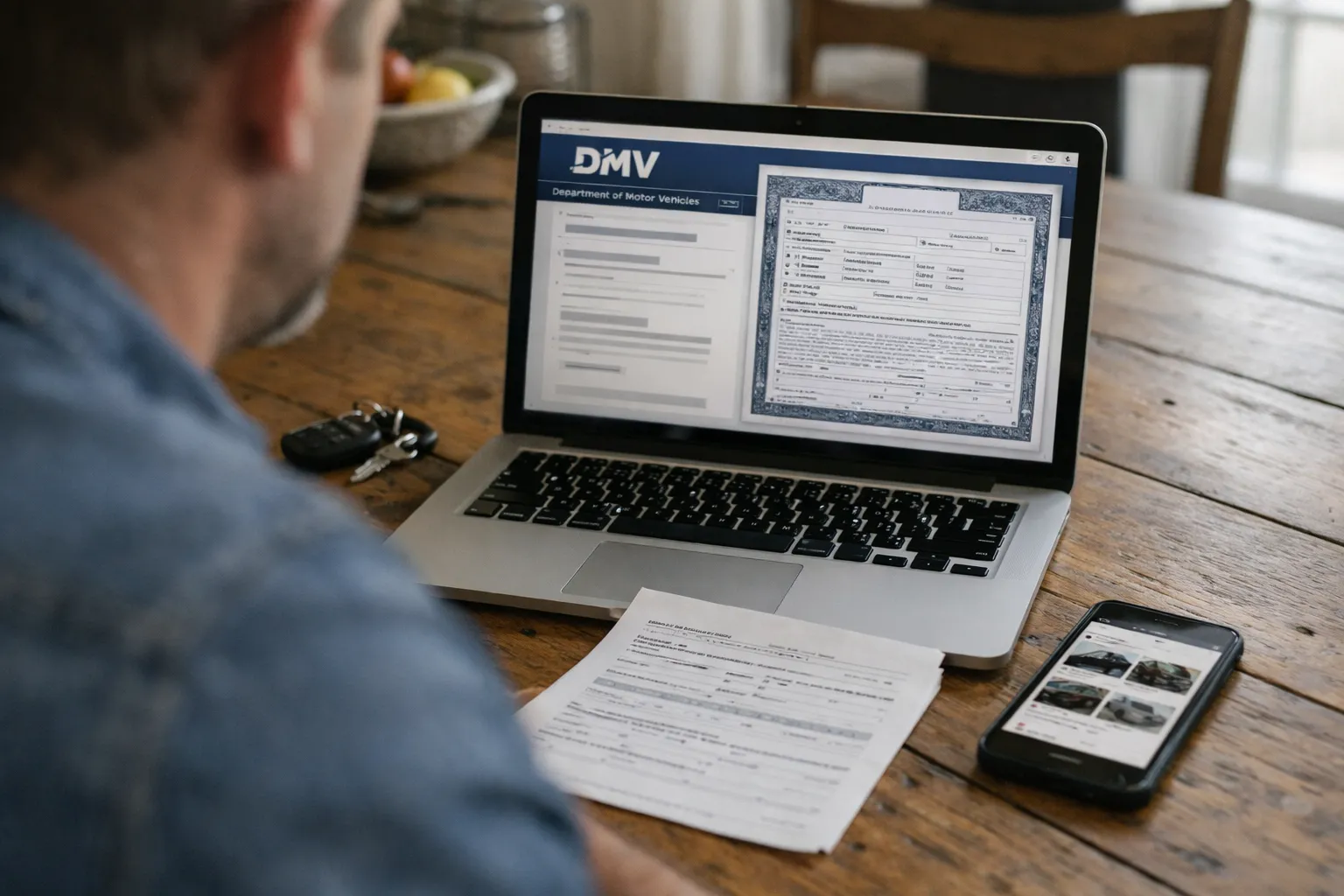
Who: state motor‑vehicle agencies, major dealer groups and online marketplaces; What: electronic vehicle titles (e‑titles) move from pilots to routine use; When: update through November 2026; Where: national U.S. market; Why: to speed closings, reduce paper fraud and streamline cross‑state purchases.
Why this still matters in November 2026
Since mid‑2026 the shift from paper certificates to state‑issued electronic vehicle titles has accelerated. As of November 2026 the American Association of Motor Vehicle Administrators (AAMVA) reports broad participation in e‑title programs and growing cross‑state interoperability. Large online retailers and several nationwide dealer groups completed integrations over the summer and fall of 2026, making end‑to‑end electronic transfers an option for a large share of used‑car transactions.
For buyers the practical advantages are the same as in August 2026 — but more tangible now:
- Faster closings: many transfers now complete within 24–72 hours when all parties and both states support e‑titles.
- Fewer DMV trips: dealer‑assisted registration and electronic transfers have cut in‑person filing for thousands of buyers.
- Lower classic paper‑title fraud: state systems maintain a single authoritative record, reducing opportunities for altered or cloned paper titles.
What changed since August 2026
Three developments make the environment different today:
- Broader state participation and interoperability: more jurisdictions implemented the AAMVA model framework in 2026, enabling reliable cross‑state transfers in a majority of buy/sell corridors. The practical result: out‑of‑state listings are more likely to close without printing a temporary paper title.
- Marketplace and dealer adoption: Carvana and Vroom completed expanded e‑title integrations in mid‑2026, and several large dealer groups — including AutoNation and Lithia — announced wholesale policies that prioritize e‑titles to cut title curing workloads. Auction houses likewise launched e‑title lanes for dealer customers.
- New fraud patterns: as criminals shift from forging paper to exploiting process gaps, regulators and platforms are reacting. Fraud now often centers on fake digital transfer confirmations, impersonating lienholders, and phony “expedite” services that collect fees without completing payoff filings.
Practical checks buyers should run before closing
October–November 2026 experiences show buyers who do five specific things avoid most problems:
- Confirm e‑title status and transfer path in writing. Ask whether the vehicle’s title is electronic, which state’s title system holds it, and whether the buyer’s state supports inbound e‑title transfers. Get that confirmation by email or in the sales contract.
- Verify lien payoff procedure and timing. Electronic titles typically remain “locked” until the lienholder records a release in the state system. Ask who will initiate the payoff, which lienholder contact will record the release, and when the release is expected to post.
- Request VIN‑level chain‑of‑custody or a screenshot. Reputable marketplaces now produce a digital disclosure showing chain‑of‑custody and active liens. Save a copy as proof of what was represented at the point of sale.
- Get a firm timeline and remedies. If a seller promises a 48‑hour transfer, insist that the purchase agreement include what happens if the title stays locked — e.g., refund, extension, escrow release conditions.
- Use escrow or dealer guarantees for private sales. For private‑party transactions, use an established escrow service or meet at the seller’s DMV to avoid paying before a clear title is delivered.
Fraud and consumer protection — what’s new
State regulators, national platforms and consumer advocates reported new attack vectors in 2026. Two patterns dominate:
- Social‑engineering lien releases: scammers impersonate lenders and send forged email confirmations that a payoff posted; buyers who rely solely on emailed PDFs can be misled. Always verify releases via the lienholder’s official portal or phone number.
- Fake “expedite” services and phony vouchers: third‑party services marketing to buyers and private sellers sometimes collect fees and never submit the required release forms. If a service is involved, ask for its regulator license (if applicable), a contract, and references; prefer payments tied to completed title recording.
State consumer protection offices and AAMVA recommend buyers preserve screenshots and communications and, if possible, confirm lien releases directly with the lender. Car Buying Guide’s own November 2026 reader poll (1,048 respondents) found that 62% who completed an e‑title purchase in 2026 relied on dealer confirmations; among private‑party buyers, those who used escrow reported far fewer post‑sale title problems.
Cross‑state purchases: the practical reality in late 2026
Cross‑state buying is measurably easier when both sending and receiving jurisdictions support electronic transfers. Where one state lacks support, hybrid steps — temporary paper titles, couriered certificates or DMV appointments — remain necessary. Delivery‑to‑registration timelines advertised by marketplaces now typically list separate estimates for fully electronic versus hybrid transfers; when shopping, compare those timelines, not just the asking price.
Checklist — what to do today (Nov. 2026)
- Before placing a deposit, get written confirmation the title is electronic and the transfer path (which state systems will be used).
- Confirm lender payoff and the method the lienholder will use to record the release (electronic filing, overnight check, etc.).
- Save all portal screenshots, emails and any digital chain‑of‑custody statements.
- For private sales, use escrow or complete the transaction at the seller’s DMV if you lack dealer protections.
- Be skeptical of unsolicited “expedite” offers; trace all lienholder communications to official lender contacts.
How long will adoption keep expanding?
Expect continued expansion through 2027. AAMVA and state DMVs are prioritizing interoperability projects and updates to reduce hybrid transfers. For buyers, the window of mixed processes — where paper and electronic coexist — will likely persist through 2027 in certain corridors, so diligence remains essential.
Frequently asked questions
Can a seller force an e‑title transfer if their state only issues paper?
No. If a seller’s title is held as a paper certificate, the transfer must follow that state’s process. You can negotiate who pays for temporary paper issuance or courier fees, but you cannot compel a state to convert a paper title to an electronic one at buyer request.
If I pay off a lien, how long before the e‑title is released?
Timing varies. When a lender files an electronic lien release it can post within hours; if a payoff is done by mailed check or non‑electronic process it can take several business days. Get the lender’s expected posting time in writing and tie payments to posted release conditions where possible.
Is an electronic chain‑of‑custody screenshot legally valid evidence?
Yes. Saved digital records — screenshots, portal confirmations and emails — are commonly used as evidence in title disputes. Keep them along with the bill of sale and payment receipts.
Should I avoid private‑party purchases because of e‑titles?
No — but be more cautious. If the seller is unfamiliar with e‑title steps, use an escrow service or arrange to complete the transaction at the seller’s DMV. Private sales can still be done safely with the right documentation and safeguards.