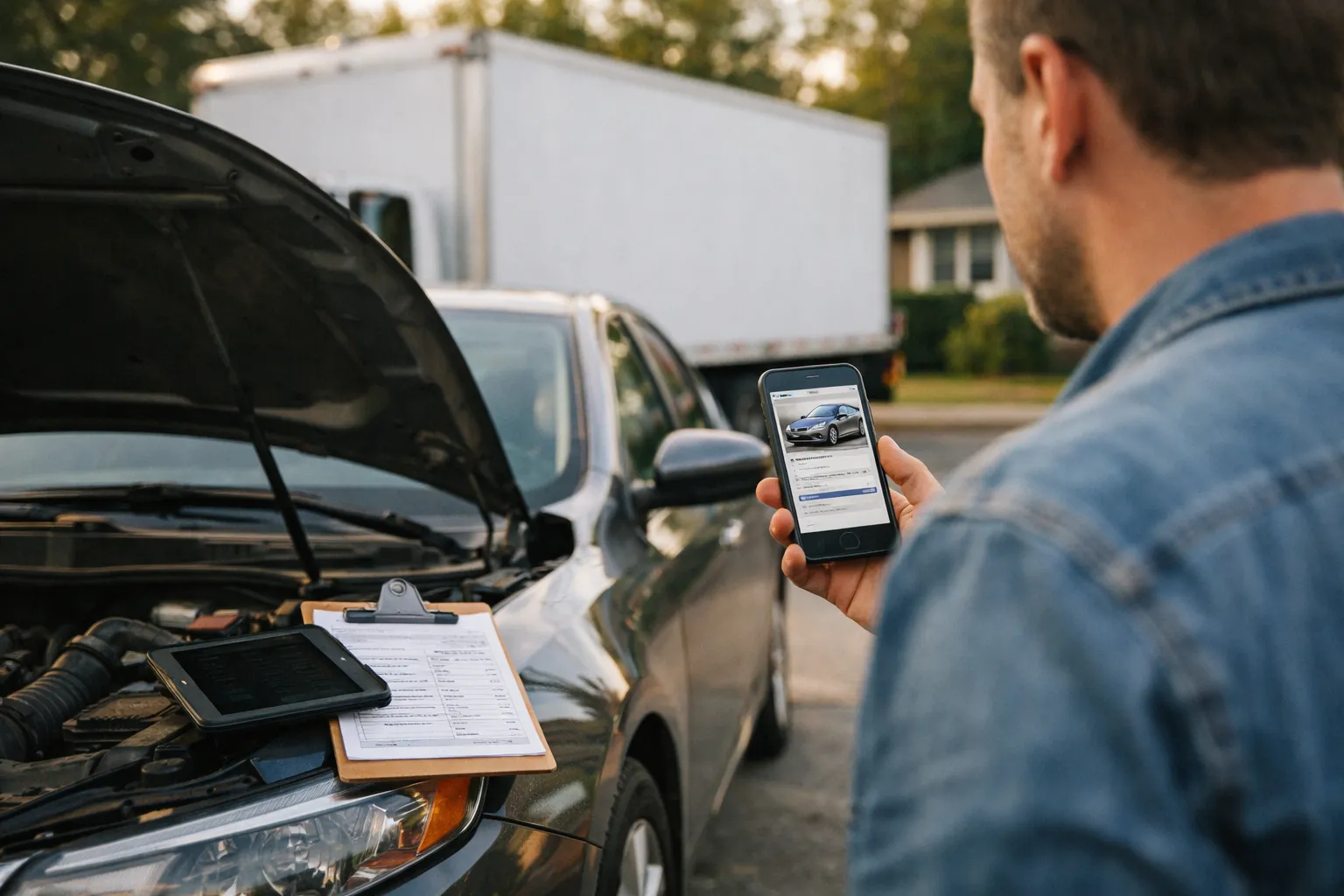
Online channels continue to dominate the used‑car market in 2026. This updated guide shows car‑buying enthusiasts how to buy a used car online today with the newest checks and tactics that matter right now: VIN and federal database checks, EV battery and software inspections, live remote inspections, state electronic title options, and realistic return‑window expectations.
Who this is for and why it matters
This guide is for experienced shoppers and enthusiasts who want to shop beyond local inventory while avoiding the specific pitfalls created by 2024–2026 developments: increases in used‑EV transactions, wider deployment of ADAS, more vehicle software/subscription features, and more sophisticated listing fraud. Follow this workflow to reduce surprises, preserve leverage and make an informed purchase.
Prerequisites / What you should know first
- You must have a smartphone or camera for timestamped photos and video at delivery.
- Obtain payment pre‑approval from a credit union, bank, or online lender before serious negotiations.
- Create accounts on comparison sites (Kelley Blue Book, Edmunds, Cars.com/TrueCar) and bookmark your state DMV, NHTSA recall lookup, NMVTIS and NICB VINCheck.
- If you’re shopping EVs or vehicles with advanced software, be prepared to ask for specific digital records: battery health, software version and subscription status, and telematics logs when available.
Step 1 — Define constraints, budget and technical must‑haves
- Total budget: Add purchase price, state sales tax, registration, shipping/delivery, an initial service (brakes/tires/fluids), and a 5–10% contingency for unexpected repairs. For EVs, add potential battery remediation or inverter replacement costs.
- Technical must‑haves: For EVs, minimum battery health (ask for usable capacity or state‑of‑health percentage), acceptable fast‑charge history, and presence of DC fast‑charge damage indicators. For cars with ADAS, insist on full ADAS functionality and records of any forward‑end repairs (collisions that may require camera/lidar recalibration).
- Geographic scope: Nationwide searching unlocks more choices but factor transport, out‑of‑state taxes, emissions or safety remediation and title transfer delays into your effective price.
Step 2 — Use VIN and federal databases to screen listings
VIN checks are still step one — but do more than run CARFAX. Use multiple sources and federal systems.
- Run three checks: CARFAX or AutoCheck, plus NMVTIS (National Motor Vehicle Title Information System) and NICB VINCheck to screen for salvage, theft or total‑loss brands. NMVTIS is the definitive federal title database for many states and catches title branding not always shown on dealer histories.
- Decode factory options: Use a VIN decoder and the manufacturer’s site to confirm trim and factory‑installed options. This matters for software bundles and ADAS equipment that may differ by factory option.
- Check NHTSA recalls: Use NHTSA’s VIN lookup for open recalls and whether recall remedies are completed.
Step 3 — Scrutinize photos, media and listing metadata
Listings have become more polished — and more prone to manipulation. Deepfaked or stock images are a real risk.
- Inspect EXIF metadata if available. Request original, uncompressed photos and short walkaround videos of the VIN plate, engine bay, odometer and each corner of the car. Live video calls with the seller are a useful deterrent to doctored images.
- Look for repair clues: misaligned panels, uneven gaps, mismatched paint tones under natural light, different wheel styles front to rear, and inconsistent wear on driver controls.
- For EVs, request battery charge cycles (if available) and a slow/fast charge history printout; for plug‑in hybrids ask for charging frequency and last full‑charge date.
Step 4 — When and how to order an independent pre‑purchase inspection
Independent inspections are now more flexible and digital: live, on‑site, or hybrid reports that combine photos, telematics pulls and test drives.
- Choose the right service: Use national providers (e.g., Lemon Squad, YourMechanic) that offer detailed reports and live‑stream options, or a trusted independent shop near the vehicle. For remote buys, preference services that record a video test drive and provide a downloadable report with timestamped photos.
- Inspection checklist: Frame and unibody integrity, suspension and steering, engine/transmission health, leak checks, battery/charging system for EVs, ADAS camera/lidar alignment and calibration, and electrical module faults. Request clear statements on immediate safety and recommended repairs with estimated costs.
- Make inspection a contingency: For private sales or dealer orders, require inspection approval before final payment and make deposit refundability conditional on passing the inspection.
Step 5 — Understand return windows and what they actually cover (2026 updates)
Many marketplaces expanded return options after consumer pushback in 2024–25. Still, scope and limits vary.
- Know the exact coverage: Some platforms now offer 7–30 day return windows; read what is covered. Mechanical‑only windows (major failures) differ from “any reason” windows. Ask for the written policy and the mileage allowance.
- Document on receipt: Record high‑resolution photos and a short video the moment the vehicle arrives. Time‑stamped media is often required for dispute resolution.
- Verify fees: Confirm restocking or transport fees, and whether refunds deduct reconditioning or usage charges. Keep all paperwork and any third‑party inspection reports.
Step 6 — Financing and payment strategy in mid‑2026
Interest rates and lender practices have stabilized compared with 2023–2024 volatility, but lenders have tightened appraisal and collateral rules for EVs and older vehicles.
- Pre‑approve first: Get a written pre‑approval from your credit union or bank. Compare the offer to dealer financing and the platform’s advertised rate. Pre‑approval clarifies your maximum loan amount and monthly payment target.
- EV underwriting: Expect some lenders to require battery records or a recent independent inspection before approving an EV loan over a certain age or mileage.
- Payment mechanics: For peer‑to‑peer sales use escrow or bank transfer and complete paperwork at your bank when possible. Avoid wiring funds without documented title transfer. For larger purchases consider escrow services integrated into the marketplace with buyer protection.
Step 7 — Negotiate online — updated tactics
Data is your leverage. In 2026, sellers expect requests for digital records and will price to include reconditioning, software updates and extended warranties.
- Request out‑the‑door pricing: Get an itemized OTD quote that lists prep, documentation, delivery, and any software transfer fees.
- Use inspection and telematics: If a pre‑purchase inspection or telematics report reveals issues, request a credit or fixes prior to delivery. For EVs, battery degradation above a threshold is a standard bargaining point.
- Ask about software subscriptions and transfers: Confirm whether features (navigation, connected apps, FSD or driver‑assist subscriptions) transfer with the vehicle, require re‑purchase, or can be transferred by seller/dealer.
Step 8 — Title, registration and state‑by‑state quirks (2026 specifics)
Electronic title systems grew in 2024–26. Many states now accept electronic transfers that speed processing; others still require physical paperwork.
- Verify title brand and transfer method: Confirm salvage, rebuilt or flood designations via NMVTIS. Ask how the seller will deliver the title and whether they’ll process the transfer electronically or via mailed paperwork.
- Temporary permits and compliance: If the vehicle will travel across states, confirm temporary tags, transit permits and emissions requirements. Some states require emissions testing or safety inspections before registration; budget for corrective work.
- Loan and lien payoff: For dealer sales with trade‑ins or vehicles with outstanding loans, require written confirmation that the lien will be released and the title clear before finalizing the sale.
Step 9 — Delivery, immediate inspection and documenting issues
When the car arrives, move fast—return windows are short and many remedies depend on timely reporting.
- Media sweep: Film a continuous walkaround showing the exterior, interior, VIN plate, odometer, engine bay and charging port (for EVs). Include cold start and a short road test if possible.
- Function checks: Test HVAC, infotainment, ADAS features, lights, windows, locks, and charging (if EV). Verify the odometer matches the listing and VIN stamped on the vehicle.
- Document discrepancies: If anything differs from the listing or inspection report, contact the seller immediately and open an official dispute via the platform or in writing for private sales.
Step 10 — If problems appear after delivery
- Act fast: Use the platform’s dispute channel if the seller is unresponsive. Provide time‑stamped photos, inspection findings and communications.
- Return procedure: Follow the seller’s written return steps exactly—many programs require pre‑authorization before any third‑party repair to preserve refund eligibility.
- Payment recourse: If you paid by card, your issuer may offer chargeback options for undisclosed defects or fraud. For financed purchases, review loan documents and notify your lender of any title or defect disputes.
Common mistakes to avoid
- Skipping NMVTIS and NICB checks because a CARFAX looks clean.
- Assuming software features (navigation, driver assists, subscriptions) automatically transfer with the vehicle.
- Declining an independent inspection on a higher‑value or EV purchase to “save money.”
- Accepting a headline price without an itemized out‑the‑door quote.
- Paying full price or wiring funds before title/lien paperwork is confirmed.
Pro tips
- EV specific: Ask the seller for a recent full‑charge and a DC fast‑charging log. If the seller can provide an OBD/telematics export or battery health report (SOC, Ah remaining), use it as a negotiation tool.
- ADAS and software: Request records of any forward‑end repairs and ADAS recalibration receipts. If the vehicle has subscription features, confirm whether the VIN is linked to a transferable account or if a new activation fee applies.
- Use time‑limited leverage: Make deposit returns and inspection outcomes explicit in writing. A signed contingency clause prevents disputes later.
- When buying private: Meet at your bank, confirm the title physically, and if possible, sign and transfer at the DMV or with a third‑party escrow to avoid scams.
Final checklist before you buy
- VIN checked through CARFAX/AutoCheck, NMVTIS and NICB VINCheck
- Manufacturer options decoded and NHTSA recall lookup completed
- Comparable pricing research (KBB, Edmunds, Cars.com/TrueCar)
- Independent inspection ordered or completed; for EVs, battery/charge history reviewed
- Itemized out‑the‑door price confirmed in writing
- Financing pre‑approval in hand and lender requirements for EVs clarified
- Title transfer method and lien status confirmed; return policy documented
- Delivery media and immediate function checks planned
Bottom line
Buying a used car online in June 2026 offers access to deeper inventory and competitive pricing, but it requires updated due diligence: federal VIN checks (NMVTIS, NICB), EV battery and telematics checks, verification of software/subscription transfers, modern inspection options (live or hybrid), and clear written contingencies tied to inspections and return policies. Follow this updated checklist and you’ll trade the frustrations of local shopping for a disciplined process that preserves leverage and reduces post‑delivery surprises.
Common Questions
Do I need a different checklist for used EVs?
Yes. In addition to standard VIN, title and inspection checks, insist on a battery health report or usable capacity estimate, a charge‑cycle history if available, DC fast‑charge frequency, and confirmation that any battery recalls or software updates are completed. Battery condition and repair costs are the largest determinants of used‑EV value.
How can I verify a seller's photos aren't doctored?
Request original high‑resolution photos with EXIF metadata or a live‑streamed walkaround. Ask for photos of VIN plates, odometer close‑ups, and the engine bay/charging port taken during daylight. If the seller refuses, treat that as a red flag.
What if a vehicle's software features require subscription fees after purchase?
Ask the seller whether features are tied to the VIN, the original account, or a transferable license. Some features (navigation, streaming or driver‑assist subscriptions) may require a new subscription for the new owner. Factor any activation or subscription costs into your offer.
Are remote inspections reliable?
Remote inspections that include a live‑streamed drive and a timed report are reliable when performed by reputable services. Prefer providers that deliver timestamped videos, a checklist of faults, and allow you to ask the inspector live questions. For high‑value purchases, consider a follow‑up on‑site inspection when possible.
What are the clearest red flags that should stop a purchase?
No VIN provided, refusal to allow an independent inspection, inconsistent mileage across records, late disclosure of a salvage/rebuilt/flood title (confirmed via NMVTIS), or absence of clear title/lien paperwork. Any of these should stop the transaction until resolved in writing.