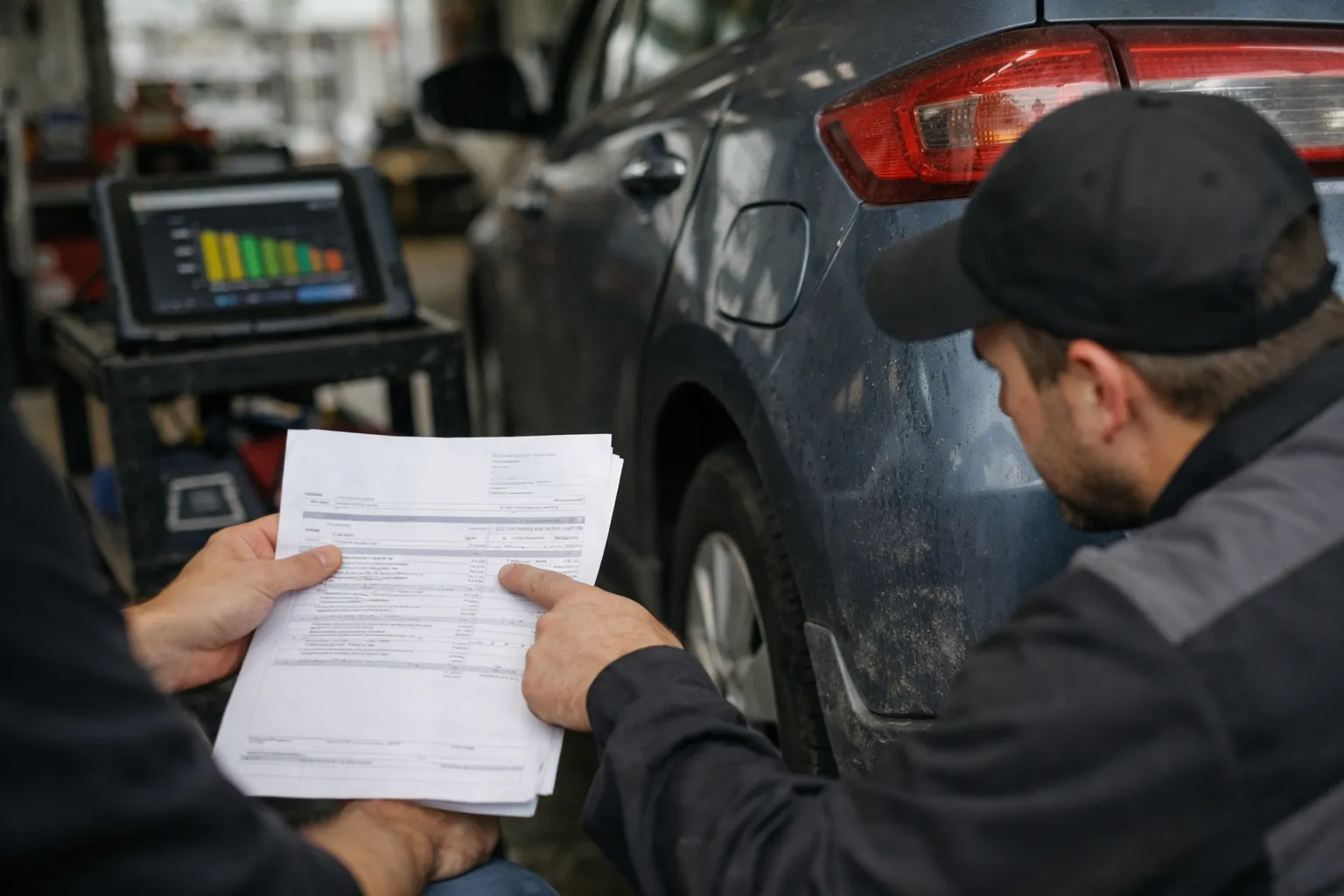
Buying a used electric vehicle whose battery pack has been replaced, remanufactured, or refurbished can be a smart way to get EV range and features at a discount—if you know exactly what to check. This updated November 2026 guide tells car‑buying enthusiasts what to demand, how to test, what to value, and when to walk away. It reflects mid‑2026 market and tech developments—broader OEM reman programs, better third‑party diagnostic tools, and more emphasis on battery traceability—so you can make a confident, evidence‑based purchase today.
Prerequisites / context: what’s changed by late 2026
Since early 2024 the used‑EV market has matured. Several OEMs expanded certified remanufacturing and warranty-transfer programs, third‑party remanufacturers consolidated, and consumer diagnostic tools (OBD-II/BMS readers and smartphone apps) became more reliable. Regulators and industry groups have focused on traceability and safety: in some regions digital battery trace records or “battery passports” are now offered by manufacturers or supply‑chain platforms. For buyers this means better documentation is increasingly available—but it’s still uneven by make, model, and geography.
What you need before you start shopping:
- A basic familiarity with model‑specific battery histories (e.g., past recalls or known failure modes for your model year).
- Access to a VIN lookup (NHTSA, Carfax/AutoCheck) and a smartphone app or OBD-II reader capable of reading battery health data for the vehicle you’re considering (examples below).
- A plan and budget for a specialist pre‑purchase inspection; expect certified inspections to cost $150–$600 depending on depth.
Step 1 — Know the types of battery work (updated terminology)
Classification matters because provenance and warranty differ sharply.
- OEM new pack: Full new pack installed by the manufacturer or authorized dealer. Typically best documentation and transferable OEM warranty.
- OEM remanufactured/refurbished pack: Pack rebuilt or remanufactured under OEM control or through a certified program; often carries a limited, transferable warranty and a serialized certificate.
- Certified third‑party remanufacturer: Independent companies that follow standardized reman protocols and provide serial‑tracked certificates; quality can approach OEM if certified.
- Independent refurb/ module swap: Repairs that replace modules or cells on a module level; may be cost‑effective but depend on detailed test data and durable documentation.
- Salvage repack: Packs recovered from salvage vehicles and rebuilt. Higher risk unless backed by a reputable builder with test logs and warranty.
Step 2 — Obtain and verify documentation (what’s new in 2026)
Documentation remains your primary defense. In late 2026, ask for and verify the following items—and ask specifically whether a digital battery trace or passport exists for the VIN.
- Service invoice(s): Dated invoice with installer’s business name, qualifications, part numbers, and pack/module serial numbers. If the work was done under an OEM program, ask for the OEM service order number.
- Warranty certificate: A copy showing issuer, serial numbers, start/end dates, mileage limits, transferability conditions and claim process. For certified reman packs, ask for the registration confirmation.
- Battery trace / passport: Where available, request the digital trace record (can show chain‑of‑custody, test results, and cell supplier). Not all vehicles will have one—if it exists it’s a strong positive.
- Recall & service history: VIN lookup (NHTSA VIN lookup in the U.S., OEM‑portal lookup elsewhere) showing completion of any battery‑related campaigns and whether the replacement was done under a recall or warranty program.
- Pre/post test reports: Printouts or PDFs of capacity test results, cell balance reports, internal resistance measurements, and thermal test logs. Accept only signed reports from the remanufacturer or technician.
- Photos and installation checklist: Time‑stamped before/after photos of the pack and a signed installation checklist where available.
Step 3 — Ask the right provenance questions
- Who performed the work? Get contact details—dealer service manager, remanufacturer, or shop owner—and call them to confirm dates and serial numbers.
- Was the replacement part OEM new, OEM reman, or a third‑party unit? Request the exact part or reman program name (this matters for warranty lookup).
- Was the vehicle a lease return, repo, crash repair, or salvage before repair? Salvage histories materially affect insurability and value.
- Can the seller provide original failure diagnostics and the replacement’s test data (capacity in kWh or percent SOH, internal resistance, cell‑to‑cell variance)?
- Is any registration or transfer step required to activate warranty? If so, demand proof it’s complete or that the seller will perform it before closing.
Step 4 — Verify warranty and transferability (updated checks)
Questions to resolve before you write an offer:
- Who issues claims—OEM or remanufacturer—and what are exact remediation steps (repair, module swap, full pack swap)? Confirm whether labor, towing, and rental are covered.
- Is the warranty VIN‑linked? Can the issuer already see the VIN in their system? Ask the issuer to confirm in writing by email or printout.
- What exclusions apply—e.g., use in commercial fleets, modified vehicles, or vehicles with prior flood damage? These frequently void third‑party warranties.
Step 5 — On‑vehicle tests to run or request
Paperwork is necessary but not sufficient. Run these checks yourself or supervise them.
Tools and apps to use
- Model‑specific apps and OBD tools: LeafSpy Pro (Nissan Leaf), Scan My Tesla (Tesla), Torque or manufacturer apps for other brands—these can provide SOC, estimated SOH, pack voltage, and per‑module voltages when supported.
- Portable BMS readers and certified diagnostic services: many shops can export OEM diagnostic logs and thermal event histories; insist on an exported file or printed summary.
Practical road and charge checks
- On a near‑full charge, drive a consistent local route (30–60 minutes) and compare observed range to expected real‑world range for that model and conditions. Look for unusual SOC drops.
- Observe DC fast‑charge acceptance and the shape of the charge curve. Sellers should allow you to view or record the charging session. Abnormal tapering, charging cutouts, or sudden acceptance drops can indicate cell imbalance or thermal protection events.
- Watch for thermal anomalies: unusual heat from underbody covers, dashboard thermal warnings, or repeated heating/cooling cycles on the BMS readout.
Professional inspection and invasive testing
For higher‑value purchases (late‑model vehicles, long road trips expected), pay for a specialist test:
- Authorized dealer or independent EV battery lab who can run a capacity/impedance test, inspect pack mounting, check coolant lines (if liquid‑cooled), and verify serial numbers.
- Ask for exported OEM diagnostic logs including BMS firmware version and a summary of any historical fault events. Firmware mismatches can be benign, but unexplained faults are a red flag.
- Some independent labs offer a “battery health certificate” after a charge/discharge test—expect costs in the $200–$800 range depending on depth.
Step 6 — Safety, regulatory, and legal considerations (2026 emphasis)
- Confirm the installation met local vehicle safety inspection rules. Many U.S. states and EU member states require re‑inspection for salvage or major battery work—get certificates if applicable.
- Check insurance and financing—some insurers and lenders have limits on vehicles with salvage history or non‑OEM repairs. Ask your insurer and lender before purchase.
- Ensure any battery‑related recalls on that VIN were closed. Use NHTSA VIN lookup (U.S.) or the OEM portal to confirm.
Step 7 — Value the car appropriately (current negotiation factors)
Valuation now factors in improved but variable reman options, more transparent diagnostics, and stronger buyer tools.
- Start with market comparables for the same model, trim, mileage, and condition with original pack.
- Adjust for replacement provenance and warranty: OEM new or certified OEM reman with transferable warranty usually commands a premium over unknown third‑party refurb units.
- Use documented replacement cost as a negotiation anchor. If the invoice shows a recent OEM pack replacement, paying near comparable market value is reasonable; if the work was third‑party with limited warranty, discount accordingly.
- Where you lack robust SOH data, budget a conservative contingency for future repair—25–50% of current replacement cost for risk‑averse buyers; reduce that if you have a certified capacity test.
Step 8 — Negotiation scripts and tactics (updated language)
- Incomplete documentation: “I’m interested but need the full service invoice, pack serials, and a transferable warranty confirmation before I can pay market‑rate. Without that I’ll adjust my offer to reflect replacement risk.”
- OEM reman with transferable warranty: “This reduces my downside. Let’s split the gap between comparable listings and the documented replacement cost given the shorter effective depreciation risk.”
- Third‑party refurb: “Give me the remanufacturer’s contact, test certificates, and proof of serial number cross‑check—or I’ll price in the cost and time to replace the pack.”
Red flags that should stop the deal
- No invoices, missing pack serial numbers, or inability to contact the remanufacturer or installer.
- Visible water intrusion, corrosion, or physical damage to the battery enclosure.
- Multiple battery replacements in the vehicle history without clear root causes.
- Nontransferable or immediately expiring warranty; missing recall completion records.
- Persistent BMS fault codes or unexplained software mismatches on a diagnostic export.
Closing checklist
- Collect all paperwork: invoices, warranty certificates, installation checklists, diagnostic export, and any digital battery trace record.
- Get a written seller statement about warranty transfer and prior battery issues; note this in the bill of sale.
- Confirm financing and insurance accept the vehicle’s history (especially salvage entries).
- Schedule a post‑sale inspection or re‑check within the first 30–90 days—some reman warranties require early verification.
Updated example (November 2026)
Scenario: a 2019 compact EV with 60,000 miles listed near comparable cars with original packs. The car shows an OEM remanufactured pack installed 18 months ago by a dealer under the OEM reman program; a 5‑year/50,000‑mile reman warranty is registered to the VIN and the VIN is visible in the OEM’s warranty portal. The seller provides the dealer invoice with pack serial number and a capacity test report showing 92% SOH post‑installation. With those documents an offer near market value is defensible because the OEM reman warranty materially reduces downside—confirm insurer and lender acceptance before closing. Contrast that with a vehicle that has a third‑party refurb invoice from an unknown shop and no transferable warranty: discount heavily or walk away.
Pro tips
- If possible, insist on a recorded DCFC session to capture the actual voltage/current curve—this speaks to cell balance and thermal response.
- Use model‑specific apps to read module voltages and cycle counts when supported—these often expose hidden issues earlier than aggregate SOH metrics.
- When buying from a dealer, ask whether the vehicle has been through a multi‑point EV inspection and request the full report; franchise dealers often have access to OEM diagnostic exports.
- For high‑value purchases, consider an independent battery lab test that simulates a partial discharge; it’s the single most definitive pre‑purchase test short of full teardown.
FAQ
Can I trust a third‑party refurbished pack if it comes with a short warranty?
Short warranties are better than none, but they vary widely. If the remanufacturer provides detailed test reports, visible serial numbers, a contactable business, and a warranty that covers meaningful remediation (module replacement or pack swap), a third‑party pack can be acceptable—especially at a reduced price. Without those items, treat it as high risk.
How do I get a usable battery health number (SOH)?
Use model‑specific diagnostic tools (LeafSpy, Scan My Tesla, or dealer diagnostics) to get module voltages, pack capacity estimates and cycle counts. For the most reliable result, pay for a certified capacity/impedance test from an EV battery lab; many labs provide a standardized SOH percentage with a test report you can use in negotiation.
What if the pack serial number is missing or the seller won’t provide it?
That’s a major red flag. Pack serials tie invoices, warranties and service records together. If the seller can’t or won’t provide them, either insist on having them produced before purchase or walk away.
Are salvaged packs always bad?
No—salvage packs can be safely remanufactured if rebuilt by a reputable facility with full testing and warranty coverage. The concern is documentation and insurance/finance acceptance. Salvage history often reduces resale value and can complicate coverage, so proceed with extra caution and insist on lab‑grade test reports.
How much should I discount the price for uncertain battery life?
There’s no fixed rule: conservative buyers often reserve 25–50% of current replacement cost as a contingency when SOH is unknown. If you have verified SOH and a transferable warranty, the required discount can be much smaller. Use the replacement invoice, warranty terms, and independent test data to quantify risk.
Final word
In November 2026 the tools and channels for buying used EVs with replaced or refurbished batteries are better than ever—but buyer diligence still determines outcomes. Insist on serialized documentation, a transferable warranty or clear certificate, a recent capacity or diagnostic export, and a specialist inspection when needed. With those pieces in hand you can capture real value from reman programs and reputable third‑party work; without them, the uncertainty is costly. Follow this checklist, and you’ll be able to buy confidently—or walk away with reasoned justification.