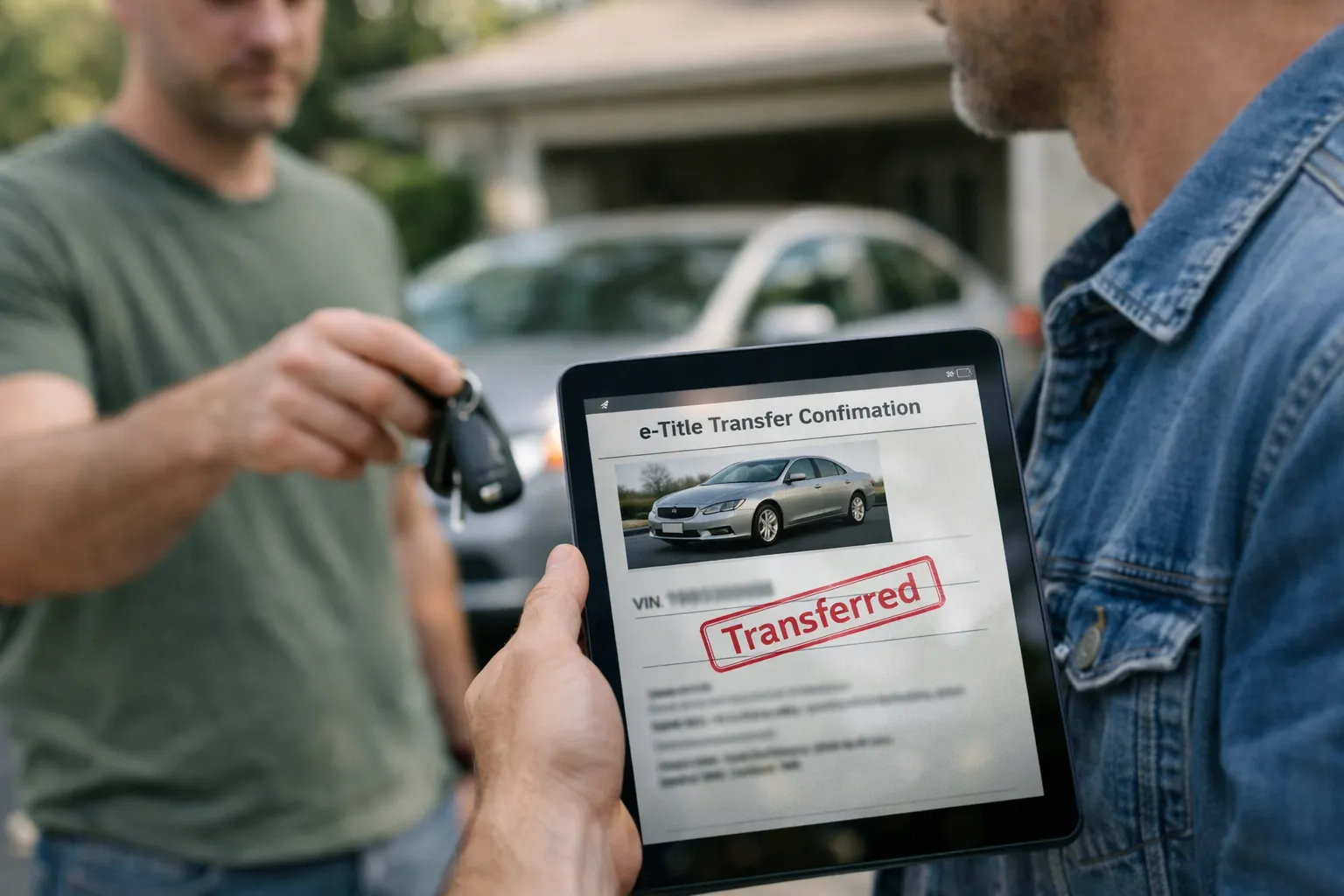
Who, what, when, where and why: As of October 2026, the interstate electronic vehicle title (e‑title) network — the federated infrastructure enabling state motor vehicle agencies, lienholders and marketplaces to exchange digital vehicle titles and lien records — has moved from early production pilots into broad operational use. Buyers, sellers and dealers in participating jurisdictions are seeing materially faster closings and fewer paper steps when both the buyer’s and seller’s states, the lender (if any) and the service provider are connected. This update explains what changed since June 2026, new risks and protections, and exactly what buyers should do today.
Why this matters now
Paper titles have historically delayed closings, introduced forgery risk and required in‑person DMV interactions. The e‑title network was designed to standardize electronic lien and title (ELT) exchanges and reduce those frictions. Between March and October 2026 the ecosystem progressed from pilot rollouts to substantive scale: dozens of state DMVs, a critical mass of national lenders and multiple major marketplaces completed integrations or announced staged production plans. For buyers, the practical result is that truly end‑to‑end digital transfers — from payoff to new‑owner title issuance — are now frequently completed within hours rather than days, when the transaction is fully in‑network.
What’s changed since June 2026
- Broad jurisdictional growth: More states and territories moved to production between July and September 2026. Public trackers maintained by state motor vehicle associations and participating DMVs show that adoption shifted from a small cohort of early adopters in spring 2026 to more than 30 jurisdictions in production by early October. That expansion increased the likelihood that cross‑state private sales can use an end‑to‑end electronic workflow.
- Significant lender integration: Several national banks, large indirect finance platforms and major captive finance arms completed ELT integrations in Q3 2026. Those integrations reduce the persistent stall where a lender’s manual lien release delays title issuance, and they enable automated payoff acknowledgments tied to e‑title transactions.
- Marketplaces and retailers went live: Multiple national online retailers and vehicle marketplaces announced live or staged e‑title workflows during summer 2026. Platforms integrating e‑title APIs now offer coordinated flows that tie funds release to a verified, VIN‑level title transfer in participating states.
- Operational metrics improved: State DMVs and industry groups report that, for fully connected transactions, median resolution times moved from multiple business days to same‑day completion; in several states the median fell below business‑hour thresholds when no out‑of‑network participant was involved.
- Regulatory attention increased: Consumer protection offices and state auditors began focused reviews of identity‑verification and fee disclosure practices in September 2026, prompting DMVs and marketplaces to tighten onboarding and public fee lists.
Specific coverage and current limits
Participation remains voluntary for states and lienholders, and important limits persist:
- Check both states and the transaction type: Not all transaction classes are supported in every jurisdiction. Salvage branding, court‑ordered title changes, some dealer and auction flows, and many out‑of‑country transfers continue to require paper processing.
- Smaller lenders may lag: While most large national lenders and major indirect finance platforms are integrated, community banks, small credit unions and private-party noteholders commonly remain on paper workflows.
- Partial integrations still occur: Some lenders can record liens electronically but cannot perform instant releases — creating temporary holdbacks that require manual follow‑up.
- Fee and disclosure variation: States and third‑party providers have implemented electronic processing fees (commonly $5–$25), and disclosure practices vary. Expect to ask explicitly who pays these fees and to see line‑item costs when using marketplace integrations.
Updated buyer benefits — and newly visible risks
What is materially different for buyers in October 2026:
- Faster, more predictable closings: When every participant is on the network, transfers and lien releases frequently resolve the same business day and often within a few hours.
- Better VIN‑level visibility: Real‑time title and lien status checks reduce the chance of unexpected liens or late salvage disclosures, provided you confirm the network transaction ID and final title record.
- Integrated escrow and conditional funds release: Escrow providers that integrate with e‑title APIs can condition disbursement on an explicit, verifiable title transfer event.
New or evolving risks to watch:
- Phishing and fake portals: Fraudsters continue to mimic DMV lookalike sites and marketplace notifications. Always confirm the domain, use bookmarks to reach your state DMV (.gov), and verify OAuth or identity‑credential exchanges.
- Identity‑proofing gaps: September 2026 audits flagged inconsistent identity‑verification across state portals and third‑party providers. Buyers should insist on two‑factor or multi‑factor verification flows before transferring funds.
- Fee surprises and split costs: With multiple service layers (state fee + provider fee + marketplace fee), buyers are still seeing unanticipated charges when parties do not confirm responsibility up front.
- Edge‑case operational holds: Partial integrations — for example, where a lender records liens electronically but requires a manual branch signature to release title — still create short delays and potential temporary registration gaps.
Practical checklist for buyers — October 2026 edition
Before you sign, wire money, or accept delivery, follow these updated, practical steps:
- Confirm state and lender participation today. Check both the seller’s and buyer’s state DMV e‑title pages and the AAMVA/network tracker for live status. Ask the seller which workflow will be used and request the lender’s integration confirmation or an electronic lien reference number.
- Use only verified integrations and official domains. Prefer in‑platform flows with OAuth, bank‑grade identity verification, or government‑issued digital credential prompts. Avoid links in unsolicited emails; navigate to your DMV via a saved bookmark or .gov domain.
- Require an e‑title transaction ID and VIN‑level proof. Insist on a transaction receipt that includes VIN, buyer name, timestamp and confirmation that liens were released. Hold funds in escrow until you can verify the VIN is listed to you in the issuing state’s title record.
- Prefer escrow services integrated with e‑title. If the sale is remote or high‑value, use an escrow provider that can verify an e‑title event before releasing payment.
- Ask about and budget for fees. Confirm who pays state e‑processing fees, marketplace fees and any expedited processing charges. Request a written fee allocation before closing.
- Document exceptions and keep paper backups. For excluded transaction types, retain notarized bills of sale, temporary registration, and any mailed lien releases until the definitive paper title is issued.
- Monitor post‑closing records. Check your state's online title record within 48–72 hours after closing and save screenshots/PDFs of the final record.
Reactions from stakeholders
State motor vehicle agencies continue to highlight operational gains while urging consumer vigilance. Industry trade groups point to measurable reductions in processing costs and cycle time. Consumer advocates have welcomed improved visibility but continue to press for standardized fee disclosures and consistent identity‑proofing protocols. In September 2026, a coordinating industry body reiterated that "e‑title promises faster and more secure transfers, but standardization of identity checks and fee transparency remain priorities."
Impact — who gains and who should be cautious
Private buyers, remote purchasers and dealers in participating states are the primary beneficiaries: fewer DMV trips, faster registration and less closing uncertainty when every participant is connected. Sellers benefit from quicker lien satisfaction and funds release. Buyers in states with low adoption, transactions involving small lenders, salvage cases or out‑of‑country transfers should remain cautious and expect paper steps.
What to watch next (and when)
- Late 2026: Expect additional announcements of state and lender production dates; watch your state DMV site for exact rollouts.
- Q1 2027: Anticipate more standardization around fee disclosure and identity‑verification following regulatory reviews initiated in September 2026.
- Marketplace rollouts: Platforms will continue staged expansions — check platform help pages for live state lists and lender coverage before assuming end‑to‑end digital processing.
What should you do today?
If you’re buying a car now, treat e‑title as an operational improvement that still requires buyer diligence: confirm jurisdiction and lender participation, verify portals and identity checks, insist on a VIN‑level e‑title receipt and use escrow for high‑value or remote purchases.
Frequently asked questions
How do I know if my state is on the interstate e‑title network?
Check your state DMV website for "e‑title" or "electronic titling" pages and consult the public tracker maintained by the American Association of Motor Vehicle Administrators (AAMVA) or your state DMV's interoperability status. If a marketplace or lender claims e‑title capability, ask for the specific state and production date for that workflow.
What if the car has a loan and the lender isn’t integrated?
If the lender has not integrated, the sale will typically require a traditional paper lien release or a manual branch process. Confirm with the lender how payoff and release will be delivered — electronic release, mailed release, or in‑person pickup — and plan for potential delays before funds are released.
Are e‑title transactions more secure against fraud?
E‑title reduces certain paper‑based fraud vectors by enabling real‑time checks and lender confirmations, but it introduces online risks such as phishing and account takeover. Always use official DMV pages, verify domain names, insist on multi‑factor authentication flows, and require a verifiable e‑title transaction ID and VIN‑level receipt before releasing funds.
Can I still get a paper title if I want one?
Most states that issue e‑titles still allow consumers to request a paper certificate for a fee. If you prefer or require a paper title for your records, ask your state DMV about the process, timelines and costs.