Overview
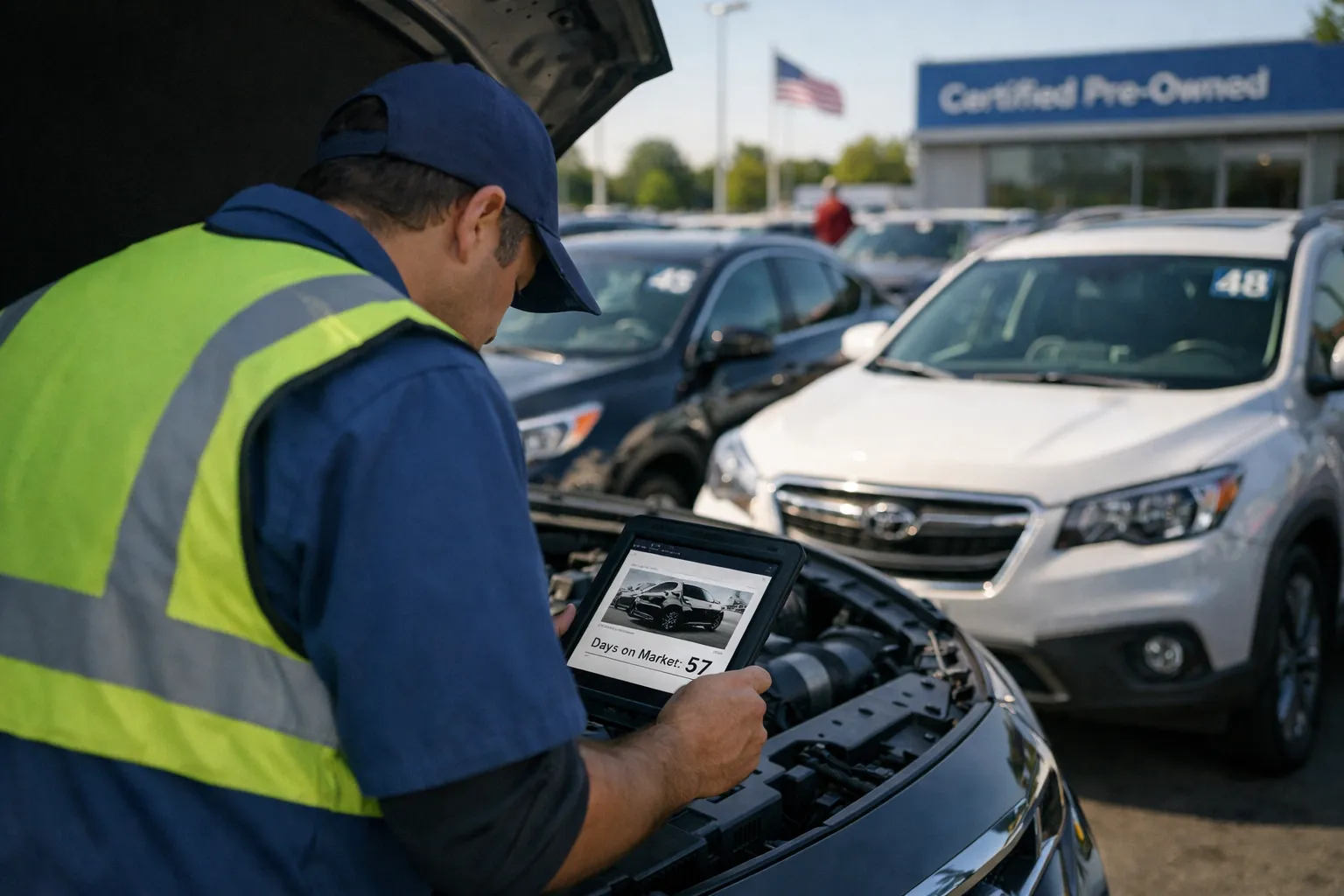
Used‑car shoppers in June 2026 still face substantial price differences for identical models across markets. One consistent — and often overlooked — driver is dealer operational timing: vehicles that sit in back‑lot reconditioning, recall queues or listing pipelines create "stale" inventory. That invisible stock compresses the pool of cars competing in real time, lifting asking prices and creating predictable negotiation windows. This update synthesizes the latest industry signals from 2025–mid‑2026, adds fresh examples, and gives practical, timely steps buyers can use today.
Background: why this still matters in 2026
The basic mechanics have not changed since earlier in the decade: dealers acquire used vehicles, perform mechanical and cosmetic work, clear titles and recalls, photograph and list. What has changed is the mix of forces around those steps. Rising interest rates through 2022–2024 tightened dealer floorplan behavior; ongoing EV adoption, more complex software/firmware work, and supply‑chain frictions for replacement parts lengthen some reconditioning timelines; and digital retail tools have reduced listing lag for some dealers but not uniformly.
As a result, visible marketplace inventory can understate available supply. The consequence is the same: fewer active listings relative to demand raises asking prices on the cars that are visible, while the inventory that ultimately reaches retail often follows a time‑dependent pricing path that buyers can exploit.
Data and evidence (industry signals through June 2026)
- Days on market remain a practical signal. Across major aggregator platforms, listing‑age remains a robust predictor of discounting behavior. Industry analyses through mid‑2026 continue to show that listings older than roughly two weeks have a materially higher likelihood of price reduction compared with new listings.
- Regional spreads persist. Major used‑car indexes (Manheim, Cox Automotive and national search data from AutoTrader/Edmunds) report that metropolitan price spreads for identical year/model/trim combinations continue to vary by hundreds to thousands of dollars between tight and loose markets. That variance tracks local dealer reconditioning capacity and demand seasonality.
- EV and hybrid models add reconditioning friction. Dealers and third‑party refurbishers report longer diagnostic and software‑update windows for battery electric and newer hybrid models because of additional diagnostics, battery health checks and manufacturer software provisioning. That has lengthened time‑to‑list for some EVs compared with comparable ICE models.
- Digital retailing narrows but does not eliminate delays. Larger dealership groups and digital retailers that invest in dedicated photography teams, in‑house service capacity, or third‑party batch reconditioning reduce listing delays. Independent and small-market dealers still show longer hold times, producing geographic arbitrage opportunities.
Fresh examples and context
Two patterns observed across markets in 2025–2026 illustrate the effect:
- High‑demand metros with quick turn. In sunbelt metros with tight retail demand, dealer groups increasingly prioritize rapid digital listing and "ready to buy" tags. Those markets show faster turnover but higher baseline prices — the supply is visible and competitive, so margins are smaller but velocity is higher.
- Smaller markets with staged inventory. In smaller regional markets, dealers more commonly queue vehicles for reconditioning and photography, sometimes waiting weeks to batch listings. That creates an artificial scarcity visible to national aggregators and can inflate asking prices on the limited listed units.
Real‑world illustration: several national dealer groups piloted centralized reconditioning hubs in 2025 to shorten turn times for high‑volume vehicles. Those hubs reduced time‑to‑list by days where implemented; the same model has not yet reached many independent sellers, maintaining regional disparity in list timing and price dispersion.
Multiple perspectives
- Dealers: Many dealers see reconditioning as an investment: better photos, full service history and certification can command higher prices and reduce post‑sale rework. They face tradeoffs between floorplan interest, shop capacity and retail pricing strategy.
- Buyers: Savvy shoppers view listing age, price history and "coming soon" signals as sources of leverage. For buyers willing to accept "as is" purchases or out‑of‑area transport, the opportunity set widens substantially.
- Platforms and online retailers: Aggregators have improved tools for surfacing listing age and price history; a handful of national digital retailers now offer guaranteed delivery windows tied to reconditioning status, shifting some negotiation toward upfront pricing models.
- Regulators and safety advocates: State DMVs and NHTSA emphasize that delays tied to open recalls or title issues are sometimes consumer‑protective — buyers should verify recall and title clearance rather than assuming delay equals inefficiency.
How stale inventory widens price gaps — updated mechanics
- Active supply compression: When a meaningful share of recently acquired vehicles sits off‑market for weeks, active supply on aggregator platforms understates total available stock, lifting visible asking prices.
- Staggered price discovery: Dealers who list early often test the market and later adjust. In 2026, platforms with transparent price history show a recognizable pattern: initial firmness followed by higher probability of discounting after roughly 10–21 days, depending on segment.
Actionable buyer tactics for June 2026
The core tactics remain relevant, but two developments are new: wider availability of "coming soon" feeds on aggregator apps, and more dealers offering limited "as‑is" pre‑market offers to move inventory quickly. Use both.
- Filter by listing age — and expand the window. Look for vehicles listed 10–30 days. In mid‑2026, many price reductions occur in that band; widen searches to nearby metros for added options.
- Use "coming soon" and dealer pre‑market inquiries. Contact dealers about cars in reconditioning. Some groups have policies to sell pre‑market at a small discount rather than continue paying floorplan interest.
- Prioritize VIN checks and recall status. Before making "as‑is" offers, check NHTSA recall data and manufacturer portals for open campaigns; for EVs check battery health reports where available.
- Factor transport, tax and certification costs precisely. Cross‑market arbitrage often survives after fees, but buyers should get firm transport and title estimates before making out‑of‑area offers.
- Time to dealer cash‑flow cues. End‑of‑month, quarter and fiscal year periods still correlate with increased dealer willingness to move slow stock.
- Use price‑history screenshots as leverage. Many dealers recognize that documented listing age and prior price drops provide a neutral, verifiable basis for offers.
Negotiation scripts — updated for 2026 realities
- "I see this car's been on your lot for X days and it’s listed as 'coming soon' — what’s your best out‑the‑door price if I take it today as‑is?"
- "If you can confirm there are no open recalls and I cover transport, what's the lowest you can do to move this unit before month‑end?"
- "This trim is priced Y in my market and Z in [nearby city]. Will you match a firm all‑in offer if I agree to immediate pick‑up?"
Implications — what this means for buyers right now
Understanding dealer timing remains one of the highest‑leverage, low‑cost skills a buyer can develop. Improved platform signals (listing age, price history, "coming soon") make timing strategies more actionable, but adoption is uneven. Buyers who combine patient monitoring with pre‑market outreach and rigorous VIN/recall checks can convert operational delays into consistent savings — especially in smaller markets or for EVs with longer reconditioning paths.
Outlook — what to watch next
- Wider rollout of centralized reconditioning hubs: If the trend that started in 2025 expands, turn times will compress in more markets and regional spreads may narrow.
- Standardized battery health reporting for used EVs: Broader adoption would reduce uncertainty and could speed listing for EVs, lowering reconditioning hold times.
- Platform transparency improvements: Expect more marketplaces to surface "coming soon" inventory and price‑history alerts; that reduces asymmetry but increases competitiveness for informed buyers.
Checklist — what to do today (quick reference)
- Search and filter by days on market; prioritize 10–30 day listings but watch for "coming soon".
- Set alerts for price drops and listing changes on target VINs or trims.
- Call dealers about vehicles in reconditioning and ask for pre‑market pricing.
- Always run VIN checks, recall lookups (NHTSA and OEM), and request any battery health diagnostics for EVs.
- Get firm transport and out‑the‑door quotes before pursuing out‑of‑area arbitrage.
Frequently asked questions
Why does a dealer hold inventory off the market?
Dealers hold cars for reconditioning (mechanical work, cosmetic detailing), to complete recall or title tasks, to wait for high‑quality photos and inspection reports, or because they're deciding whether to retail or wholesale the unit. These operational decisions reduce visible supply and can affect pricing.
Is it safe to buy a vehicle sold "as‑is" while it's still in reconditioning?
Buying as‑is can yield savings, but it's riskier. Always run a VIN history and recall check, ask for any available inspection documentation, and consider a pre‑purchase independent inspection if possible. For EVs, request battery diagnostic data where available.
Do digital retail platforms eliminate stale inventory problems?
Digital retailing reduces some delays by standardizing photography, pricing and paperwork, but implementation is uneven. Large dealer groups and national retailers benefit most; many independents still have multi‑day hold times. So stale inventory persists in parts of the market.
How much can I realistically save by timing my purchase?
Savings vary by model, market and how long the car has been listed. In practice, buyers who target 10–30 day listings, use price‑history alerts, and pursue pre‑market opportunities commonly save hundreds to low‑thousands of dollars on typical used vehicles, after accounting for transport and fees.
What should I watch for over the next 6–12 months?
Watch for broader rollout of reconditioning hubs, standardized EV battery reporting, and improved platform transparency around "coming soon" inventory and price history. Each will change the balance of timing leverage between buyers and dealers.
Understanding dealer timing — what sits unseen, why it sits, and when it will surface — remains a practical way to improve outcomes in the used‑car market. In June 2026, buyers who combine platform tools with direct dealer outreach and careful verification stand the best chance of converting stale inventory into a better deal.