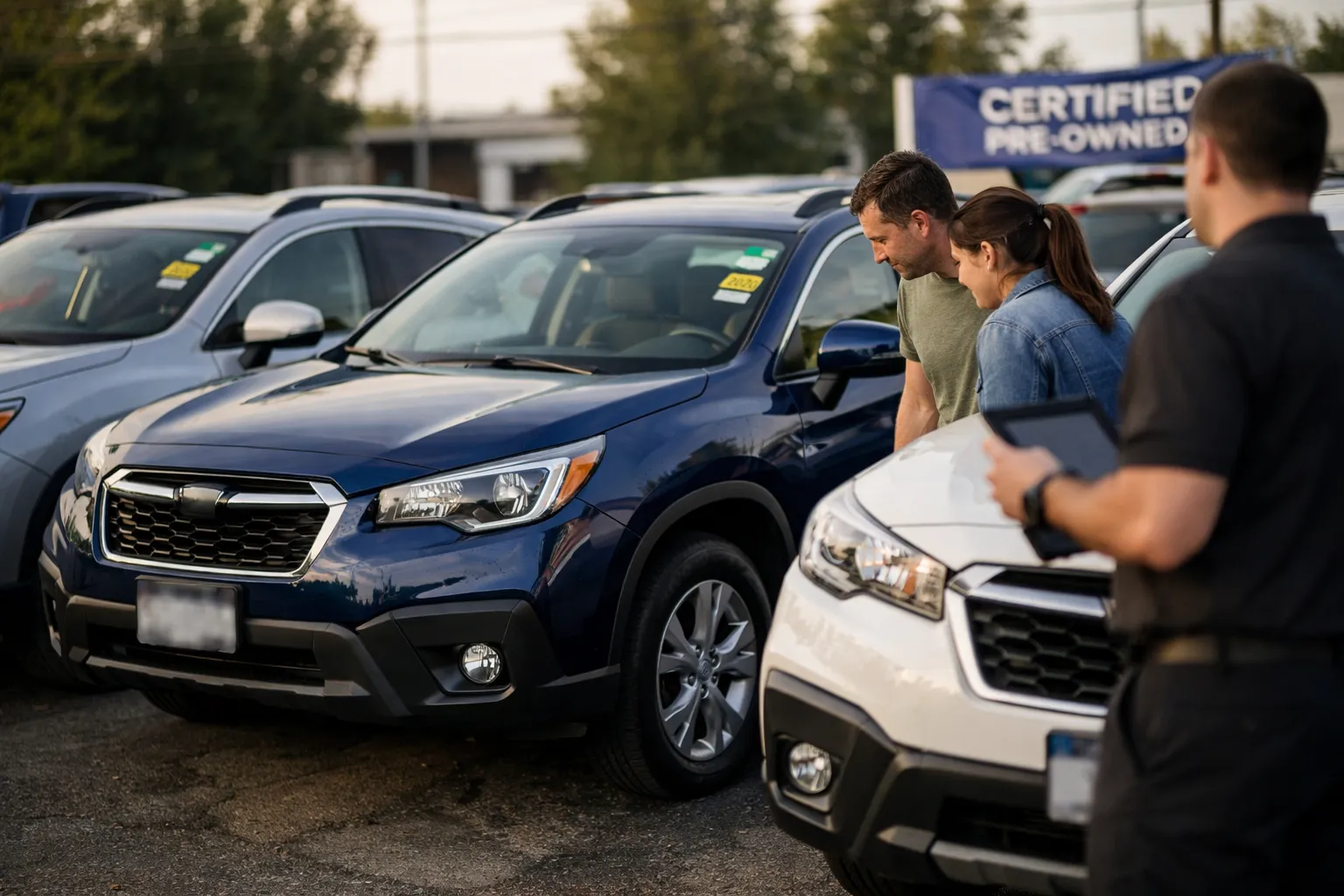
For buyers focused on monthly payments, reliability and long-term value, 2026 has crystallized a clear winner: two-year-old vehicles. This cohort — cars returned off-lease or traded by early adopters after short ownership — is trading at a price point that often beats new-vehicle deals when total cost of ownership is considered. The shift is not accidental; it results from a confluence of depreciation dynamics, changing lender behavior, inventory flows and buyer priorities. This analysis unpacks the market forces that made two-year-olds the “sweet spot” and explains how shoppers can exploit it.
Why two-year-old cars now outperform new and older used options
Several structural trends combined between 2024 and 2026 to move buyer preference toward near-new vehicles:
- Depreciation curve sweet spot. New cars take their largest hit in the first 12–24 months. By the time a vehicle is two years old, much of the immediate depreciation has already occurred, yet the car often still carries manufacturer warranty coverage and modern features.
- Off-lease supply glut. A large cohort of leases that began during earlier volumes reached maturity in 2024–2026. That produced a steady stream of low-mileage, well-documented two-year units into wholesale and retail channels, increasing buyer choice and price competition.
- Financing and loan-term dynamics. Lenders tightened qualification after the pandemic-era credit expansions but also extended maximum loan terms on used cars. The combination — slightly higher APRs on used loans but stretched terms — made monthly payments on near-new vehicles comparable to, or in some cases lower than, payments for base new cars with fewer options.
- New-car incentive normalization. When factory incentives and aggressive dealer rebates receded, the premium for buying new rose; near-new cars provided most of the benefits of a new car without the full invoice-to-retail markup.
- Buyer behavior focused on monthly cash flow. Buyers increasingly shop by monthly payment rather than total price. Two-year-old cars deliver modern tech and safety while lowering depreciation risk, aligning with this payment-centric approach.
Market mechanics: where the value comes from
To understand the appeal, look at the interplay of three levers that determine a buyer’s actual cost: vehicle price, financing cost, and retained value.
- Lower purchase price: Dealers and private sellers price two-year-old units below new MSRP to reflect past depreciation but above older-model prices because of low miles and remaining warranty.
- Competitive residuals: Many two-year-old cars keep a meaningful portion of their original value, especially models with strong brand reputations for reliability. That reduces long-term ownership loss in scenarios where buyers trade again after a few years.
- Financing trade-offs: While APRs for used-vehicle loans are typically higher than promotional new-car rates, the lower principal on a two-year-old car offsets some of that cost. Extended loan terms can make monthly payments comparable to new-car financing packages that require higher down payments or buy-rate commitments.
Put differently: buyers are often paying less up-front, borrowing a smaller principal, and preserving resale value — a powerful triad that narrows the total-cost gap with new cars.
Which cars benefit most from the two-year advantage?
Not every two-year-old car is equally attractive. The best candidates share three traits:
- Strong brand reputation: Compact SUVs, mainstream midsize sedans and certain trucks from manufacturers with high reliability ratings tend to retain more value.
- High original volume: Popular models that were widely leased or sold new create larger pools of clean, low-mileage two-year units.
- Minimal model-year refresh: Cars that did not undergo major redesigns in their third year keep parity with current new offerings, reducing obsolescence risk.
Examples: in 2026, mainstream compact SUVs and entry-level pickups are often the sweet spot because they combine strong demand, ample off-lease supply, and slower feature-driven obsolescence than luxury cars where software and feature updates move faster.
Risks and friction points buyers should watch
Two-year-old cars are compelling, but not risk-free. Buyers should guard against several pitfalls:
- Warranty gaps and software licensing: Some vehicles carry transferable factory warranties, others do not. Increasingly, OEMs tie advanced features to software subscriptions — a two-year-old car may lose access to certain telematics or premium features unless subscription rights transfer.
- Buy-back and recall backlogs: Rapid increases in recall work or prolonged buy-back processes can complicate purchases. Always check vehicle history reports and open recall status.
- Financing misconceptions: Longer loan terms reduce monthly payments but increase overall interest paid; buyers focused solely on monthly cash flow may end up paying more over the life of the loan.
- Condition variance: Not all two-year-old cars are low-mileage or dealer-maintained. With larger volumes flowing through wholesale channels, some units may have less compelling service histories.
How to shop two-year-old cars effectively
Buyers seeking the two-year sweet spot should follow disciplined steps to capture the benefits while minimizing risk:
- Prioritize certified and dealer-inspected units: CPO programs or dealer reconditioning give added protection; compare the premium to the value of included warranties and inspections.
- Verify software and subscription status: Confirm which connected services remain active, whether subscriptions are transferable, and whether key driver-assist features require ongoing fees.
- Run full vehicle history and warranty checks: Use VIN reports and contact the OEM for recall and extended-warranty transfer rules.
- Compare financing scenarios: Get pre-approvals for used loans and model the total cost over typical ownership horizons (3–5 years), not only monthly payments.
- Negotiate on total price, not just monthly payment: A dealer will often manipulate terms to reach a target monthly payment; anchor negotiations on a clear out-the-door price and APR.
- Consider insurance and registration costs: Two-year-old cars sometimes cost less to insure than brand-new equivalents with the same equipment; get quotes before you buy.
What this means for buyers and the broader market
The rise of the two-year sweet spot has broader implications. For dealers, it increases the strategic value of acquiring well-documented off-lease returns and investing in reconditioning operations. For lenders, it shifts underwriting focus: residual values and remarketing channels matter more than ever for used-vehicle exposure. For OEMs, the dynamic pressures a balance between encouraging new-vehicle sales and supporting healthy pre-owned channels.
For buyers, the takeaway is straightforward: if you prioritize modern features, lower depreciation risk, and predictable ownership costs, a well-chosen two-year-old vehicle often offers the best compromise between price and utility. The key is disciplined shopping — verify history, confirm protections, and model total ownership costs rather than chasing the lowest sticker price or monthly payment alone.
Bottom line
Two-year-old cars are not a fad; they are the product of predictable economic mechanics and inventory cycles converging at a time when buyers favor monthly affordability and modern features. In 2026, that combination made the near-new segment uniquely attractive. Savvy buyers who understand depreciation timing, review warranty and software transfer rules, and compare true total costs can find strong value in the two-year market.