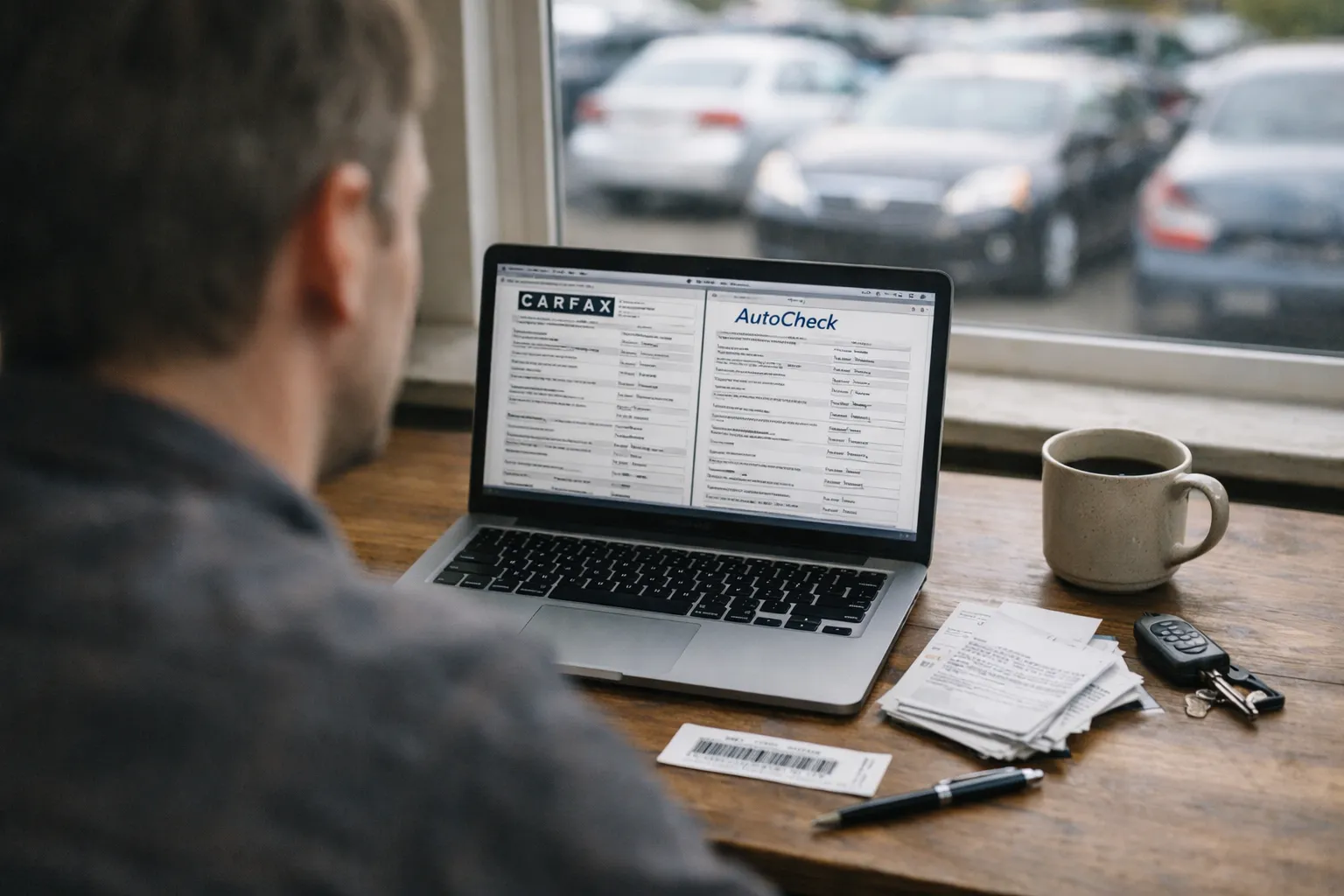
Running a vehicle history report is now a default step for many used-car buyers. Carfax and AutoCheck are the two names most shoppers encounter when they punch a VIN into a search bar. In August 2026 both remain dominant, but they differ in sources, presentation, and practical usefulness. This review evaluates their core features, strengths and weaknesses, pricing approaches, and which buyers should favor one report, both, or an alternative.
What each service does and how they differ
Both Carfax and AutoCheck aggregate title, registration, auction, insurance, and service data tied to a vehicle’s VIN. Both draw from state DMV records and national databases such as the National Motor Vehicle Title Information System (NMVTIS), plus commercial sources. Where they diverge is in emphasis and presentation:
- Carfax emphasizes narrative presentation: accident descriptions, service records, ownership history (e.g., number of owners, 1-owner notations), and branded-title alerts. Carfax also markets consumer-facing guarantees and a visual, scrollable report designed for non-technical users.
- AutoCheck (an Experian product) is built around its numeric AutoCheck Score and a more data-forward display. It tends to include large volumes of auction and title-brand data that dealers and wholesale buyers prioritize.
Data coverage and common patterns
What buyers commonly see in practice:
- Carfax often reports more service entries (oil changes, routine maintenance) because it aggregates many manufacturer and independent service records. That can give a fuller maintenance picture for the OEM-conscious buyer.
- AutoCheck frequently surfaces auction activity and title-brand histories (salvage, rebuilt, flood) earlier or more consistently in some VINs, because Experian has long-standing partnerships with auction houses and dealer data feeds.
- Neither report is comprehensive. Each depends on what was reported to the systems they access; gaps are common, and absence of a record doesn’t guarantee absence of issues.
Pricing, access and dealer integration
Both services offer consumer and dealer-facing purchase options:
- Carfax sells single reports and multi-report packages to consumers; dealers often integrate Carfax into their listings and provide reports to prospective buyers.
- AutoCheck offers single reports and subscription-style access; many dealers and auction platforms provide AutoCheck reports as part of the listing process. AutoCheck’s score is frequently shown on dealer inventory pages.
Because pricing and package structures change frequently, check each provider’s website for current per-report costs and subscription deals. In practice, dealers commonly provide whichever report they subscribe to—so availability can hinge on the seller.
Accuracy, false positives and data gaps
No vehicle history report is perfect. Expect three recurring issues:
- Delayed reporting: Titles, auctions and insurance claims can take weeks to hit centralized systems. A recent accident may not be visible.
- Incomplete service histories: If a service shop doesn’t upload records to a shared database, routine maintenance won’t appear.
- Mismatched VINs and false flags: Human or transcription errors can link the wrong event to a VIN—producing false positives such as an erroneous salvage flag.
For these reasons, both services include disclaimers and users should corroborate critical items (title brands, odometer discrepancies, major accidents) with state records, a certified inspection, or the seller’s documentation.
Consumer protections and guarantees
Carfax markets its Buyback Guarantee for certain title-brand problems it doesn’t report; the terms require that the title issue must be covered and meet eligibility rules. Read the guarantee details before relying on it as a safety net.
AutoCheck offers its own consumer-facing protections in some contexts, but its core proposition is a comparative score and wholesale/dealer integrations rather than a broad buyback promise aimed at retail buyers. Always verify the scope and exclusions of any advertised guarantee.
Practical advice: when to run which report
Here are guidelines tuned to common buyer scenarios:
- Private-party purchase: Run Carfax first for service and ownership narrative. If anything looks suspicious—salvage tags, odometer inconsistencies—run AutoCheck to see auction/title data and confirm.
- Dealer purchase: Ask which report the dealer provides. If only one is shown, request the other. Dealers frequently rely on AutoCheck for inventory economics, but Carfax can reveal complementary service history.
- High-value, late-model or low-mileage cars: Buy both reports. The incremental cost is small compared with the price premium of these vehicles, and discrepancies are more consequential.
- Electric vehicles: Neither report provides detailed battery health or state-of-charge degradation metrics. Use the history report as a baseline and get an independent battery-health and range test from a qualified EV technician.
Pros and cons — at a glance
- Carfax — Pros: user-friendly narrative, richer service-history presentation, consumer-focused guarantees in certain cases. Cons: can be more expensive per single report and may miss auction/title data.
- AutoCheck — Pros: concise score, broader auction and title-brand coverage, commonly used by dealers and wholesale buyers. Cons: less emphasis on service records and no single narrative to read like a timeline.
Bottom line: use the right tool for the risk level
For low-cost cars or early-stage browsing, one report (whichever the seller supplies) may suffice as a screening tool. But when the stakes rise—higher purchase price, private sale, flagged items in a first report—run both and follow up with NMVTIS, the state DMV, and a pre-purchase inspection.
In August 2026 the practical reality remains the same as it was earlier this decade: Carfax and AutoCheck are complementary rather than strictly competitive. Treat them as pieces of evidence, not definitive proof. When you combine VIN reports with visual inspection, independent mechanic checks, and state-title verification, you drastically lower the odds of an expensive surprise.
Checklist before you buy
- Obtain at least one VIN report; if anything is unclear or costly, get the other.
- Cross-check NMVTIS and state DMV title records for branded titles.
- Order an independent pre-purchase inspection, focusing on frame damage and, for EVs, battery health.
- Request maintenance receipts and compare service dates to reported odometer readings.
- Document everything and keep downloadable copies of the VIN reports in case title issues surface later.