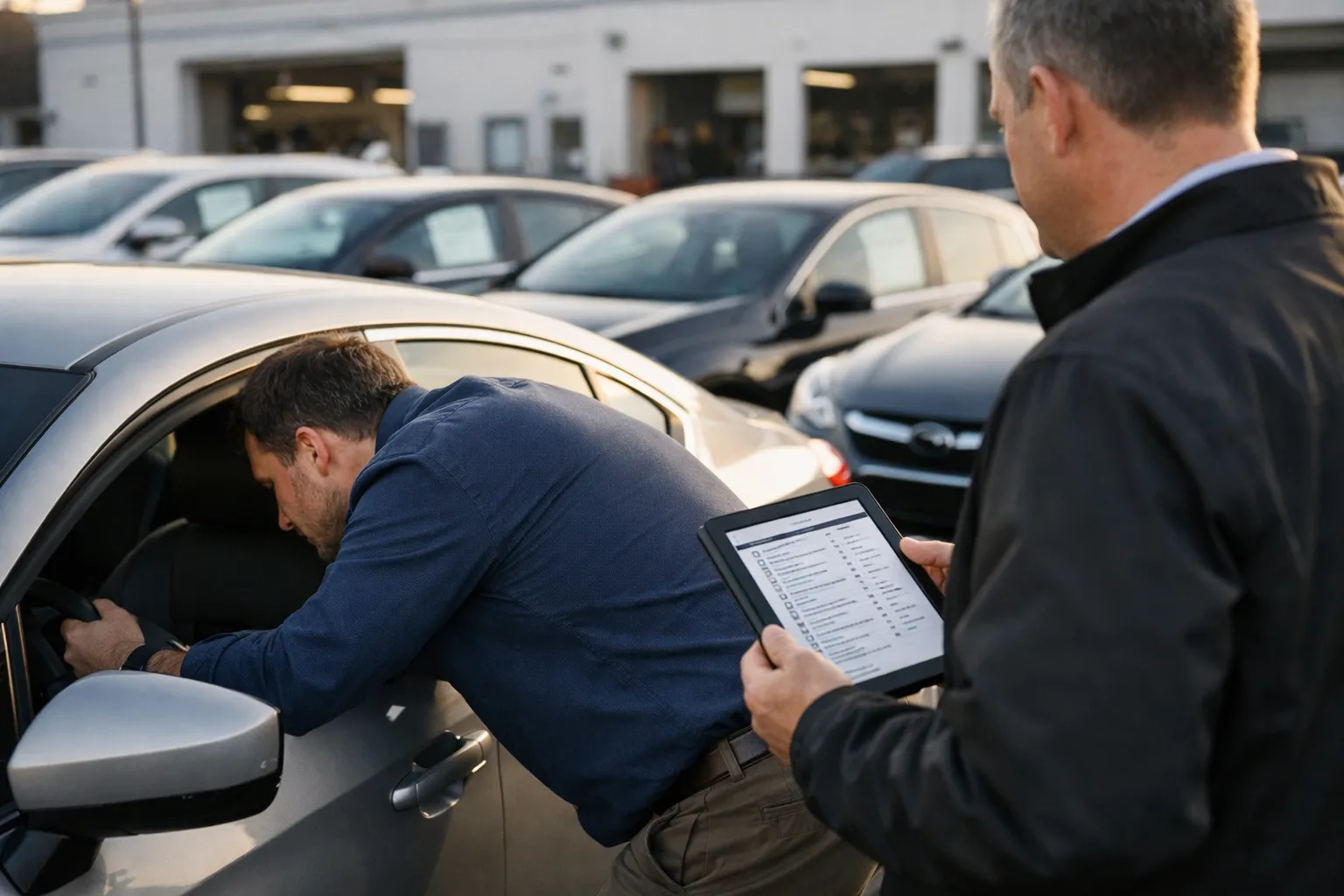
As lease maturities from the last several years roll off, off‑lease cars — late‑model, low‑maintenance vehicles returned at predictable mileage and condition — are a major part of the used‑car market in 2026. For car‑buying enthusiasts, ex‑lease vehicles can offer near‑new features, remaining factory warranty, and lower depreciation than new cars. But buying an off‑lease car also requires a disciplined approach: you must verify wear‑and‑tear, understand the dealer’s reconditioning work, and pick the right financing and warranty strategy.
Why consider an off‑lease car now
Off‑lease cars are typically 2–4 years old, often maintained on factory schedules and driven within typical mileage limits (commonly 10,000–15,000 miles per year on the original lease). That makes them attractive: newer tech, recent safety features, and much of the original powertrain and bumper‑to‑bumper warranty may still apply.
In 2026, many shoppers face higher interest rates and cautious new‑car incentives compared with pre‑pandemic years. An off‑lease purchase can be a good compromise: you avoid the steep depreciation of a new car while getting late‑model reliability and features.
Step 1 — Where to find off‑lease cars
- Franchised dealers: Manufacturer dealers commonly retail ex‑lease vehicles, either as certified pre‑owned (CPO) units or “as is.” Start at local brand dealers matching the car you want (Toyota, Honda, Hyundai, etc.).
- Large independent used‑car retailers: Carvana, Vroom and similar platforms list many ex‑lease cars; they make comparisons easy and often show full inspection reports.
- Third‑party sites and local listings: AutoTrader, Cars.com and TrueCar let you filter by model year, mileage and “one owner / lease return” terms in descriptions.
- Lease return programs: Some manufacturers list off‑lease inventory centrally (look for “manufacturer certified pre‑owned” or “ex‑lease inventory” pages on brand sites).
Step 2 — Do the research before you test‑drive
Before you visit, gather facts so you can assess price and condition efficiently.
- Market price check: Use Kelley Blue Book, Edmunds and NADA guides to get private‑party and dealer retail values for the vehicle’s year, trim and mileage. Compare a few sources.
- Vehicle history report: Check CARFAX or AutoCheck for title branding, accident history, service records and number of owners. Off‑lease cars are usually one owner but confirm.
- Warranty status: Identify remaining factory warranties and whether the vehicle qualifies for CPO. Register the VIN on the manufacturer’s site or ask the dealer for warranty end dates.
- Residual context: If the car is still under lease and you’re considering a lease takeover, find the lease residual (purchase option) and compare that buyout to market value.
Step 3 — Inspection checklist for test‑drive and walkaround
Off‑lease cars often have routine wear, but you should look for telltale signs of neglect or hidden damage. Use this checklist at the lot or before clicking “buy” online.
- Exterior: Check panel gaps, paint mismatch, mismatched bumpers, and uneven gaps that can indicate prior collision repairs. Inspect for rust, dents and curb rash on wheels.
- Tires and suspension: Confirm even tread wear across tires (uneven wear can indicate alignment or suspension issues). Bounce each corner — the car should settle quickly.
- Interior: Look for excessive wear on the driver’s seat, steering wheel, pedals and headliner. Smells of mold, heavy air freshener or dampness are red flags.
- Electronics: Test infotainment, Bluetooth, backup camera, adaptive cruise, blind‑spot monitors and power accessories on a test drive.
- Under the hood: Check for fluid leaks, corroded battery terminals and odd aftermarket parts. Ask for service receipts for scheduled maintenance.
- Test drive: Drive at highway and city speeds. Listen for clunks, chirps, rattles, and check braking smoothness and steering response. Verify transmission shifts without hesitation.
- Mileage vs. lease term: Compare odometer reading to typical lease mileage (often 12k–15k/yr). An ex‑lease with 30–45k miles on a 36–39 month lease is typical; verify there’s no odometer rollback evidence.
Bring a professional PPI option
Even if the car looks clean, pay for a pre‑purchase inspection (PPI) by an independent mechanic or a trusted local shop. Many shops offer standard PPI packages for a fixed fee and will return a written report covering engine, transmission, suspension, and any past repairs. Online retailers sometimes include inspection reports — verify the inspector’s credentials and ask follow‑up questions.
Step 4 — Price negotiation strategy
Dealers pay a wholesale cost when they acquire off‑lease cars, and they may add a markup for reconditioning, inspection, and profit. Your goal is to separate necessary reconditioning from dealer padding and to know your target price.
- Set your target: Base it on fair market value (KBB/Edmunds) for dealer retail for that trim/mileage. Subtract bargaining room (often 3–8% for used cars) and any visible defects you will need to repair.
- Ask for recon receipts: If the dealer claims extensive reconditioning, ask for itemized receipts. You should be willing to accept completed, documented work but question vague “reconditioning” fees.
- Use comparative inventory: Show listings for similar off‑lease cars in your area (or online offerings) to justify a lower price.
- Negotiate total out‑the‑door (OTD): Dealers may layer fees. Insist on a written OTD price including taxes, registration and documentation fees so you can compare offers cleanly.
- Scripted negotiation lines: “I’ve checked market retail for this year/trim/miles and am willing to pay $X OTD today.” If dealer counters with reconditioning: “Show me line‑item receipts for the work you claim.”
Step 5 — Financing, trade‑ins and incentives
Financing rates for used cars in 2026 are generally elevated compared with pre‑pandemic lows. Shop rates before you go to the dealer.
- Get pre‑approved: Secure pre‑approval from a credit union or bank so you know your rate and loan term. Credit unions often offer the lowest rates for used car loans.
- Dealer financing: Compare the dealer’s offer to your pre‑approval. Dealers can sometimes beat rates if they have promotional relationships with manufacturers, but verify the math and total cost over the loan term.
- Loan length caution: Avoid excessively long loans on used cars (84–96 months) — negative equity risk increases with term length. Keep payments affordable while protecting yourself from upside‑down loans.
- Trade‑in strategy: Get an appraisal from at least two dealers and consider selling your current vehicle privately if it yields more than trade‑in value. Use the appraisal as leverage in negotiations.
Step 6 — Warranties, CPO and extended coverage
One reason buyers pick off‑lease cars is remaining factory coverage. But coverage varies by make, model and mileage.
- Confirm warranty coverage: Ask for written confirmation of remaining bumper‑to‑bumper or powertrain warranty and whether the warranty is transferable without fee.
- Certified Pre‑Owned (CPO): CPO programs include multi‑point inspections, extended limited warranties and roadside assistance — they cost more but may make sense if you want longer coverage and a structured inspection program.
- Extended warranties: Consider third‑party or dealer extended warranties only after reviewing the factory remaining coverage, likelihood of repairs for the model, and the cost of repairs versus the price of coverage.
Step 7 — Final paperwork and post‑purchase steps
Complete these checks before you drive away.
- Title and registration: Ensure the dealer provides clear title or a proper bill of sale. If buying from a lease company, confirm the lease buyout has been processed and the title transferred.
- Odometer disclosure: Federal/state law requires accurate odometer disclosure on transfers. Verify the odometer statement is signed and correct.
- Service records: Get all available service records; ex‑lease cars often have factory‑scheduled maintenance records from the leasing period.
- Confirm promised work: If the dealer agreed to complete repairs or reconditioning before delivery, have those items written into the contract with clear completion terms.
- Insurance: Add the car to your policy and bring proof of insurance if required at pickup.
Common pitfalls and how to avoid them
- Hidden accident repairs: Some ex‑lease cars with earlier collisions may have been repaired. A thorough PPI and vehicle history report reduce this risk.
- Reconditioning markups: Dealers sometimes charge vague “reconditioning” fees. Ask for line‑item receipts and decline unnecessary items like expensive “paint protection.”
- Warranty misunderstandings: Don’t assume all factory warranties are transferable or that CPO status is automatic. Confirm in writing.
- Long loan terms: Stretching loan terms to match a payment target increases interest paid and negative equity risk. Prioritize shorter, affordable terms.
When to buy and when to walk away
Buy an off‑lease car if it meets these criteria: market price aligns with fair retail after negotiation; a clean vehicle history and PPI; remaining or extended warranty that matches your risk tolerance; and financing terms that make total ownership cost acceptable.
Walk away if the inspector finds structural damage, the seller can’t prove service history, the dealer can’t substantiate reconditioning, or the OTD price exceeds comparable listings notably. With plenty of off‑lease inventory in most markets, patience usually pays off.
Quick checklist for buying an off‑lease car (printable)
- Market value checked (KBB/Edmunds/NADA)
- Vehicle history report retrieved and reviewed
- Remaining factory warranty confirmed in writing
- On‑lot inspection checklist completed
- PPI scheduled and completed
- Recon receipts requested (if claimed)
- Pre‑approved financing obtained
- OTD price written before any down payment
- Title/odometer paperwork verified at signing
Off‑lease cars are a practical way to access late‑model tech, strong reliability and moderate pricing in 2026, but they reward the buyer who does homework. Use the steps above to compare values, verify condition, and negotiate from a position of knowledge. If you prioritize transparency and a documented inspection, an ex‑lease can be one of the smartest buys in today’s used‑car market.