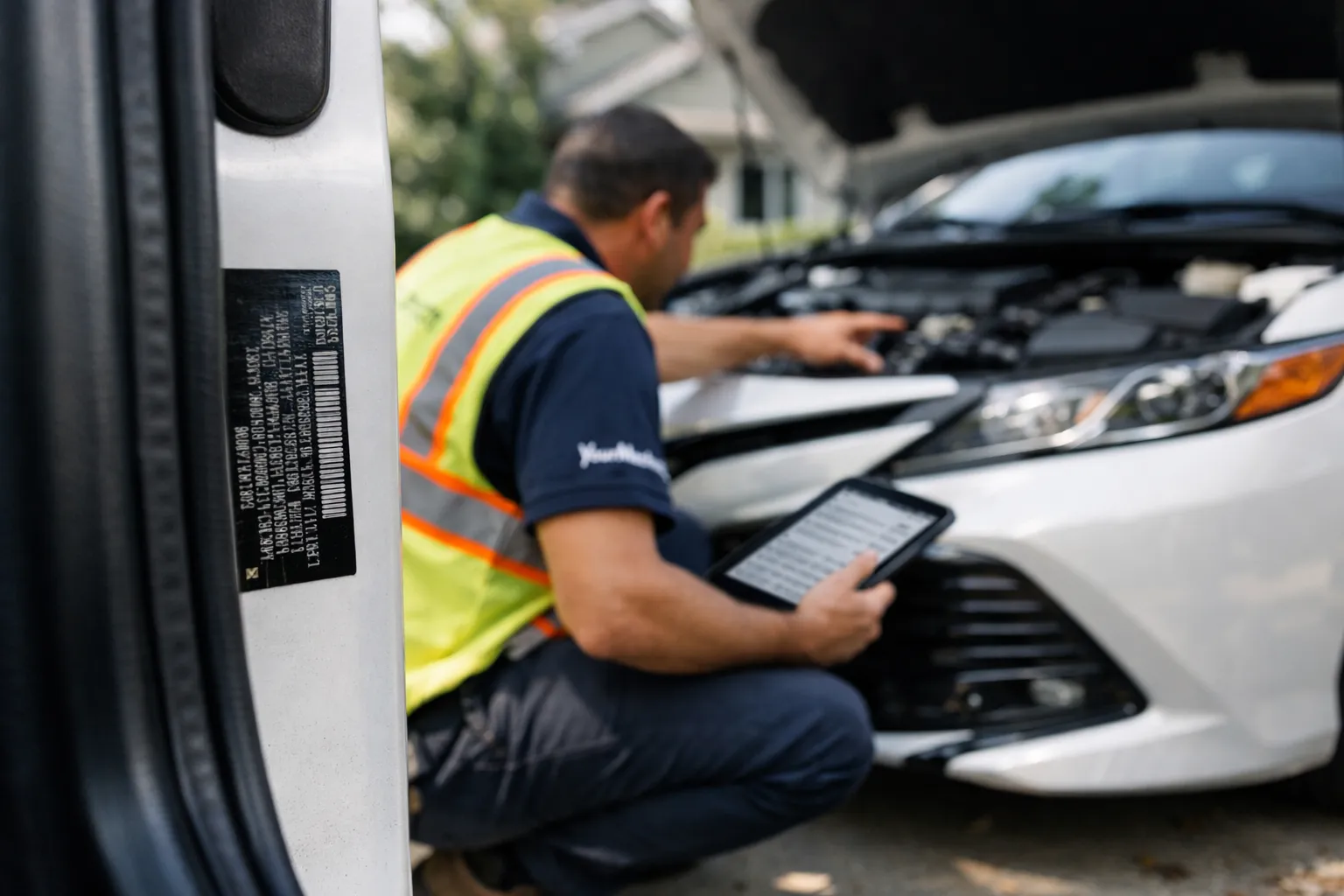
When you’re buying a used car in 2026 — private-party or dealer trade — an independent pre-purchase inspection remains one of the best ways to avoid a costly mistake. YourMechanic, long known for mobile maintenance, now positions its nationwide network as a go-to for on-site pre-purchase inspections. This review examines what the service actually delivers in 2026: scope, pricing, report quality, EV capability, limitations and the buyers for whom it makes the most sense.
What the service offers
YourMechanic’s core pre-purchase product is a mobile inspection performed at the vehicle’s location (seller’s driveway, dealer lot, etc.). Key elements in 2026 include:
- Online booking with upfront pricing and the ability to select a time/place.
- A standardized checklist covering exterior, interior, underhood, brakes, suspension, fluids, lights and a road test where safe and permitted.
- Photo-rich digital reports delivered via email and the YourMechanic app — typically with annotated photos, a condition summary and recommended repairs or estimated costs.
- Access to ASE-certified mechanics in most metro areas; background checks and customer ratings are available on many inspector profiles.
- EV-specific items in many markets: charging port inspection, inlet condition, on-board charger checks, and basic regenerative-braking function tests (note: deep battery state-of-health, high-voltage pack teardown or cell-level diagnostics are not performed).
What we tested and how
To evaluate the service, I booked two inspections in June 2026: a suburban private-party listing for a 2018 Toyota Camry (95k miles) and a dealer trade for a 2020 Hyundai Kona Electric (53k miles). Bookings were completed online, one within 24 hours and one in 48 hours. Inspectors arrived on time, used tablets to log findings, and delivered reports the same day. I assessed thoroughness, clarity of the report, photographic documentation, and the inspector’s ability to spot issues a buyer would care about.
Strengths
- Convenience and access. The mobile model is ideal when you can’t get the seller to a shop. For private-party sales this is invaluable: the mechanic meets you at the car and inspects on the spot.
- Standardized, photo-backed reports. Reports are concise, with photos of key problem areas (tire wear, leaks, corrosion). That documentation is useful in negotiating price or walking away.
- Inspector credentials and accountability. Many inspectors list ASE certifications and real customer ratings; you can select a higher-rated tech in many markets.
- EV awareness. Compared with older mobile inspections, YourMechanic’s 2026 checklists include charging and basic EV-system checks in most urban areas — a practical improvement given rising used-EV inventory.
Limitations and caveats
- Not a garage lift inspection. Mobile inspections can’t fully replace a shop inspection with a lift and diagnostic equipment. Undercarriage issues, frame damage, and some suspension problems can be missed without a full hoist.
- Battery/pack depth for EVs. Inspectors perform visual and functional checks for EVs, but in most cases they cannot provide an OEM-level battery state-of-health (SOH) readout. For higher-value EV purchases we still recommend a dealer or OEM diagnostic for battery SOH verification.
- Inspector variability. While many mechanics are highly capable, individual thoroughness varies. The service model relies on local contractors; a highly rated inspector is worth the extra effort to select.
- Rural coverage gaps. Availability and response times are best in major metros; in some rural areas booking windows can stretch several days.
Pricing and value
As of mid-2026, inspection fees generally range by vehicle type and market. Expect economy sedans to fall toward the lower end and large trucks or specialty vehicles toward the higher end. Typical pricing in my sample cities was in the $150–$275 range. For comparison, a local independent shop lift-and-inspect can be similar or cheaper, but lacks the convenience of on-site inspection.
Value depends on your priorities: if you need a quick, documented assessment for negotiation or peace of mind when buying private-party, the fee is easily justified. For high-value purchases and EVs where battery health is decisive, budget for an additional shop- or dealer-level diagnostic.
When to choose YourMechanic
- Buying private-party in a metro area. The convenience of a mechanic coming to the seller is the platform’s strongest use case.
- Time-constrained buyers. If you’re traveling or can’t commit to a shop visit, a mobile inspection fills that gap.
- Negotiation leverage. The photo-backed report provides objective grounds for price negotiation or a contingency walk-away.
When not to use it (or when to supplement it)
- If you’re buying a high-value vehicle where a full lift and diagnostic scan are warranted, book the shop inspection as well.
- For used EVs older than four years or with suspect range degradation, arrange a battery specialist or OEM diagnostic in addition to the mobile check.
- For classic cars or vehicles with suspected structural or collision history, a frame specialist and paint-depth inspection at a shop is preferable.
Practical tips when booking
- Choose a highly rated inspector when available — the platform shows customer ratings.
- Ask the inspector in advance whether a road test is possible; some sellers or dealers deny it.
- Set expectations about EV checks: ask if the inspector will attempt a basic battery report and whether they have an OBD2 EV scanner for that make.
- Use the report to request repairs, a price reduction, or to walk away — the documentation strengthens your negotiating position.
Verdict
YourMechanic’s at-home pre-purchase inspection is a practical, well-documented option for most used-car buyers in 2026, especially those buying from private sellers or who need a quick, on-site assessment. The service scores high for convenience, report clarity and overall usability. Its limitations — most notably the lack of lift-based inspections and OEM-level EV battery diagnostics — mean it shouldn’t be the sole step for high-value buys or for prospective EV owners demanding a full battery health warranty.
Bottom line: for everyday used-car purchases, YourMechanic is a smart, time-saving investment. For expensive, high-stakes, or EV purchases where battery life is central, use it as an initial filter and follow up with shop- or dealer-level diagnostics when warranted.