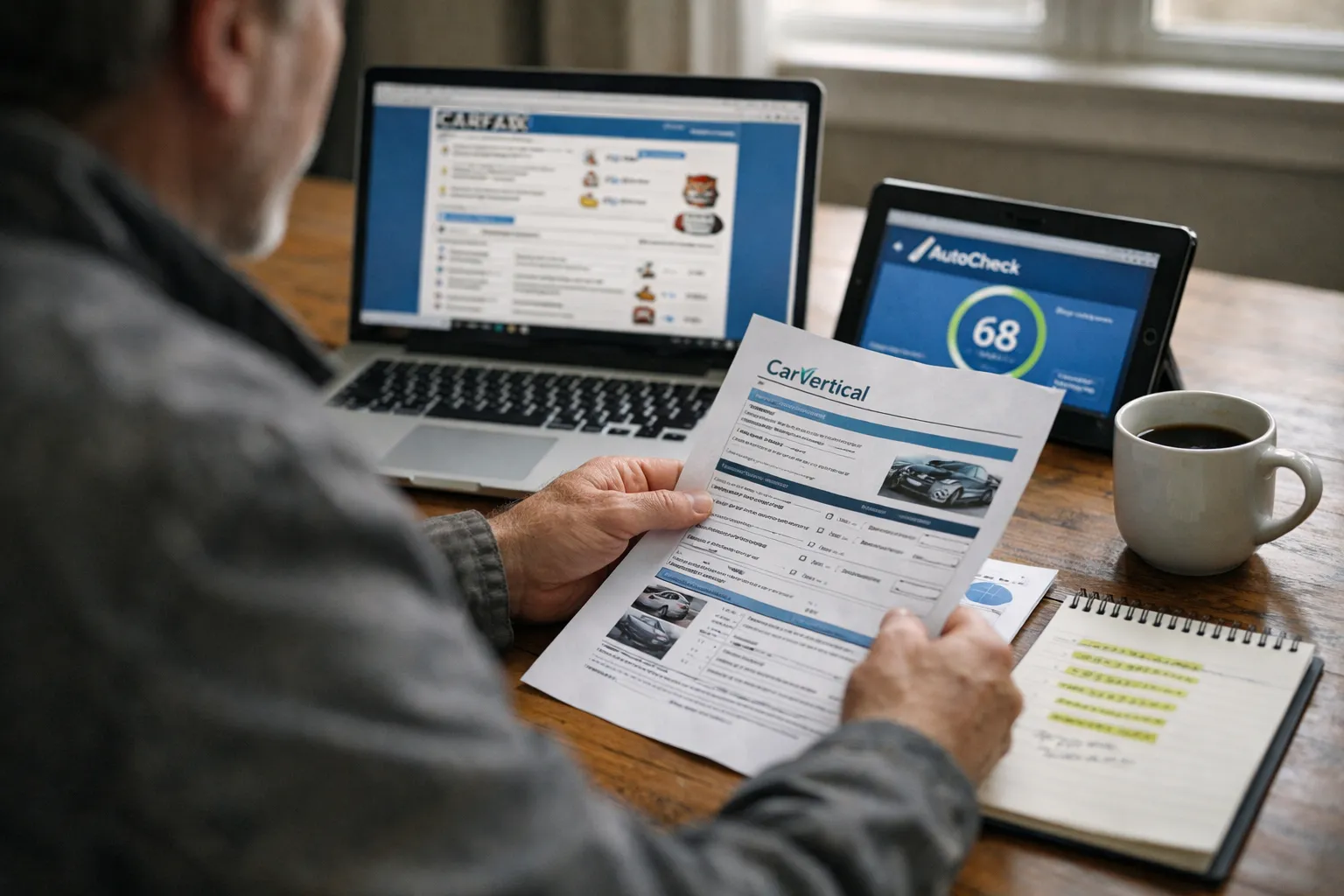
Vehicle‑history reports are a staple of the modern car‑buying checklist. In 2026, with cross‑border imports, a still‑active market for older combustion vehicles, and a growing stock of battery‑electric vehicles (BEVs) on the used market, the choice of which VIN report to trust matters more than ever. This review compares three of the most commonly used services — CARFAX, AutoCheck and CarVertical — across data depth, coverage, EV and battery handling, usability and value for different buyer profiles.
How we tested
To evaluate each provider we ran a set of real‑world checks on a range of sample VINs representative of vehicles that frequently raise questions for buyers: a mainstream U.S. sedan, a full‑size pickup, and a European luxury model that had a history of cross‑border ownership. We examined the level and type of records surfaced (service, auction, title brands), the clarity of risk flags (salvage, flood, odometer issues), how EV or hybrid items were handled, and the practical features buyers will encounter on the website or report PDF.
Quick summary — which to use
- CARFAX — best for dealer/service records and a broad U.S. footprint; good first stop for retail buyers.
- AutoCheck — strongest for auction and wholesale data and its AutoCheck score; useful when evaluating vehicles with auction histories.
- CarVertical — fills gaps for imported and European vehicles and emphasizes international and blockchain‑claimed sources; a worthwhile second opinion for imported cars.
CARFAX: strengths and limits
CARFAX remains the most recognizable brand in vehicle‑history reporting. Its strength lies in dealer and service records: maintenance entries, inspections and some repair invoices from dealer networks and franchised service shops often appear here first. CARFAX also integrates manufacturer recall information and offers a consumer‑facing "buyback" guarantee in eligible cases, which adds reassurance for retail buyers buying from dealers.
- Pros: Strong U.S. service/repair coverage; easy interface; widely accepted by dealers and many marketplaces.
- Cons: Coverage gaps for auction and wholesale events; less comprehensive for some title branding and international records; limited EV battery diagnostic detail.
AutoCheck: strengths and limits
AutoCheck, backed by Experian, leverages extensive auction and wholesaler feeds. That makes it particularly good at surfacing incidents that occurred in dealer channels or at auctions — especially important if the vehicle spent time in wholesale lanes before retail. AutoCheck's numerical AutoCheck Score is a fast‑scan tool that helps compare similar makes/years, which some buyers find useful.
- Pros: Strong auction/wholesale data; clear scoring system for quick comparisons; often flags title brand changes earlier than others.
- Cons: Less emphasis on full dealer service histories; score can oversimplify nuanced issues; not as strong on international import histories.
CarVertical: strengths and limits
CarVertical started with a focus on international and cross‑border data aggregation and has positioned itself as the go‑to for imported vehicles. It highlights records from European databases and claims to use decentralized ledger proofs for some entries. For buyers shopping for imports, ex‑European cars or models with foreign‑market service, CarVertical frequently surfaces records that U.S.‑centric databases miss.
- Pros: Better international/import coverage; useful for ex‑European or cross‑border vehicles; different source mix can reveal hidden flags.
- Cons: U.S. dealer/service coverage is not as deep; interface and report detail vary by VIN; EV battery specifics remain limited.
EVs and battery history — where all three fall short
None of the three services provides comprehensive, manufacturer‑level battery health logs the way a dealer diagnostic can. Reports may list battery replacements recorded as service entries or title brands tied to major damage, but granular state‑of‑health data — cycles, usable capacity, cell replacements — is not standard in public VIN reports as of mid‑2026. Buyers of BEVs should treat these tools as part of the screening process, not the definitive battery check. A post‑purchase dealer diagnostic or a paid third‑party battery health test remains essential.
Price, packaging and practical use
All three providers offer single‑report purchases and multi‑report subscription packages. Practical workflow for buyers: run at least two reports on any used vehicle you’re seriously considering. If a vehicle has auction exposure, include AutoCheck. If it was imported or registered internationally, add CarVertical. For dealer‑sold used cars, CARFAX often supplies the most familiar and easily interpretable logs for negotiations.
Common discrepancies and what to do about them
- Title branding appears in one report but not another: trust NMVTIS (U.S. federal title database) and the state title office; request the dealer show the actual title history.
- Service records differ: ask for service invoices; many buyer protections rest on documented maintenance.
- Odometer or accident inconsistencies: obtain an independent pre‑purchase inspection and a mechanic’s estimate of structural or frame repairs.
Verdict — layered reporting is smarter than a single read
No single VIN report is perfect in 2026. For most U.S retail buyers buying domestically, CARFAX is the most immediately useful starting point because of its dealer and service coverage and consumer protections. For any vehicle with auction history, add AutoCheck. For imports or European cars, add CarVertical. For EV buyers, supplement VIN reports with a dedicated battery health check and a professional inspection.
Actionable checklist for buyers
- Run at least two different VIN reports before negotiating — CARFAX + AutoCheck, or CARFAX + CarVertical if imported.
- Cross‑check title status with NMVTIS or your state DMV.
- Always get an independent pre‑purchase inspection; for BEVs, include a battery health diagnostic.
- When reports conflict, request original service invoices and call past service providers listed on the reports.
Bottom line: VIN reports remain indispensable but imperfect. Use them as complementary tools — different providers surface different data streams. A layered approach, combined with inspection and title verification, gives buyers the best protection in a 2026 used‑car market that increasingly mixes domestic, auction‑sourced and imported vehicles.