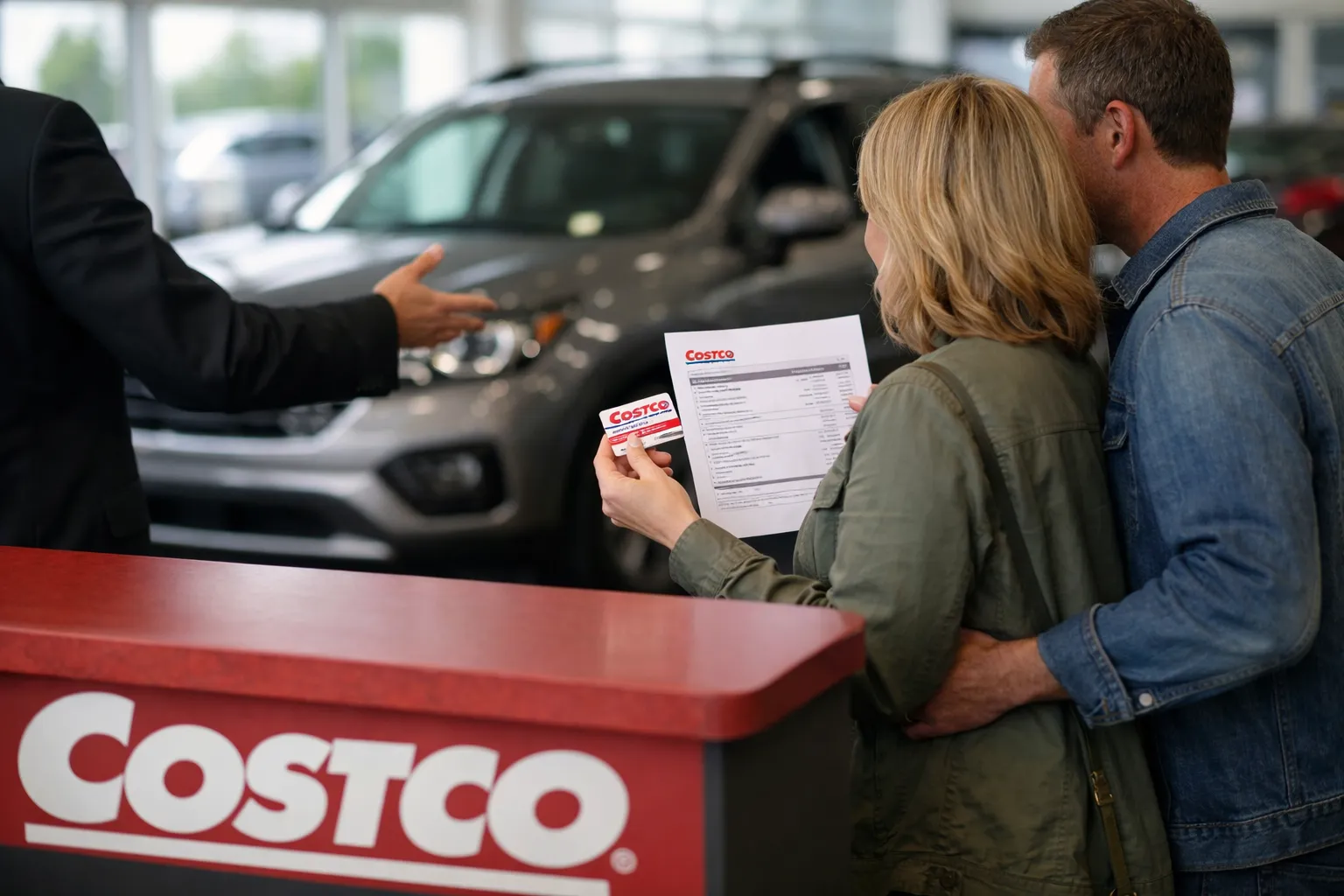
Overview — What we’re reviewing
This update examines the Costco Auto Program as of August 2026: how it works, what member pricing actually covers, current marketplace implications (EVs, software subscriptions and inventory cycles), and practical steps to protect your out‑the‑door price. Key specs at a glance:
- Who: Costco members (membership required; verify current plan fees at Costco.com).
- What: Pre‑arranged "member pricing" from participating dealerships on new and select used/CPO vehicles.
- Primary advantage: a no‑haggle baseline price and a short list of vetted dealers.
- Primary caveat: dealer execution determines final out‑the‑door cost; financing and trade‑in values are separate.
Background — who runs it and who it’s for
The Costco Auto Program is a member benefit administered by Costco Wholesale that aggregates participating franchised dealerships in its network. It is designed for members who want a lower‑friction buying experience: a prescriptive, quoted price from local dealers who have agreed to the program terms. The program requires an active Costco membership; it does not replace dealer paperwork, state taxes, registration or manufacturer incentives. Target users are value‑oriented buyers who prefer a straightforward starting point rather than negotiating from scratch.
Features analysis — what the program actually delivers (and what to verify)
Most of the program’s core features still stand in 2026, but several market developments affect how buyers should use it:
- Member pricing = a documented baseline, not a final bill. Costco’s price is a committed dealer offer on eligible vehicles, but it typically quotes before dealer‑installed accessories, market adjustments, and state fees are added. Always request an itemized out‑the‑door figure that lists taxes, registration, delivery fees and dealer line items.
- Inventory and EVs: EV model availability has expanded since 2024, and more mainstream ICE models now compete with EV pricing. For EVs, check that the quoted vehicle is equipped as advertised (battery capacity, onboard charger, eligible battery warranty) and confirm federal/state EV tax credit eligibility—dealers don’t automatically verify your personal eligibility.
- Subscription software and add‑ons: By 2026, more brands offer optional or mandatory software services (advanced driver assistance features, telematics packages, concierge features). These are often sold as subscriptions or one‑time dealer add‑ons—confirm whether the Costco price includes or excludes these items.
- Financing and trade‑in remain separate decision points: The Costco program facilitates a dealer transaction but does not guarantee the lowest financing rate or best trade‑in offer. Obtain a pre‑approval from your bank or credit union and get independent instant offers (Carvana, Vroom, local auction‑based offers) before accepting a dealer trade‑in.
- Dealer variability is decisive: Participation quality varies. Some dealers honor Costco pricing cleanly; others treat it as lead generation and recover margin via finance markups, add‑ons, or trade‑in offsets.
Pros — what Costco still does well
- Fast, low‑stress starting point: For buyers who dislike haggling, Costco cuts the initial negotiation and provides a verified quote from a local dealer.
- Brand trust and vetting: The Costco name gives members confidence to contact dealers that have agreed to the program terms.
- Useful for mainstream new models: On common trims and in normal inventory conditions, the Costco price is often competitive with other no‑haggle programs.
- Simple online workflow: Request a quote, schedule appointments and compare offers quickly via Costco’s site.
Cons — where the program can disappoint in 2026
- Out‑the‑door erosion: Dealer fees, required state items, sub‑packages, and finance markups frequently increase the final cost above the quoted member price.
- EV complexity: Additions like battery conditioning packages, home charger installation coordination, or software subscriptions are often handled outside the quoted price.
- Trade‑in and financing left to dealers: Expect to shop lenders independently and use multiple trade‑in estimates; the program does not guarantee best‑in‑market offers on those fronts.
- Uneven dealership responsiveness: Participation quality is still inconsistent across markets and makes the program experience variable.
Pricing and value — what it costs and what to expect
Costco does not charge members an extra fee to use the Auto Program beyond the required Costco membership. Historically (and still commonly), Costco offers two membership tiers—Gold Star and Executive—so the effective cost to access the program is your annual membership fee; verify current membership pricing on Costco.com before shopping.
What to expect in practical pricing terms:
- Ask for a single, itemized "out‑the‑door" price that includes taxes, title, registration, destination and any dealer-installed equipment. If a dealer will not provide this in writing, walk away.
- Use pre‑approved financing to set a benchmark. If dealer financing claims to beat your rate, get the dealer’s written loan estimate with APR and total finance charge before signing.
- For trade‑ins, collect at least two instant offers (e.g., Carvana, Vroom) plus a dealer appraisal. Treat the Costco dealer’s trade offer as negotiable and separate from the member vehicle price.
- For EVs, factor in installation costs for home chargers and potential state/federal incentives. Confirm eligibility and timing for any federal EV tax credit with the IRS or your tax adviser; dealers are not a substitute for personal eligibility checks.
Who it’s best for
The Costco Auto Program is most useful for:
- Buyers who want a clear, low‑stress baseline price and prefer to spend time comparing a few final offers instead of haggling on every transaction detail.
- Consumers purchasing common new models with healthy inventory and predictable dealer behavior.
- Members who value speed and a pre‑screened dealer list and who will independently shop financing and trade‑ins.
It is less appropriate for:
- Shoppers targeting limited‑supply, high‑demand models or factory‑allocated trims where dealers have leverage.
- Buyers who rely on the dealer for best trade‑in pricing or who do not plan to get independent financing quotes.
- Those seeking the deepest possible price on used vehicles—dedicated used‑car marketplaces often have broader selection and more transparent pricing for that market.
Alternatives to compare
- TrueCar / Edmunds Price Promise: Similar no‑haggle pricing with varying dealer networks; compare the final out‑the‑door numbers.
- Online retail platforms (Carvana, Vroom, Shift): Useful for used vehicles and often provide instant trade offers and home delivery.
- AAA Auto Buying Program: Another membership‑based service with a dealer network—worth checking if you belong to AAA.
Best practices — how to use the Costco offer and avoid common traps
- Request the Costco member price online and get a written, itemized out‑the‑door price before stepping into the dealership.
- Obtain pre‑approval from a bank or credit union, then compare written dealer financing offers against that benchmark.
- For trade‑ins, get at least two instant online offers and one live appraisal; treat trade value as a separate negotiation from the vehicle price.
- For EVs, verify manufacturer battery warranty, any included charger or installation discounts, and federal/state incentive eligibility before finalizing the purchase.
- Document every promise—ask for signed addendums for included accessories, software bundles or service credits.
Verdict
The Costco Auto Program remains a pragmatic, time‑saving tool for many buyers in August 2026. Its core strength is offering a no‑haggle baseline and a channel to vetted dealers; its key weakness is that dealer execution determines the real value. Use Costco for a reliable starting price, but protect yourself by securing pre‑approved financing, multiple trade‑in estimates, a written out‑the‑door price, and explicit confirmation of EV or subscription inclusions. Treated as the first offer in a short list of competitive quotes, the program can save time and often money; treated as a total solution it can leave buyers paying avoidable add‑ons.
FAQ
Do I need a Costco membership to use the Auto Program?
Yes. An active Costco membership is required to request member pricing. Verify current membership tiers and fees at Costco.com—Costco does not charge a separate Auto Program fee beyond membership.
Does the Costco price include dealer fees and taxes?
No. The quoted member price is a baseline for the vehicle. Always request an itemized out‑the‑door price that lists taxes, title, registration and any dealer charges before you commit.
Will the Costco program get me the best financing rate?
Not necessarily. Dealers may offer competitive financing but can also add markups. Get a written pre‑approval from an external lender and compare it to any dealer offer in writing before choosing financing.
Can I use the program for EV purchases and get tax credits?
Yes, the program covers many EVs sold through participating dealers, but federal and state EV tax credits depend on vehicle eligibility and your personal tax situation. Confirm eligibility with the IRS or a tax advisor before relying on credits to close the deal.
What’s the simplest way to avoid unexpected add‑ons at the dealership?
Insist on a written out‑the‑door price before visiting, review each line item, decline unwanted dealer accessories in writing, and walk away if the dealer refuses to honor the quoted Costco price as the transaction baseline.