Odometer rollback and title washing remain two of the most damaging — and still common — frauds in the used-car market. For car-buying enthusiasts who scour listings for bargains, spotting these scams can mean the difference between a long-term value buy and a costly legal headache. This guide, current for August 2026, walks through concrete, verifiable steps you can take before purchase to detect fraud, what evidence to collect, and how to negotiate or respond if you find discrepancies.
Why this matters in 2026
Used-car inventories and technology have changed since 2020. More vehicles carry complex digital records across multiple control modules; some salvage/title branding practices still vary by state; and online marketplaces let bad actors anonymize listings quickly. At the same time, authoritative data sources like the National Motor Vehicle Title Information System (NMVTIS) and VIN-based report vendors are more accessible. That combination makes careful data-first checks essential.
What are odometer rollbacks and title washing?
Odometer rollback: any deliberate alteration, disconnection or reset of a vehicle’s odometer to display fewer miles than the car actually traveled. Rollbacks can be mechanical (older analog odometers) or digital (clearing/reprogramming module mileage).
Title washing: removing or obscuring a title brand — for example, “salvage,” “flood,” or “junk” — by retitling the vehicle in another state or using flawed title transfers so the history is not reflected on future title checks.
Step-by-step checklist before you buy
Work in this order: start with remote data checks, then schedule a physical inspection, and finally use specialized reads or professional services if anything looks suspicious.
-
Run multiple VIN/title reports
Do not rely on a single commercial report. Pull at least two sources:
- NMVTIS report: The federal NMVTIS database aggregates title brand data from participating state DMVs and is the most reliable source for salvage history. You can order NMVTIS reports via approved providers (e.g., VinAudit, others) for a modest fee.
- Commercial history reports: Carfax and AutoCheck aggregate service records, auction sales and some state records. Use one of these plus NMVTIS to cross-check dates, mileage entries and title brands.
- NICB/VINCheck: The National Insurance Crime Bureau’s VINCheck (free) flags theft and some total-loss records.
Compare mileage entries and title events across these reports. Inconsistent dates, big mileage jumps or missing title brand entries are red flags.
-
Inspect service and inspection records
Ask the seller for complete service records, emissions/inspection stickers and maintenance invoices. Verify dates and odometer readings on each record. Common signs of rollback:
- Service visits with mileage that jumps backward or shows large unaccounted gaps.
- Inspection or registration stickers that show earlier miles inconsistent with the car’s current condition.
- Handwritten receipts without official headers or shop stamps — harder to verify.
-
Check the title chain and bill of sale
Ask to see the current title and any previous title assignments. Look for:
- Multiple out-of-state title transfers in a short period (a common sign of title washing).
- Altered or smudged entries, missing seller signatures, or titles with branding stamps covered by white-out or tape.
- A bill of sale with explicit mileage disclosure; absence of mileage disclosure in some states is not proof of fraud, but a missing, inconsistent, or deceptive bill of sale is a red flag.
-
Physical inspection: wear vs. odometer
Compare visible wear to the odometer reading. Key checks:
- Driver’s seat, steering wheel, pedals — heavy wear with low miles suggests rollback.
- Tire condition relative to age and known rotation records. New tires on a purportedly low-mile car might be legitimate, but ask why they were replaced.
- Serviceable parts and undercarriage rust consistent with geographic history — a car reportedly from the arid Southwest but showing heavy salt corrosion could indicate an undisclosed flood history.
-
Use module mileage reads and diagnostic snapshots
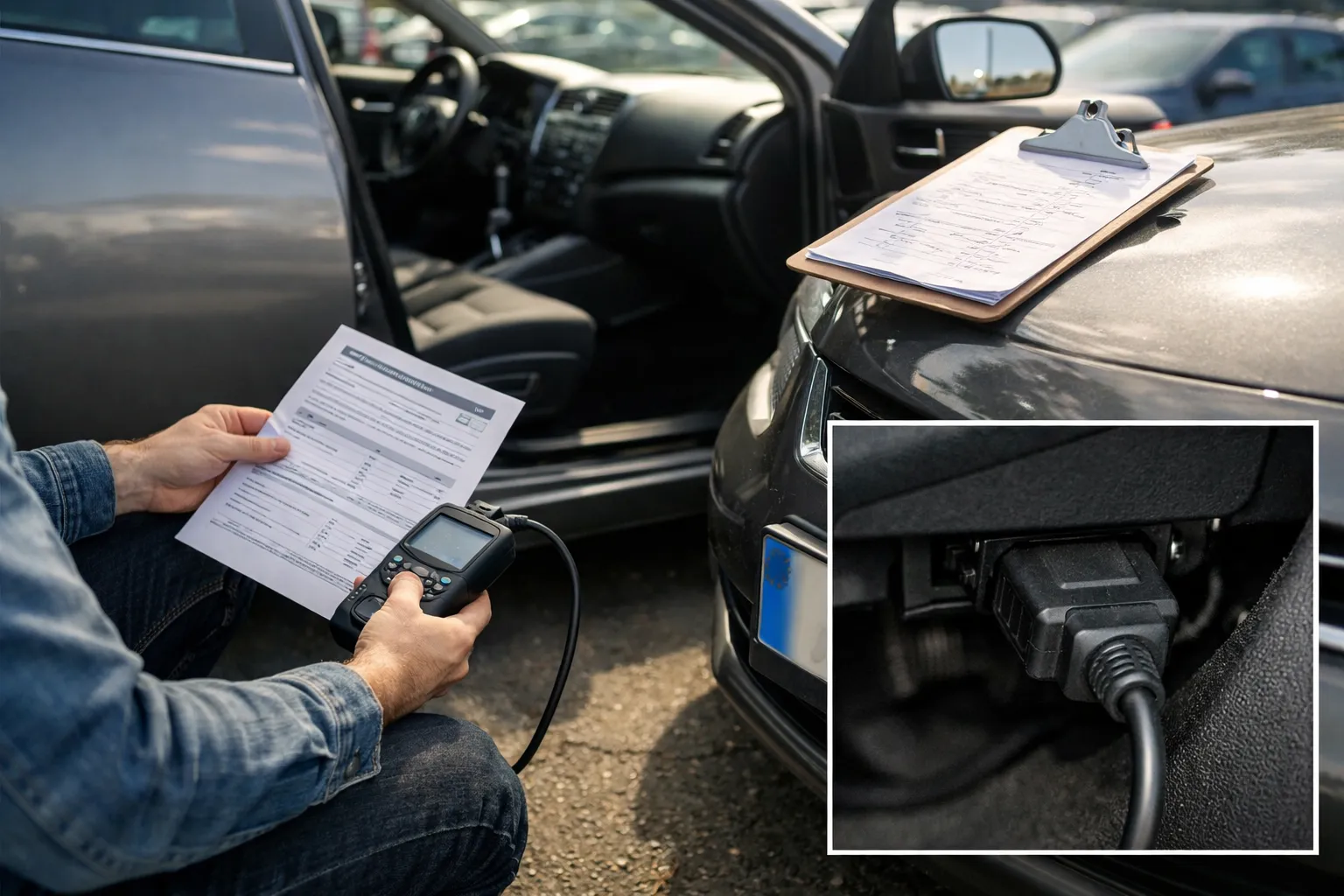
Modern vehicles store mileage in various electronic control units (ECUs): instrument cluster, powertrain control module (PCM), ABS, airbag control module, and sometimes body control module. These different records often do not match if someone has tampered. Steps:
- Request that a qualified mechanic or inspection service perform a multi-module mileage read. Many independent shops use tools such as OBDLink, Carly, FORScan (for Ford), or dealer-grade scanners to read module mileage snapshots.
- For older cars with mechanical odometers, check for loose dash components and evidence of cluster removal.
- Note: some consumer tools can read only the cluster mileage; professional scanners can read multiple modules for a cross-check.
If module mileages conflict or a module shows a replacement date with no explanation, get documentation from the seller about repairs or cluster swaps.
-
Get a pre-purchase inspection that covers fraud indicators
Ask for a pre-purchase inspection (PPI) from a mechanic with fraud-detection experience. Specify that the inspection include:
- Module mileage reads across major ECUs.
- Title branding and salvage signs (frame damage, replaced panels, mismatching VIN plates).
- Evidence of water damage in trunk, under carpet, and electronics.
-
Search auction and export records
Many salvaged cars are sold at dealer auctions or exported. Commercial auction records and salvage auction listings (e.g., IAAI, Copart) can confirm whether a vehicle was previously designated salvage. Cross-reference auction sale dates with title events in NMVTIS and commercial reports.
How to interpret common red flags
Not every discrepancy proves fraud, but some patterns demand caution:
- Multiple title transfers across states within months — possible title-washing attempt.
- Repeated repairs listing “instrument cluster replaced” without documented reason — could indicate a cluster swap to hide mileage.
- Module mileage mismatches — strong technical evidence of rollback if not explained by documented repairs.
- Omission of maintenance between mileage entries spanning years — suggests missing records or tampering.
Negotiation and next steps if you find inconsistencies
If you discover potential rollback or title washing before closing:
- Ask the seller for written explanations and supporting documentation (repair invoices, title transfer paperwork).
- Demand a reduced price commensurate with the risk or insist on a clean title and a full warranty. Many buyers will walk away; be prepared to do so.
- Consider escrow or conditional closing only after a clean, independent verification from a state DMV or trusted third party.
- If you already purchased and later discover fraud, contact your state DMV, the state attorney general’s consumer protection office, and file a complaint with the NICB and NHTSA. Keep all records — purchase invoice, title, inspection reports, and correspondence.
Legal and reporting resources
- NMVTIS (federal database) — for title brand and total-loss history
- State DMV — request certified title histories and ask about title-brand rules for that state
- National Insurance Crime Bureau (NICB) — VINCheck and fraud reporting
- NHTSA consumer hotline — for complaints and safety-related concerns
- State attorney general or consumer protection office — for fraud complaints and restitution pursuit
Tools and vendors worth knowing (examples)
There are both free and paid options. Use more than one source and prefer providers that cite NMVTIS or official title records.
- NMVTIS report providers (e.g., VinAudit and other approved vendors)
- Commercial vehicle-history reports: Carfax, AutoCheck
- NICB VINCheck (free)
- Diagnostic/mileage-read tools: OBDLink (interface), Carly (brand for many makes), professional shop scanners or dealer tools for in-depth module reads
- Salvage/auction searches: IAAI, Copart listings
Practical buying checklist (one-page)
- Run NMVTIS and at least one commercial report — save PDFs
- Ask seller for complete service records — verify dates/mileage
- Inspect title for brands, out-of-state transfers, and alterations
- Compare physical wear to odometer reading
- Get a multi-module mileage read by a qualified mechanic
- Order a pre-purchase inspection that checks for flood/salvage signs
- Document all communications and demand written clarifications for discrepancies
Bottom line
Odometer rollback and title washing are avoidable risks if you adopt a data-first, verification-heavy buying process. Rely on NMVTIS and multiple VIN reports, insist on documented service and title chains, and use module mileage reads and knowledgeable PPIs to catch technical inconsistencies. When in doubt, walk away — the small time investment in checks and a conservative negotiation stance can save thousands in repairs or legal trouble.
For car-buying enthusiasts, mastering these detection techniques turns a frustrating gamble into an informed transaction. Keep copies of all reports and receipts, and if you suspect fraud, report it — your records can help stop another buyer from being duped.