Advanced driver‑assistance systems (ADAS) — automatic emergency braking, lane‑keep assist, adaptive cruise with stop‑and‑go, occupant‑monitoring cameras and radar suites — are no longer luxury add‑ons. By mid‑2026 most new vehicles sold in North America include multiple ADAS features as standard. That shift is changing how buyers value used cars: the technology can preserve value by improving safety and lowering some insurance costs, but it also raises repair, calibration and salvage complexity. This analysis breaks down how ADAS affects depreciation, where buyers should be cautious, and which market dynamics will matter most over the next few years.
How ADAS changes the resale equation
Historically, features that improve safety tended to support resale values, especially in family cars and crossovers. ADAS amplifies that effect for two reasons. First, many consumers now explicitly shop for safety technology and will pay a modest premium for vehicles with proven systems. Second, certain ADAS features demonstrably reduce low‑speed collisions (the sort that cause bumper, sensor and windshield damage), which can lower claims frequency on fleet and retail portfolios — a positive signal for buyers.
But ADAS also introduces new depreciation pressures. Cars with damaged sensors or incomplete calibration histories are discounted more heavily than similarly aged vehicles with conventional components. Buyers notice when a vehicle’s lane‑keep works erratically, or when a forward camera fails to register lane markings; those symptoms reduce trust and therefore price.
Repair and calibration: the new hidden cost
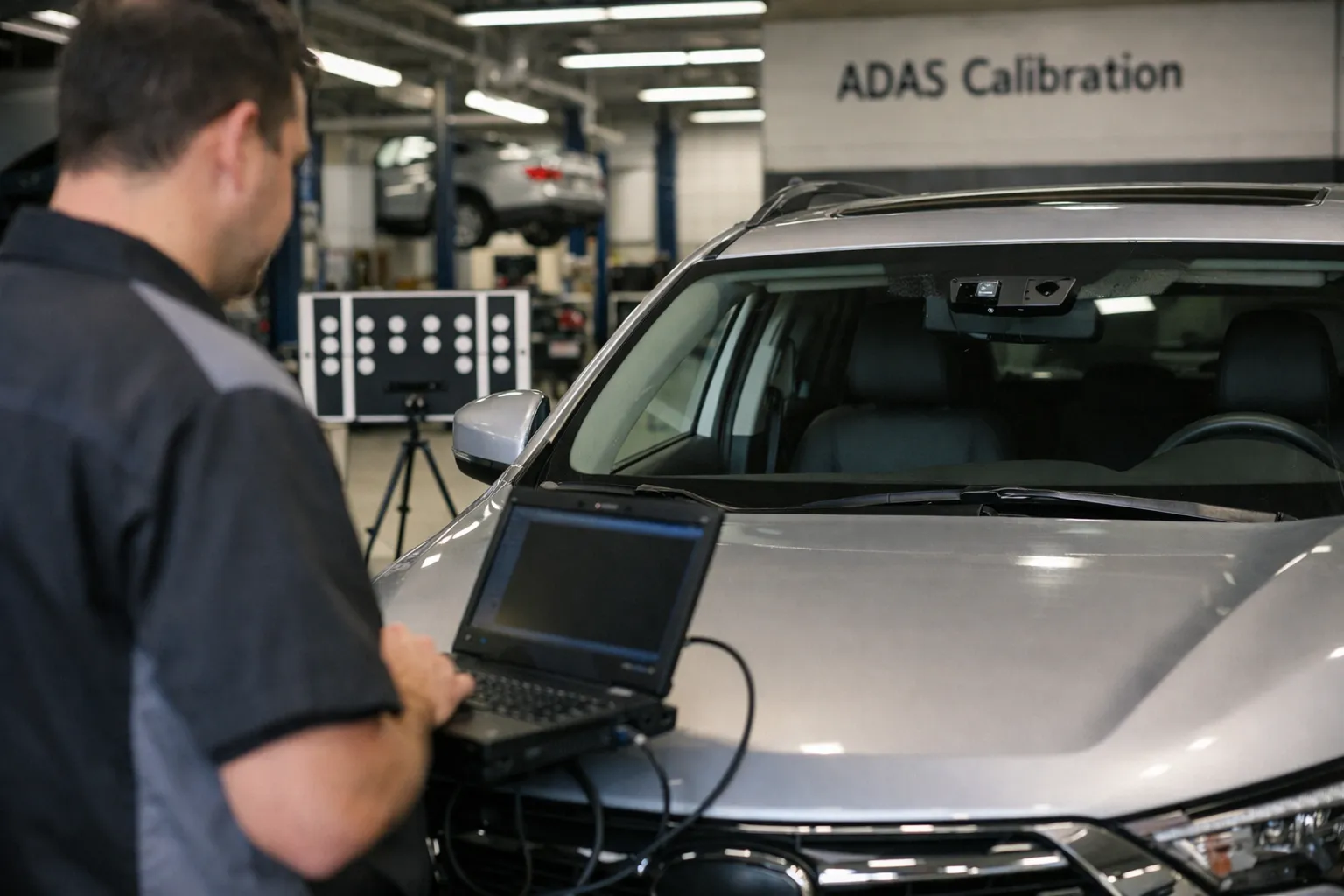
Unlike a bumper or headlamp, ADAS components often require specialized replacement parts and recalibration equipment. A windshield replacement on an ADAS‑equipped model typically requires not just glass but a certified recalibration of the forward‑facing camera and radar alignment. Similarly, replacing a front fascia or radar module can demand OEM parts and diagnostic procedures that go beyond traditional bodywork.
- Parts: Radar, camera assemblies and LiDAR modules remain more expensive than standard mechanical parts, and in some segments OEM supply is limited for several months after accident spikes.
- Calibration: Proper recalibration requires access to manufacturer software or approved third‑party tools, a level‑floor and optical targets for camera alignment, or drive‑calibration procedures that add labor time.
- Repair network variability: Dealerships and authorized body shops can perform calibrations reliably, but many independents still lack the equipment or training. That drives repair cost differences regionally.
For buyers, that means two cost lines to watch: the immediate repair bill and the residual value hit if a vehicle has a history of ADAS‑related damage or non‑OEM repairs. Maintenance records showing post‑repair calibration performed at certified facilities can materially improve buyer confidence and asking price.
Real‑world impact: what typically costs more
- Windshield with camera — replacement plus calibration: often several hundred to more than a thousand dollars, depending on model.
- Radar module replacement — parts and lane‑aligned calibration: typically expensive on mainstream models, costlier on luxury vehicles with proprietary sensors.
- Software diagnostics and ECU updates — necessary for reinitializing sensors after repairs; some updates are free under recall campaigns but many carry shop labor charges.
Insurance and safety offsets
Insurers have responded unevenly to ADAS. Many carriers now factor certain ADAS features into premium calculations when aggregated crash data shows reductions in fender‑benders or rear‑end collisions. Automatic emergency braking (AEB) and pedestrian detection are two features frequently recognized by rate adjusters because they demonstrably reduce frequency of specific claim types.
However, total cost of ownership effects are mixed. A buyer might benefit from lower annual premiums on a well‑maintained ADAS vehicle, but when an ADAS‑related repair is needed after a claim, the repair bill and potential insurer subrogation can be higher. In some cases, insurers write vehicles to salvage if ADAS repair costs approach a high percentage of the vehicle’s market value — a dynamic that can depress used values for models with expensive sensor suites.
Segment and regional differences
Not all markets or vehicle segments behave the same way.
- Luxury vehicles: High‑end models with multi‑sensor systems (radar + camera + lidar) carry the highest ADAS‑related repair costs and often larger software dependencies. Certified pre‑owned (CPO) programs and brand reputation mitigate some buyer concern, but the absolute repair bill can still suppress prices if the vehicle has collision history.
- Mainstream family cars: Where ADAS features are widespread and relatively standardized (forward camera and AEB), buyers generally value them and independent shops have caught up with recalibration workflows, so depreciation impacts are smaller.
- Urban markets: Higher rates of low‑speed parking collisions and curb strikes mean more cosmetic and sensor damage. Urban buyers are also more likely to demand the latest ADAS because they drive in dense traffic; that supports values for well‑maintained examples but punishes those with unchecked sensor faults.
- Rural and harsh‑climate regions: Salt, gravel and off‑road exposure increase sensor contamination and glass damage, which reduces the practical value of camera‑based systems and can lower resale prices for ADAS‑heavy cars unless documented maintenance is clear.
What buyers should do — a checklist for 2026
For car‑buying enthusiasts evaluating used inventory, ADAS adds several specific due‑diligence steps:
- Ask for a full front‑end repair and calibration record. Look for timestamps and the name of the shop or dealer that performed any calibration.
- Test every system in real conditions where safe and legal: AEB at low speed, lane‑keep on a marked road, adaptive cruise on a highway. Note inconsistent behavior, false alarms or disabled functions.
- Check for OEM software updates or outstanding recalls that relate to ADAS. Some updates improve reliability; others address safety faults that can affect value.
- Get an independent inspection that includes sensor alignment verification. A qualified inspector should note visible sensor damage, aftermarket parts or mismatched fitment that indicate prior poor repairs.
- Compare insurance quotes. If you’re transferring a policy or insuring a vehicle for the first time, get rate estimates that consider the model’s ADAS suite.
- When negotiating price, factor in likely repair and calibration costs in your market. For vehicles listed without a documented ADAS calibration after windshield or front bumper work, ask for a repair credit or lower price.
Looking ahead: market signals to watch
As ADAS moves from premium option to standard equipment, two compensating trends will shape used‑car dynamics:
- Calibration commoditization: Third‑party tool makers and training programs are lowering the barrier for independent shops to perform reliable ADAS calibration. That reduces repair costs and narrows regional disparities.
- Software and data transparency: When manufacturers provide clearer histories of sensor status, software updates and calibration events in vehicle service records or digital vehicle passports, buyers gain confidence and the market penalizes earlier.
For now, though, ADAS remains a double‑edged sword for used‑car values. Well‑maintained cars with documented calibration histories and proven systems retain a premium among informed buyers. Vehicles with patchy repair work, missing calibration records, or recurring software anomalies lose market trust faster than conventional cars with similar age and mileage. Savvy buyers and dealers who understand sensor costs and the importance of calibration are gaining an edge — and that expertise will increasingly determine who wins in the used‑car market of 2026.