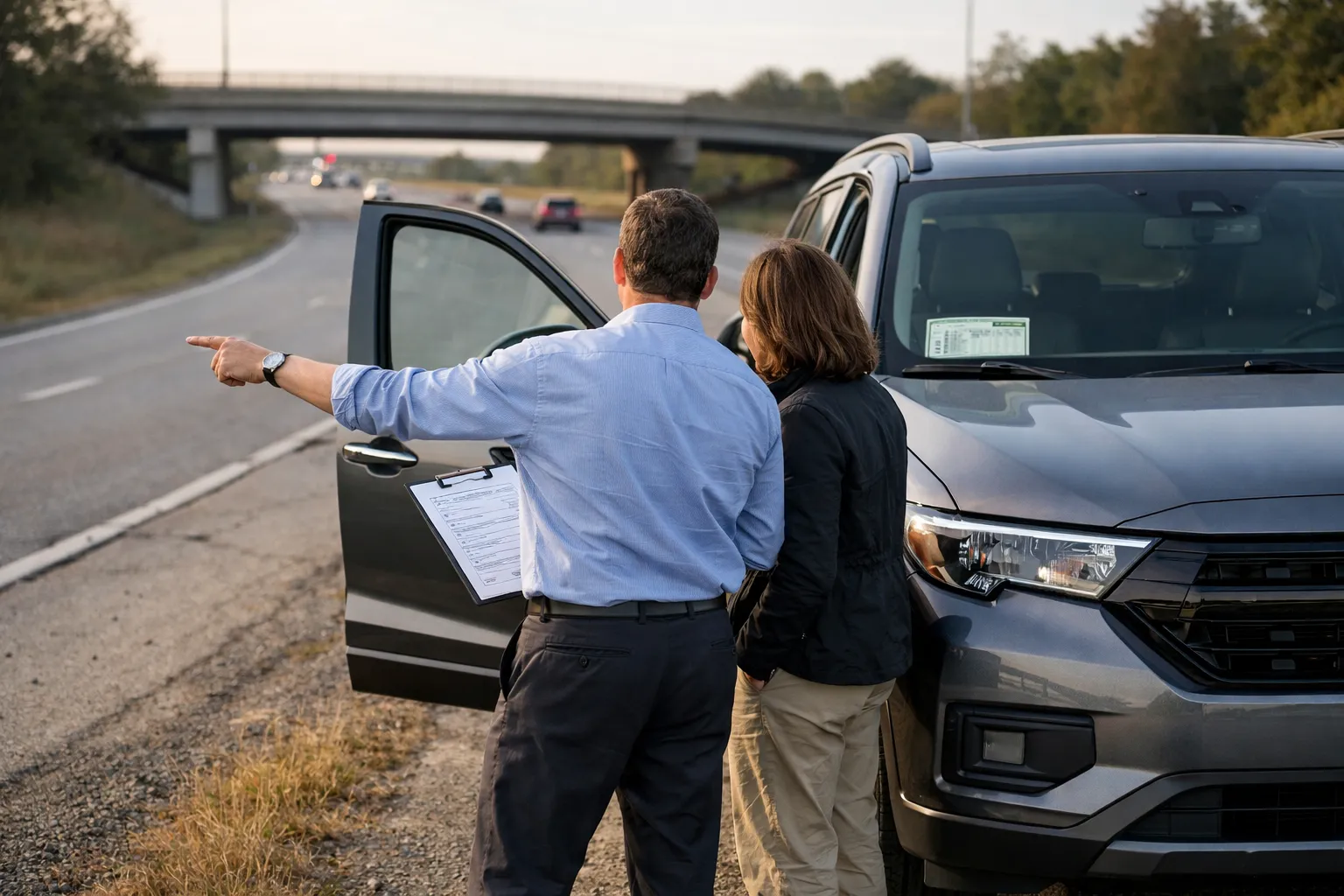
Advanced driver‑assist systems (ADAS) are now standard equipment across most brands, but performance, hardware architecture and ownership costs still vary widely. This updated November 2026 guide keeps the original evidence‑based approach and adds fresh, actionable advice for today’s market: how to research current ADAS architectures, test them in real conditions, inspect used cars for sensor and software integrity, and negotiate with sellers who increasingly monetize ADAS via subscriptions and cloud services.
Who this guide is for and what you’ll learn
This guide is for buyers — new and used — who plan to rely on ADAS daily and need to evaluate whether a given vehicle will deliver safer, lower‑stress driving in their real world. You’ll get a step‑by‑step process to:
- research system architecture, sensor redundancy and real‑world reliability;
- identify the exact trims and hardware packages to prioritize;
- conduct an evidence‑driven test drive and validate behaviors across common conditions;
- inspect used vehicles for hardware, calibration and software history;
- manage subscription and OTA update risks and negotiate fair price adjustments.
Prerequisites and context (what’s changed in 2026)
Since the original 2026 article, three trends matter now (November 2026):
- Sensor strategies diverged: Many mainstream brands doubled down on camera‑first architectures; a smaller but growing set of premium models include lidar or upgraded radar for redundancy. Camera‑only systems can perform very well, but they behave differently from radarbased systems in heavy rain, spray or dense fog.
- Software and subscriptions: Over‑the‑air (OTA) updates are common. Several manufacturers now gate advanced hands‑free or predictive features behind subscriptions or one‑time activations; transferability policies vary and can materially affect resale value.
- Independent testing and regulation: IIHS, Euro NCAP and consumer testing groups expanded ADAS evaluations through 2024–2026. Regulators and advocacy groups have pressed for clearer HMI disclosures and driver‑monitoring requirements, increasing transparency about limitations — but implementation varies by manufacturer and region.
What you should know before you start: ADAS is still a system property — sensor hardware, control software, maps and cloud services all affect real‑world safety. Your buying decision should prioritize documented, real‑world performance for the conditions you face daily (city commuting, rural roads, long highway runs).
Step 1 — Understand ADAS categories and what matters in 2026
Split features into practical buckets; new 2026 distinctions to note:
- Active safety aids (AEB, pedestrian/cyclist detection, blind‑spot alert): essential for city/suburban crash reduction. Look for different detection performance in low‑light and occluded scenarios — manufacturer claims differ here.
- Driver aids (adaptive cruise control, lane‑centering): useful for highway workload reduction. Prioritize systems with smooth longitudinal and lateral control and predictable behavior during cut‑ins.
- Hands‑free or enhanced Level‑2+ systems (manufacturer‑branded hands‑free): these require robust driver monitoring and, in many cases, geofenced road maps. In 2026, several makers publish explicit road coverage maps and requirements; verify whether the advertised coverage matches your commute.
Why this matters: camera‑only ADAS can excel on clear days and well‑marked roads but may disengage more in glare or heavy precipitation. Systems with multiple sensor types (camera + radar or lidar) typically show fewer weather‑related disengagements.
Step 2 — Research efficiently (2–4 hours, updated sources)
Collect evidence before visiting a dealer or inspecting a used car. Prioritize:
- Independent test results: IIHS and Euro NCAP publish crash‑avoidance and lane‑keeping evaluations. Check model‑year‑specific reports (not just brand summaries).
- Consumer testing and reliability data: Consumer Reports and owner surveys (e.g., J.D. Power vehicle dependability studies) report ADAS reliability and common faults.
- Owner forums and aggregated complaints: search model‑year threads for recurring camera, radar or windshield replacement issues and for OTA update regressions after a specific build.
- Manufacturer documentation: download the owner manual and ADAS supplement for the exact model year and trim; look for sensor descriptions, driver‑monitoring method and listed system limitations.
- Recall and service bulletins: check NHTSA and manufacturer TSB pages for sensor‑oriented recalls and calibration advisories.
New 2026 tip: look for published software build numbers and OTA history. Many dealerships can provide the current ADAS software build for a VIN; ask for the last update date. A vehicle with frequent safety updates applied is better than one with known patches never installed.
Step 3 — Narrow trims, options and hardware (exact identifiers)
ADAS features are still bundled variably. Your shortlist must be precise:
- Record the exact model year, trim, option package codes and VIN snapshot where possible.
- Confirm the sensor suite: windshield‑mounted camera housing, front radar or lidar, side radars/cameras and the presence of a driver‑monitoring camera (DMS) or steering‑torque sensor.
- Verify whether specific features are hardware‑dependent or software‑activatable after purchase — and whether activation requires a subscription.
Ask the dealer for printed option codes and the original window sticker (Monroney). For used cars, request the original sticker or build sheet. If the trim absence of a radar is not obvious visually, ask for the wiring list or a shop to confirm sensor presence before purchase.
Step 4 — Prepare a practical test‑drive plan (bring these items)
- Printed test‑drive checklist (see below).
- Passenger to watch lane position and collect notes.
- Smartphone to record short clips (get dealer consent) and GPS trace if possible to correlate behavior with road geometry.
- Route with at least two highway segments (one rural with long sightlines; one urban with merges), and short local streets with trees/parking and a shaded underpass or tunnel if available to test transitions that commonly trip lane‑centering.
Updated Test‑Drive Checklist (what to test and how to score)
- Activation and HMI: How clear are prompts and status icons? Does the system tell you why it disengaged? Score 0–3.
- Adaptive cruise logic and gap management: Smoothness of speed changes, predictability during cut‑ins, and behavior when overtaking. Score 0–4.
- Lane‑centering stability: Holds steady in straight and mildly curved lanes without oscillation or creeping to lane edge. Score 0–4.
- Lane change and steering assist: How well does the system handle assisted or hands‑free lane changes (if available)? Verify blind‑spot detection and lane‑change confirmation. Score 0–3.
- AEB and collision‑avoidance: Observe low‑speed brake interventions in safe, controlled ways (with permission). Evaluate pedestrian/cyclist detection in daylight. Score 0–3.
- Driver monitoring and enforcement: Note type of DMS (camera vs torque sensor), prompt frequency, and whether the system issues escalating warnings before disengagement. Score 0–2.
- Behavior across common environmental conditions: Test through shaded areas, sun glare, light rain or spray if safe; note any inconsistent behavior or disengagements. Score 0–4.
- Software state and update history: Ask the dealer for the ADAS software build and last OTA date. Score 0–2 (higher if recent safety patches applied).
Score interpretation (updated): 18–26 = strong, consistent performance for daily ADAS use; 12–17 = capable but with notable limitations; under 12 = expect frustration or extra hands‑on driving. Record short video clips of any surprising behavior to reference later.
Step 5 — What to watch for during the test drive (red flags in 2026)
- Frequent false disengagements on benign road features (manhole covers, bridge joints, painted road crews).
- Abrupt braking or lateral corrections that startle the driver — especially at highway speeds.
- Driver‑monitoring that either never checks or refuses to maintain engagement despite visible driver attention.
- Big behavioral differences across similar highway segments — this can indicate map or geofence dependency.
- Dealer or salesperson unwilling to share software/build info, or refusing to demonstrate hands‑free features on applicable roads.
Step 6 — Buying used: inspect hardware, calibration and software history
Used‑car ADAS issues are now the most common source of surprise for buyers. Key checks:
- Windshield and camera housing: Inspect the A‑pillar area and windshield for signs of replacement or poor fit. Even a correctly replaced windshield can be misaligned if not recalibrated.
- Front bumper and radar mounts: Look for paint mismatches, aftermarket repairs or missing shims that indicate prior collisions. Radar misalignment often causes poor longitudinal control.
- Service records and calibration logs: Require documented calibrations after windshield or bumper work. Typical recalibration costs (shop quotes vary) range from about $150–$1,000 depending on sensor type and required procedures; lack of records is negotiation leverage.
- OBD‑II scan and ADAS fault history: Use an independent shop or ADAS‑capable tech to scan for active and historic fault codes — some faults are “soft” and not obvious on a short drive.
- Software build and OTA history: Ask for the ADAS software build, date of last OTA and whether the vehicle is still eligible for updates. A vehicle that cannot receive critical safety patches is a downside.
Practical negotiation point: demand a contingency allowing a professional ADAS diagnostics scan, and price in the cost of recalibration or module replacement where records are incomplete.
Step 7 — Software, OTA updates, subscriptions and data privacy
Software matters more than ever. Actionable buyer steps:
- Confirm whether the OEM provides OTA updates and whether updates include safety patches. Ask whether updates are free for the vehicle’s life or conditional on connected‑service subscriptions.
- Ask whether advanced features (hands‑free, predictive lane changes) require a subscription and whether that subscription transfers on sale. Get written statements when possible.
- Understand what data the ADAS logs and who can access it. Manufacturers and insurers increasingly request vehicle event data; ask how long logs are retained and whether you can request deletion or export upon sale.
- Check warranty scope for ADAS components (camera, radar, lidar, DMS camera) and ask about optional extended coverage for sensors and calibrations.
Why this matters: a vehicle that requires a paid subscription for its safest features or for map updates can cost hundreds per year and reduce resale value if the buyer must re‑subscribe.
Step 8 — Insurance and legal considerations (practical steps)
Insurance and regulation are catching up. Do these checks:
- Ask insurers if they offer discounts for the specific ADAS package and whether they require telematics monitoring for continued discounts.
- Clarify how ADAS data may be used in a claim — some insurers request event logs as part of crash reconstruction.
- Review owner manual limitations and local laws: hands‑free operation and driver monitoring requirements differ by state and country; ensure a feature is legal and supported where you drive most.
Step 9 — Negotiation and purchase checklist (practical items to secure)
- Get VIN and confirm the ADAS package, sensor list and software build in writing.
- For new cars: obtain a written statement about update policy, required subscriptions, trial periods and whether map coverage for hands‑free roads is included.
- For used cars: require an independent ADAS diagnostic scan as a sale contingency and documentation of any recalibrations. If records are missing, negotiate a repair allowance or price reduction.
- Compare dealer markup on ADAS packages to manufacturer MSRP; dealers often add substantial premiums for pre‑activated features.
- Request a post‑sale demonstration drive (or re‑check) to confirm systems match the demonstration and that the latest OTA has been applied.
Common mistakes buyers still make
- Assuming name recognition equals safety — brand‑name hands‑free does not guarantee consistent lane‑centering or fewer disengagements.
- Failing to verify transferability of subscriptions and map licenses — leaving a buyer with a vehicle whose key features are locked behind a new subscription.
- Neglecting software build and OTA history — many problems in 2024–2026 were fixed by software patches that some used cars never received.
- Trusting salesperson demo only — always test the system yourself and record behavior in your typical driving conditions.
Pro tips (advanced, save time and money)
- Bring a laminated checklist and short video clips of any odd behavior; video evidence strengthens post‑sale claims or warranty requests.
- If buying used, budget for a professional ADAS recalibration at a certified shop — include quotes in negotiations.
- Prefer vehicles with sensor redundancy (camera + radar) if you routinely drive in heavy rain, coastal spray or winter roads; these systems reduce weather‑related false negatives.
- Ask for the ADAS software build number and check manufacturer forums for known regressions tied to builds — avoid cars on builds linked to recent safety complaints.
- When a dealer offers a one‑time activation (software unlock) at sale, get the activation code and proof of purchase in writing and confirm whether it is transferrable.
Final decision flow — updated quick rules
- If daily highway commuting is your priority, favor vehicles with well‑documented hands‑free coverage for your specific routes and with robust driver monitoring. Prefer systems with consistent lane‑centering scores in independent tests.
- If urban collision avoidance matters most, prioritize models with high AEB/pedestrian ratings and documented sensor redundancy (camera + radar) and up‑to‑date software history.
- Avoid vehicles with documented reliability complaints and missing update or calibration records unless the price reflects the cost of anticipated fixes.
- For used cars, insist on written calibration records after windshield or bumper repairs — otherwise walk away or negotiate strongly.
Resources and where to verify claims
- IIHS.org: crash‑avoidance & ADAS test reports by model year.
- Euro NCAP: ADAS and safety assist assessments.
- ConsumerReports.org and J.D. Power: owner reliability and ADAS user surveys.
- NHTSA.gov: recall and investigation databases and manufacturer technical service bulletins.
- Manufacturer owner manuals and published build notes: available on OEM websites or via dealer request.
Parting advice
Buying for reliable ADAS in late 2026 is still about evidence, not hype. Focus on sensor architecture, recent software builds, documented calibrations and clear terms for subscriptions and updates. Test systems in the specific conditions you encounter daily, insist on written confirmation of software state and transferability, and use independent diagnostics for used cars. Do this and ADAS will deliver meaningful safety and convenience; skip these steps and you risk expensive surprises.
FAQ
How important is sensor redundancy (camera + radar or lidar) versus camera‑only systems?
Sensor redundancy improves robustness across weather and complex scenes. Camera‑only systems can be excellent on clear, well‑marked roads but often have more frequent disengagements in heavy rain, spray or glare. If you regularly drive in those conditions, prioritize vehicles that combine camera and radar (or lidar where available).
Can I require a dealer to provide the ADAS software build and OTA history?
Yes — you can and should ask. Dealers often can retrieve and print the current software build for a VIN and the date of the last OTA. Get that in writing when possible; it helps you verify the car received safety patches and avoid vehicles on known problematic builds.
What if the used car’s windshield was replaced but there’s no calibration record?
Treat missing calibration records as a negotiation point. Recalibration can cost from a few hundred to about a thousand dollars depending on sensors and procedure. Either require the seller to obtain and pay for a professional calibration before sale, or discount the price to cover a certified shop’s recalibration.
Are ADAS subscriptions common in 2026 and how do they affect resale value?
Yes, subscriptions for advanced features and map services are more common. They can reduce resale value if features don’t transfer or require a purchaser‑paid subscription. Ask for written confirmation of transferability and factor expected subscription costs into your purchase decision.
Should I have an independent shop scan the ADAS before buying a used car?
Always. An ADAS‑capable diagnostic scan reveals historic or active fault codes not apparent during a short test drive. It’s inexpensive relative to the potential cost of sensor replacement or recalibration and is the most reliable way to confirm system health before purchase.