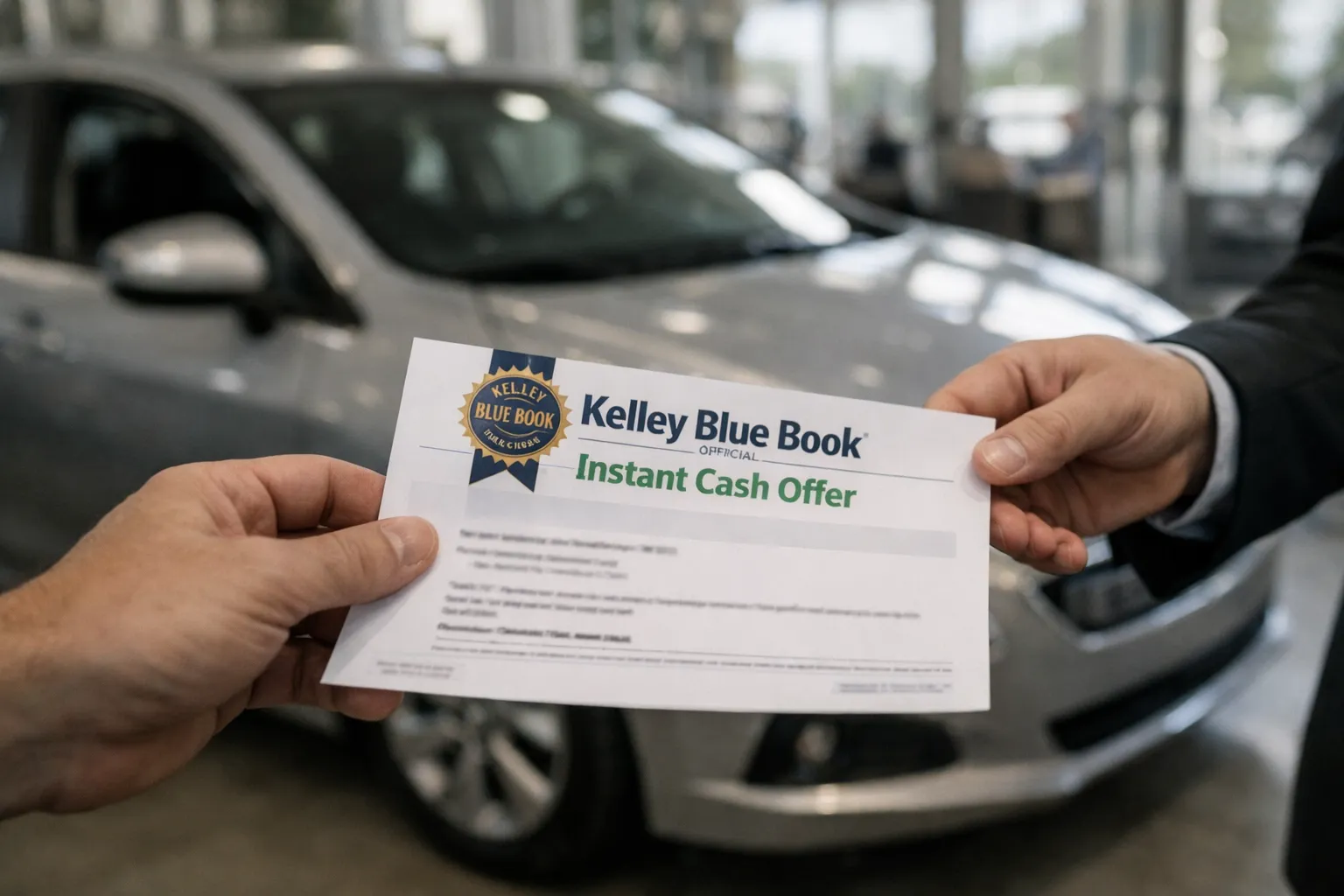
Instant online tools that promise a quick, firm cash offer for your car have become a standard part of the 2026 car‑selling landscape. Kelley Blue Book's Instant Cash Offer (ICO) remains one of the most visible consumer-facing options. This review evaluates how the program actually performs for buyers and sellers in mid‑2026: what it does well, where it falls short, and when to use it versus alternatives like private sale or national buyers.
What Kelley Blue Book Instant Cash Offer is — and how it works
KBB's Instant Cash Offer is an online appraisal and voucher system that generates a conditional offer based on a vehicle's year, make, model, mileage, VIN, and user-supplied condition details and photos. The offer is issued as a time‑limited voucher that participating dealers in KBB's network can honor. The intent is to give sellers a transparent starting point for a trade‑in or outright sale without scheduling multiple dealer visits.
Key elements of the workflow:
- Enter VIN and basic vehicle details on KBB’s ICO webpage.
- Supply current mileage, condition notes and typically several photos (interior, exterior, odometer, damage).
- Receive an instant voucher valid for a limited window (often 7–10 days) which a participating dealer can accept as a cash purchase or a guaranteed trade‑in baseline.
- Visit the dealer with the car and paperwork; dealer performs inspection before finalizing the purchase.
Pros — where ICO helps car buyers and sellers
- Speed and convenience: You can generate an offer in minutes from home, avoiding multiple dealer appointments to get baseline numbers.
- Standardization: The voucher gives you a documented, time‑stamped offer to present to dealers, which reduces ambiguity and helps focus negotiation.
- Wide dealer reach: KBB’s long-standing brand and dealer partnerships mean the voucher is accepted at many franchised and independent dealers in major metro areas.
- Useful benchmark: ICO is a fast way to compare values from an objective source against CarMax, local dealer trade‑ins, or private‑party pricing.
Cons — limits and caveats to expect
- Conditional offers: ICO offers are subject to dealer inspection. Discrepancies in condition, undisclosed damage, or title issues can materially reduce the final check.
- Usually not the absolute top dollar: For many vehicles the ICO typically lands between a dealer trade‑in and a private‑party price. If maximizing proceeds is your priority, private sale often yields more.
- Dealer acceptance varies: Although many dealers participate, vouchers are not legally binding purchase orders; some dealers will honor them as a baseline for negotiation rather than as a final price.
- Time limits and market shifts: A voucher is short‑lived; in fast‑moving markets (strong demand for certain used EVs or scarce truck models) the voucher can understate current demand or simply expire before you can redeem it.
How ICO compares to the main alternatives
- Private sale: Best for maximum proceeds, but takes time, exposure, safety precautions, and handling paperwork. ICO is faster and easier but generally pays less.
- CarMax / large national buyer: These brands provide in‑person, often same‑day offers after inspection. CarMax offers are usually firm for a short window and comparable to or sometimes better than ICO depending on vehicle condition and local demand.
- Dealer trade‑in: Dealers use ICO and similar tools as one reference point. Dealers often pay less than private buyers but can roll a trade‑in into a new purchase that reduces tax liability in some states.
When KBB ICO is the right choice
ICO is a strong fit when you prioritize convenience and speed over squeezing every extra dollar from a private sale, for example:
- You plan to buy a new or used vehicle from a dealer and want a quick, documented baseline offer to trade in your current car.
- You need a fast, reasonably fair cash offer without the time and risk of meeting private‑party buyers.
- Your vehicle is a common model with clean title history and accurate photos that reflect the reported condition — that reduces the risk of large post‑inspection adjustments.
How to get the best result from an ICO
- Be honest and document condition: Upload clear photos (odometer, body panels, interior, tires) and disclose recent repairs. Surprising a dealer with hidden damage invites a lower final offer.
- Have service and title documents ready: A complete maintenance history and clean title speed the dealer process and can support a better payout.
- Compare offers: Get an ICO, request a CarMax appraisal, and solicit a direct dealer trade‑in quote so you can negotiate from the strongest baseline.
- Time the voucher: If your model is in high demand, redeem the ICO quickly to avoid price shifts or voucher expiry.
Real‑world considerations in 2026
As of mid‑2026, used‑car inventory across many regions has shown more normal seasonal fluctuation compared with the volatility of 2020–2022, though EV and popular truck segments still experience tight supply at times. For electrified models, condition‑specific factors such as battery health and software updates increasingly affect valuation; ensure any ICO submission includes recent diagnostics or warranty info where applicable.
Further, many dealers and online platforms now use condition photo scoring and VIN‑specific market data. ICO remains useful as a neutral, recognizable benchmark — but in tight markets dealers may still pay premiums above the KBB baseline for clean, low‑mileage units they can resell quickly.
Bottom line — verdict
Kelley Blue Book’s Instant Cash Offer is a practical, low‑friction tool for sellers who want a fast, documented baseline valuation and prefer convenience over maximum price. It excels as a bargaining chip when trading in at a dealer or as a quick fallback to avoid private‑sale hassles. However, it is conditional and typically won’t beat a well‑executed private sale or, in some cases, a competitive national buyer appraisal.
Use ICO to shorten the hunting phase and to anchor negotiations, but treat the voucher as one data point among several — especially if you own a high‑demand, low‑supply EV or truck where market premiums can outpace standardized online estimates.