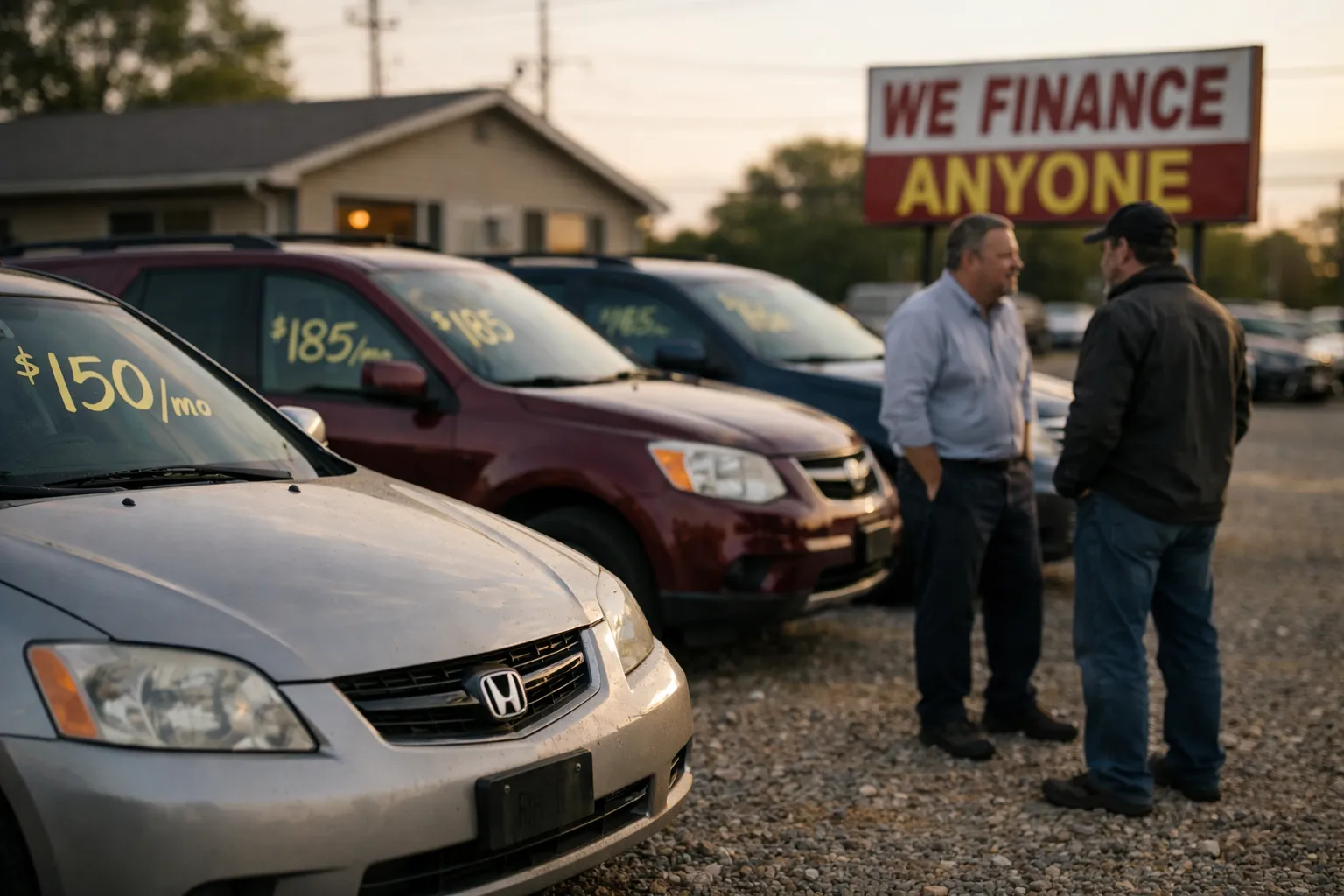
Buy‑Here‑Pay‑Here (BHPH) dealers — independent used‑car lots that finance purchases in‑house — have long served buyers shut out of prime auto lending. Through 2024–26, that niche expanded in many small towns and exurban counties. For car‑buying enthusiasts who follow market mechanics, the rise of BHPH is important: it alters where inventory flows, how retail prices are set, and the practical risks for buyers who rely on dealer financing.
Why BHPH grew in 2024–26
Three broad forces pushed BHPH networks deeper into rural markets:
- Tighter prime credit and persistent high rates. Elevated benchmark rates and stricter underwriting limited access to traditional bank and captive financing for marginal borrowers. That left more customers to seek in‑dealer credit.
- High new‑vehicle prices and longer trade cycles. New car affordability problems kept many consumers in older used vehicles, increasing demand for lower‑price stock — the product BHPH specializes in.
- Dealer economics and vertical integration. For small independents, in‑house financing increases margins. BHPH dealers reused that margin to compete while accepting higher default risk on their books.
How BHPH operations differ from mainstream used‑car retailers
Understanding the BHPH model clarifies why the segment reshapes local markets:
- In‑house financing. Instead of assigning loans to banks, BHPH dealers extend installment contracts and retain servicing. That opens a buyer pool denied by banks but concentrates credit risk on the dealer.
- Inventory sourcing and composition. BHPH lots tend to stock older, higher‑mileage vehicles bought from auctions, trades and private sellers. Inventory turnover is typically slower and mechanical warranties are limited.
- Pricing behavior. Dealers price for monthly cash flow rather than strict market comparables. That creates a visible "convenience premium" for buyers who need immediate financing and fewer alternatives.
- Contract practices and collections. BHPH contracts often include late fees, balloon payments, or repossession clauses tailored to local enforcement realities. Title retention until loan payoff is common in many jurisdictions.
Market effects: what changed for buyers and local used‑car pricing
The BHPH expansion produces measurable shifts in rural used‑car ecosystems:
- Price segmentation widens. Where BHPH occupies a significant share of local retail, prices for near‑new, bank‑financed used cars remain aligned with broader metropolitan markets, while older vehicles sell at a sustained premium to cover dealer financing margin and repossession costs.
- Inventory flows concentrate locally. Cars that might previously have moved through wholesale channels to metropolitan dealers are increasingly staying in‑market to feed BHPH lots. That reduces arbitrage opportunities for regional independent buyers.
- Risk and after‑sale costs increase for financed buyers. In‑house APRs are frequently higher than bank or credit‑union loans. When mechanical failures occur, limited or no warranties mean added out‑of‑pocket expense and higher likelihood of default.
- Secondary effects on adjacent dealers. Franchise and independent dealers in nearby towns adjust by stocking more late‑model used cars that appeal to bank‑able buyers or by offering certified financing to undercut BHPH convenience premiums.
Who wins and who loses
Short‑term winners include buyers who have very poor credit and need immediate transportation: BHPH offers access that more conservative lenders won’t. Dealers with experience in repossession and refurbishing can earn outsized returns when a portfolio is well managed.
Losers tend to be buyers who don’t fully understand contract terms, or who assume BHPH prices are comparable to a bank‑financed retail purchase. Local consumers who sell or trade older cars also see downward pressure on wholesale receipts because fewer good units exit to metropolitan channels.
Practical advice for car‑buying enthusiasts and cautious shoppers
If you or someone you advise is shopping in a market where BHPH dealers are active, use these checks to avoid pitfalls:
- Compare total finance cost, not monthly payment. Ask for an itemized payment schedule: principal, interest rate (APR), fees and term. Convert the total cost to an APR if the contract uses a nonstandard structure.
- Obtain a vehicle history and a mechanic inspection. BHPH cars are often older and can hide deferred maintenance. A pre‑purchase inspection is essential.
- Confirm title status in writing. Understand whether the dealer retains title until payoff and how repossession is handled in your state.
- Get contractual protections in writing. If any warranty or "guarantee" is promised, demand a written document with clear exclusions and claims processes.
- Explore alternative small‑dollar financing. Credit unions, local banks, and nonprofit lenders sometimes offer small auto loans with lower APR than many BHPH deals.
- Know your state’s consumer protections. Repossession notices, cure periods and right‑to‑rescind laws vary. Check your state attorney general or consumer protection office.
Regulatory and industry context
Because BHPH operates at the intersection of auto retail and consumer credit, the model attracts regulatory attention. Federal and state regulators have increasingly scrutinized high‑cost subprime auto lending practices, advertising transparency and repossession methods. For buyers and local markets, the short‑term consequence has been greater disclosure pressure but also continued demand for BHPH products where credit alternatives remain scarce.
What to watch next
Three trends will determine how deep BHPH’s imprint becomes in rural used‑car markets beyond 2026:
- Credit conditions and interest rates. Any easing of prime rates and loosening of underwriting will shrink the addressable market for BHPH credit.
- Wholesale supply dynamics. If more late‑model trade‑ins and off‑lease units remain local, BHPH dealers can improve inventory quality and margins; if not, vehicle quality will stagnate.
- Technology and underwriting platforms. The spread of risk‑based, automated underwriting tools that serve non‑prime borrowers could allow banks or fintech lenders to undercut BHPH by offering small loans with better terms.
Bottom line for market‑minded buyers
BHPH dealers fill a practical gap in many rural markets by supplying financed access to transportation. Their growth through 2026 changed how older used cars circulate and how retail pricing stratifies outside urban centers. For car‑buying enthusiasts who track valuation and supply signals, BHPH expansion is a reminder that credit access — not just vehicle attributes — shapes resale values and buying options. Savvy shoppers can still find value in these markets, but only by treating dealer financing as a central purchase variable and by insisting on the documentation, inspection and price transparency that mainstream retail buyers often take for granted.