
Introduction — What you'll learn and who this is for
This August 2026 update shows car‑buying enthusiasts how to access dealer and wholesale auto auctions safely and profitably. If you’re a private buyer, hobbyist reseller or small‑volume dealer, you’ll get step‑by‑step actions for registering, inspecting (including EV and software‑locked checks), bidding, paying and titling vehicles bought at auction. The auction marketplace continues to evolve with broader digital bidding, deeper EV inventories, and new risks around software/feature transfer and title transparency — this guide focuses on the practical steps you need right now.
Prerequisites / Context — What you should know first
- Know lane type: dealer‑only vs. public vs. salvage vs. simulcast public lanes. Dealer lanes remain restricted; public and salvage auctions have different warranties and risks.
- Check title sources: start with the federal NMVTIS database (required by federal law for many resellers), then supplement with CARFAX or AutoCheck for service/accident history. NMVTIS is the authoritative starting point for title brands and most states report to it.
- Expect more EVs and software‑first vehicles: auction lots now commonly include battery‑electric vehicles and cars with manufacturer‑tied software features. These have unique inspection and transfer considerations.
- Digital inspection tools are better but imperfect: auctions provide multi‑angle photos, 360° walkarounds and AI damage scoring. These accelerate evaluation but do not replace human and independent inspections.
- Regulatory and market context: several states have tightened salvage and re‑title procedures since 2024; NHTSA and state DMVs publish recall and titling guidance you should consult before buying high‑risk lots.
Step 1 — Understand auction types and access routes (Aug 2026)
Before registering, confirm who can bid and under what rules. In 2026 you’ll generally see these options:
- Dealer‑to‑dealer (wholesale) auctions — Examples: large national houses and regional dealer networks. These lanes are restricted to licensed dealers; private buyers must use a broker or dealer partner.
- Public auctions — County, government surplus, and some dealer houses host public lanes. Expect variable inspection windows and fewer protections.
- Salvage and insurance auctions — Salvage specialists (repairable and total loss lanes) continue to operate with state‑dependent access rules; check salvage title processes in your state.
- Brokered and marketplace access — Third‑party brokers and dealer‑access marketplaces bid on dealer lots for a fee. For most private buyers this remains the fastest, compliant route to dealer inventory.
Why this matters: Rules determine what paperwork you’ll receive at sale and whether titles are transmitted directly. Trying to bypass dealer‑only restrictions risks forfeiture of deposits and legal complications.
Step 2 — Register, verify buyer rules and deposits
- Create an account on the auction platform and read the buyer rules verbatim. The rules set buyer fees, payment windows, storage charges and “as‑is” terms.
- Provide required documentation. Dealer lanes require a dealer license or business documents; public lanes usually require valid photo ID and a signed buyer agreement.
- Complete pre‑bid financial steps. Most auctions require a refundable deposit, pre‑authorization or verified wire capability before you can bid online. Confirm accepted payment methods and wiring instructions by calling a published auction phone number to avoid fraud.
- Confirm explicit fees and title handling: buyer premium, administrative fees, sales tax collection and whether the lot shows clear, salvage, rebuilt or in‑transit title notes. Missing this step makes your "all‑in" math wrong.
Step 3 — Inspect before you bid — 2026 checklist
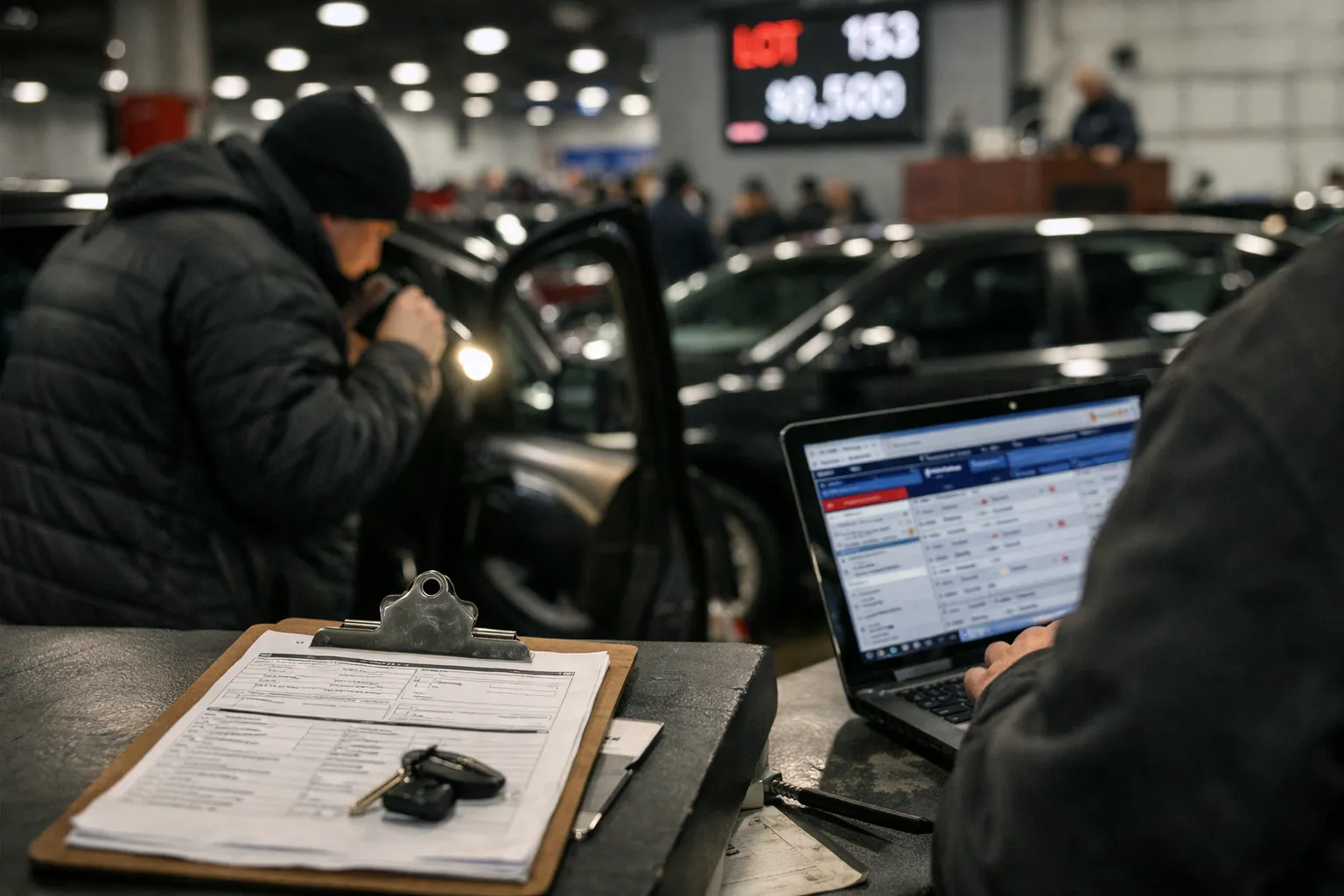
Inspection remains the single most important investment. In 2026, auctions provide richer digital data but caveats have multiplied. Use a layered approach:
- Review the auction’s digital assets — read the condition report and view all photos and 360° walkarounds. Note mechanical flags, airbag deployment, frame/flood notes and odometer exceptions.
- Run NMVTIS and commercial history reports — NMVTIS for title brands, then CARFAX or AutoCheck for service and accident history. Save the reports as part of the lot file.
- Order an independent pre‑bid inspection — national inspection services or local mechanics can provide test‑start, fluid checks, undercarriage photos and frame measurements. For EVs, request a battery state‑of‑health (SoH) read and a high‑voltage system scan where available.
- Confirm software and account‑tied feature transfer — many modern vehicles link advanced driver assistance, remote features or infotainment to an owner account. Contact the manufacturer or authorized dealer in writing to confirm transferability before bidding. If the auction listing doesn’t address account locks, treat that as a material unknown.
- Check NHTSA recall status — run the VIN through NHTSA’s recall database (nhtsa.gov/recalls). Some recalls or safety blocks can impede registration until repaired by the manufacturer.
- Look for title chain anomalies — rapid cross‑state transfers or multiple title issuances in a short period can indicate title‑washing risk. If the VIN shows conflicting state brands, obtain state DMV office records before bidding.
Why this matters: Advanced digital tools reduce uncertainty, but they can miss EV battery damage, software account locks, and subtle frame stress. Independent inspectors and manufacturer confirmation catch many of these issues.
Step 4 — Build your all‑in maximum bid
Calculate the absolute maximum you will pay before bidding. Include these line items:
- Market value for comparable vehicles in similar condition (use sold comps from public marketplaces, auction sale reports and pricing guides).
- Auction buyer fee (premium), administrative fees and any listing surcharges.
- Broker commission, if applicable.
- Transport — specialty carriers for EVs may cost more due to charging or towing protocols. Confirm carrier experience with disabled EVs.
- Immediate repairs and reconditioning (mechanical, safety systems, cosmetic).
- Sales tax, registration and state re‑title inspection fees.
- Contingency buffer (10–20%) for unexpected issues such as hidden frame damage, flood remediation, or battery replacement.
Example calculation (conservative): market value $8,000 + buyer fee $400 + broker $350 + transport $300 + repairs $900 + tax/registration $500 + contingency $900 = $11,350 all‑in. Set your live bid cap below that number if you need margin to resell or absorb surprises.
Step 5 — Adopt a disciplined bidding strategy
- Set and stick to your pre‑calculated maximum. Simulcast and app bidding accelerate pace and can trigger emotional overspend.
- Observe lane behavior for 15–30 minutes before active bidding to read market sentiment and clearance prices on similar lots.
- Use absentee (proxy) or timed bids where offered to avoid real‑time escalation. If using a broker, specify exact maximums and increment rules in writing.
- If bidding online, ensure a reliable internet connection and synchronize your clock with the auction server to avoid last‑second losses.
- For high‑value EVs or software‑sensitive cars, consider placing conditional bids that require documented confirmation of software/account transfer before closing.
Step 6 — If you win: payment, documents and immediate actions
- Pay within the auction’s required window — commonly 24–72 hours. Accepted methods vary; wire transfers and certified funds are typical. Confirm wire details by phone to the auction’s published number to avoid fraud.
- Obtain and save the bill of sale, buyer receipt, title status disclosure, condition report and inspector attachments. These documents are essential for registration and disputing errors.
- Arrange pickup promptly — most yards charge storage daily after a grace period. For EVs, schedule a hauler experienced with high‑voltage systems and disabled batteries.
- Do not drive a vehicle with unknown battery or airbag status off the lot. Have a qualified mechanic or EV technician verify safety systems before use.
Step 7 — Transport, repair and registration
- Book a licensed carrier experienced with your vehicle type. For EVs, confirm the carrier has equipment rated for the vehicle’s weight and safe battery handling procedures.
- On delivery, commission a full inspection. For EVs include a battery capacity/performance test and confirm there are no manufacturer blocks (security or subscription holds) that will prevent registration.
- Complete title transfer and registration quickly. If the vehicle has a salvage/rebuilt brand, follow your state DMV’s re‑title and inspection process — requirements and timelines vary widely.
- Keep all purchase, inspection and repair documentation together for resale, audits or warranty claims.
Practical options if you lack dealer access
- Licensed broker — fastest route to dealer‑only inventory. Brokers usually charge $200–$500 plus buyer fees and handle paperwork.
- Public salvage and government auctions — direct access but higher risk and fewer protections; plan for limited inspections and limited recourse.
- Vehicle sourcing services — firms that buy and deliver auction vehicles to consumers for a flat fee; useful for one‑off purchases if you want end‑to‑end service.
Risks, red flags and legal cautions (Aug 2026 updates)
- Invisible EV faults: battery SoH issues, prior thermal events, or damaged high‑voltage wiring can be expensive. Require a battery SoH read when available and budget for battery repair or replacement risk.
- Software and subscription locks: many features now tie to manufacturer accounts (driver assistance, remote services, in‑car subscriptions). Confirm with the manufacturer whether accounts and subscriptions can transfer; lack of transferability can materially reduce value.
- Title and chain‑of‑custody anomalies: rapid cross‑state title transfers or unusually quick flips can indicate title washing. Use NMVTIS and the issuing state DMV to verify.
- Image manipulation and AI limits: improved AI condition scoring speeds evaluation but can be fooled by edited images or staged repairs. Demand high‑resolution underside photos and independent inspections for higher‑risk lots.
- Payment and identity fraud: confirm wiring instructions by calling the auction’s published number; scammers sometimes spoof invoices. Use escrow for large purchases if available.
Common mistakes to avoid
- Letting excitement override your pre‑set maximum bid.
- Relying solely on AI condition scores or photos without independent inspection for mechanical, frame or battery problems.
- Failing to include buyer fees, transport and repairs in your math.
- Assuming software/connected features will transfer automatically.
- Not confirming title status with NMVTIS and the issuing state DMV before bidding.
Pro tips — practical, immediate advantages
- Cross‑check multiple data sources: NMVTIS, CARFAX/AutoCheck and service records. Save all reports as part of the lot file.
- For EVs, request a dashboard battery capacity estimate and charging port photos in the listing. If possible, get a BMS (battery management system) read from an independent inspector.
- Use proxy or absentee bids to avoid emotional last‑minute inflation; for high‑value lots, put conditions in writing (e.g., "sale conditional on manufacturer confirming account transfer").
- Build relationships with one reliable broker, one dependable hauler and one independent inspector; trusted partners reduce friction and unexpected charges.
- Keep an audit file: digital copies of purchase, inspection and payment documents simplify DMV re‑title processes and post‑sale disputes.
FAQ
Can private buyers access dealer‑only lots in 2026?
Usually not directly. Dealer‑only lanes require a dealer license or business credentials. Private buyers most commonly use licensed brokers, dealer partners, or third‑party marketplaces to access dealer inventory. These intermediaries charge a fee but handle registration and bill‑of‑sale procedures. Always confirm the broker’s credentials and ask for a written service agreement.
How should I approach buying an EV at auction?
Treat EVs differently: request a battery state‑of‑health (SoH) read, verify charging port and on‑board charger condition, confirm whether manufacturer accounts or software features transfer, and plan for specialized transport. Factor potential battery or high‑voltage repair costs into your all‑in bid and insist on an independent inspection that includes high‑voltage system checks.
What’s the best way to verify title branding?
Start with NMVTIS for federal title brand data, then run CARFAX or AutoCheck for accident/service history. Check the issuing state’s DMV records if possible. If title history shows rapid transfers across states or conflicting brand data, treat the lot as higher risk and obtain official DMV documentation before bidding.
Are AI condition scores reliable enough to skip a human inspection?
No. AI damage scoring and automated walkaround photos are valuable screening tools but not substitutes for human inspection. AI can miss subtle frame stress, water intrusion, or battery damage. For any vehicle you plan to keep, resell or heavily invest in repairing, order a human pre‑bid inspection.
What payment and pickup timelines should I expect in 2026?
Most auctions require payment within 24–72 hours and will charge storage after a grace period if the vehicle isn’t removed. Accepted payment methods vary; wires and certified funds are common. Confirm wired instructions by calling the auction’s published phone number to reduce the risk of fraud, and arrange transport immediately after winning to avoid storage fees.
Final note: Dealer and wholesale auctions remain among the best places for value buyers in 2026 — but the inventory mix, digital bidding mechanics and software‑linked vehicle features raise the bar for due diligence. Prioritize independent inspections (especially for EVs), include all fees in your bid math, confirm software/account transfer with manufacturers, and use licensed brokers or public lanes if you lack dealer credentials. When in doubt, walk away — there will always be another lot.
For further resources: the NMVTIS website (vehiclehistory.gov), auction house buyer rules (visit the published pages of major houses), NHTSA recall search (nhtsa.gov/recalls), and vehicle‑history providers (CARFAX, AutoCheck). For state‑specific titling rules, contact your state DMV or a licensed attorney.
Disclaimer: This guide provides practical information and is not legal or financial advice. Consult a licensed professional for specific legal, tax or title questions before purchasing.