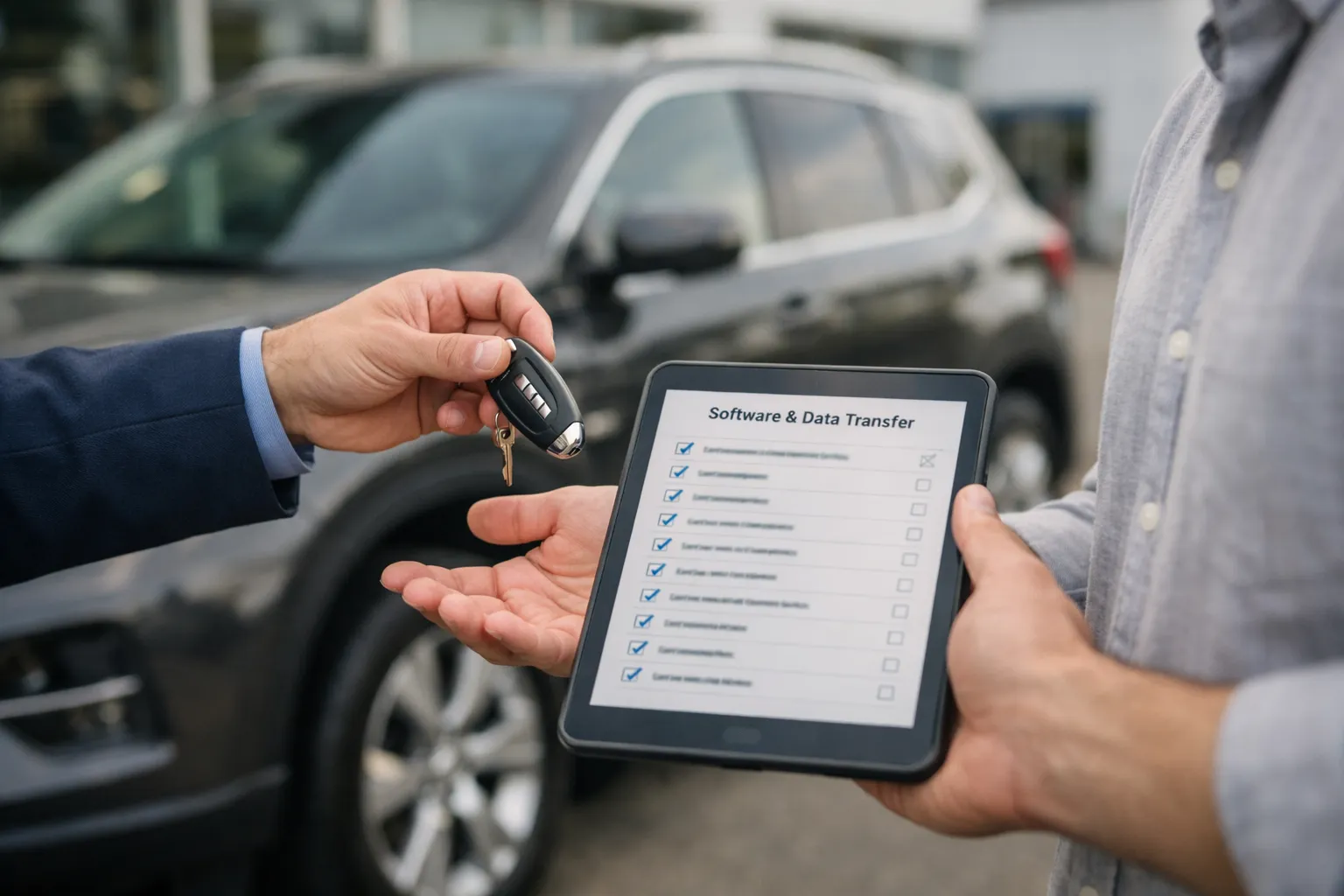
In October 2026 a broad industry coalition announced a voluntary Vehicle Software and Data Portability Framework designed to make certain in-vehicle software features, subscription entitlements and owner-controlled telematics data easier to transfer when cars change hands. The move—driven by automakers, dealers, vehicle-data companies and third-party marketplaces—aims to reduce friction in the used-car market and address buyer concerns about digital lock-in and opaque post-sale charges.
What the framework covers
The framework establishes a set of baseline practices for three areas that affect resale value and buyer experience:
- Subscription portability: Procedures for transferring time-limited or purchased software features—navigation upgrades, advanced driver assists, heated-seat activation, concierge services—between owners without requiring a new account or excessive transfer fees.
- Owner-controlled data export: Standards for exporting owner-stored telematics and maintenance data (trip logs, remaining warranty-related battery metrics where available, service history) in machine-readable formats so buyers, dealerships and third-party platforms can verify vehicle condition.
- Clear price disclosure: Recommended disclosure templates for listing fees tied to software transfers or reactivation so prospective buyers see purchase-price-equivalent costs up front.
Why it matters to buyers
Digital features and telematics increasingly influence used-car buying decisions. Buyers weighing a late-model vehicle now consider not only mechanical condition and history reports but also which software features remain active or transferable. The new framework addresses three common pain points:
- Surprise fees: Historically, buyers have encountered unexpected activation or transfer charges when buying a car with manufacturer-controlled subscriptions.
- Uncertainty about feature access: Sellers and dealers sometimes cannot easily verify whether a feature purchased by the first owner will remain active after sale.
- Opaque data sharing: Buyers have had limited ways to obtain verifiable telematics or maintenance records directly from the vehicle without complex arrangements.
How the framework will be implemented
The coalition’s approach is voluntary and staged. Participating companies have agreed to:
- Adopt a shared consent mechanism that lets owners authorize transfer or export of specific datasets at time of sale.
- Offer a standardized receipt showing which software features are transferable, which require re-subscription, and any applicable one-time transfer fees.
- Publish APIs or secure portals for verified dealers and platforms to confirm feature status without accessing unrelated personal data.
The coalition plans pilot rollouts with selected manufacturers, dealer groups and online marketplaces in the fourth quarter of 2026, expanding into broader use across 2027 if pilots meet interoperability and privacy tests.
Limitations and open questions
The framework deliberately avoids mandating that automakers make every paid feature transferable. Instead it sets a transparency and consent baseline. Key limitations include:
- Voluntary adoption: The framework relies on companies signing on; it is not a federal mandate, so coverage will vary by brand and seller.
- Scope of features: Security-related or manufacturer-controlled safety-critical software may remain excluded from transferability for legal and regulatory reasons.
- Data privacy and liability: Exporting telematics raises questions about prior owner privacy and who bears liability for data accuracy once it’s shared.
What buyers should do now
Even before the framework is widely adopted, car buyers can take practical steps to protect themselves and use forthcoming changes to their advantage:
- Ask sellers for a software and subscription inventory: When shopping for a used car, request a written list of active software features, whether they are transferable, and any transfer fees.
- Request owner-authorized data exports: Ask the seller to authorize an export of maintenance and vehicle-stored telematics so you can verify odometer consistency and service events.
- Factor software costs into price negotiations: If a must-have feature is non-transferable or charges a high activation fee, negotiate the sale price accordingly or seek a different vehicle.
- Prefer participating dealers/marketplaces: Look for listings from sellers that advertise adherence to the new framework or provide clear digital transfer receipts—these listings may offer smoother after-sale ownership.
Checklist for the sales moment
- Get a written statement of transferable features and fees.
- Obtain owner-consented export of telematics/maintenance records.
- Confirm how and when remaining subscription time (if any) will be credited or refunded.
- Document the transfer steps the dealer or seller will perform and any post-sale activation windows.
Longer-term implications for the used-car market
If the framework scales, it could reduce buyer uncertainty and shrink the price penalty some used vehicles endure because digital entitlements are unclear at resale. Greater transparency can also bolster online marketplaces and certified pre-owned programs by making it easier to verify the digital condition of a vehicle—similar to how service history and title records affect resale value today.
At the same time, partial adoption risks creating a two-tier market: vehicles sold through framework-aligned channels could command a premium, while others lag behind. Buyers should watch adoption announcements by specific brands and dealerships through 2027 to see which channels deliver the promised portability.
For car-buying enthusiasts, the framework is a useful advance: it recognizes that the car you buy in 2026 is as much defined by software entitlements and data as by engine condition and paint. Whether the new standards become the norm will depend on how quickly sellers and automakers convert voluntary commitments into consistent, verifiable practice.