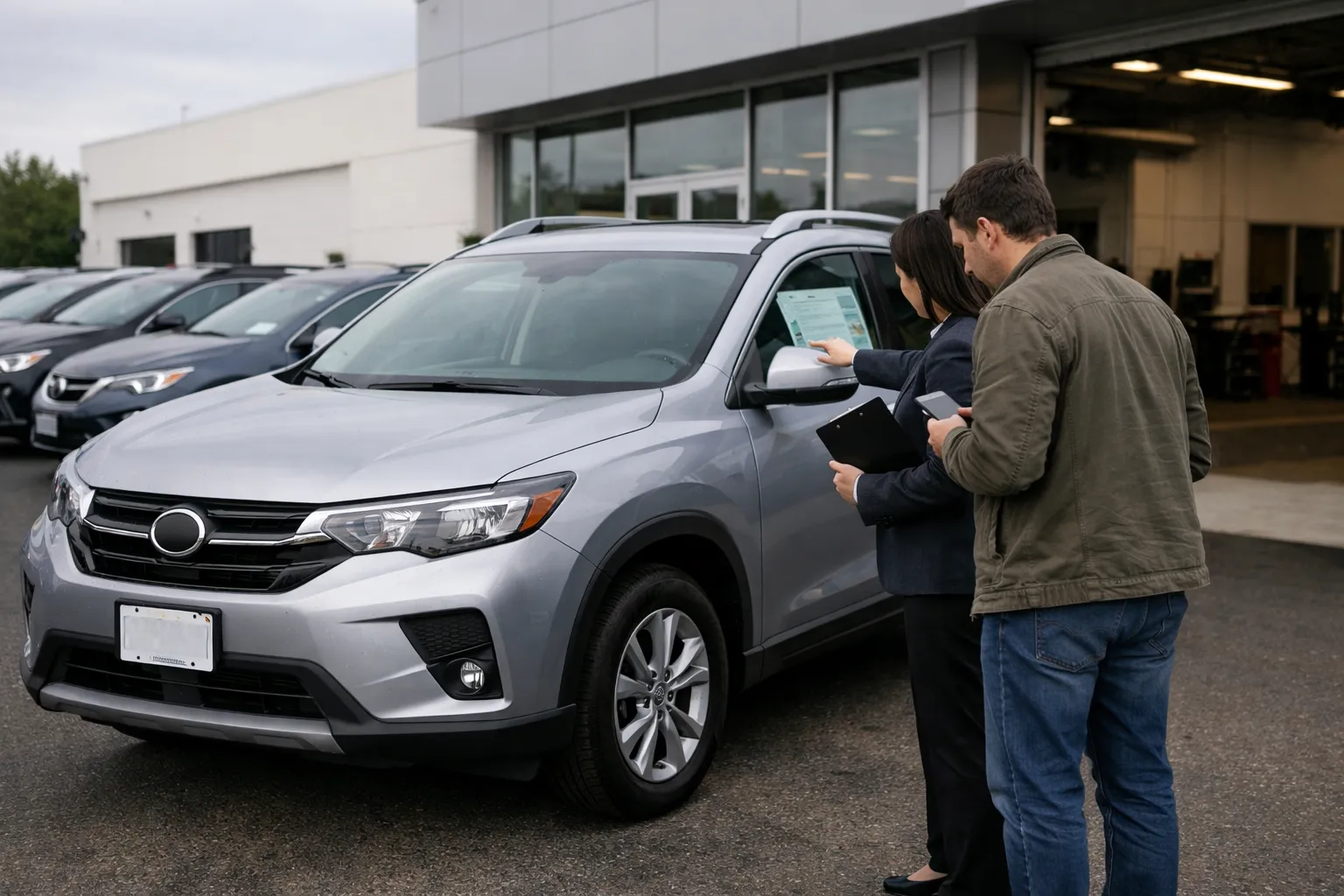
Dealer demos and loaner vehicles—cars used briefly by dealers for test drives, staff use, or short-term customer loans—are a consistent source of nearly new vehicles for buyers who want new‑car condition at a lower price. In 2026, as inventories normalize and manufacturers push demo programs to move retail units faster, savvy buyers can extract meaningful value. This guide walks through the full process: how to identify genuine demos and loaners, what to inspect, how to verify history and warranty, common pricing ranges, negotiation tactics, and red flags to avoid.
What exactly is a demo or loaner car?
A dealer demo (demo) is a vehicle driven for test drives, floor display, or brief dealer staff use. A loaner (or service loaner) is a car dealers lend to customers while their vehicles are serviced. Both are typically owned by the franchise dealer (sometimes the manufacturer) and retain full factory warranty, though how that warranty was started can vary.
Why buy one?
- Lower price than new retail: demos/loaners often sell below MSRP because they’ve accrued some mileage and are on the dealer lot.
- Near‑new condition: many have a few thousand miles and basic wear only.
- Immediate availability: you avoid factory‑order waits or long dealer markups on hot new models.
- Full new‑car warranty may remain intact, sometimes including remaining manufacturer incentives.
Common downsides
- Mileage and usage patterns—loaners can rack up highway miles from rentals or long service loans.
- Cosmetic wear—keys, upholstery, and minor dings from frequent drivers or shuttle use.
- Potential incomplete maintenance record if dealer didn’t log every usage.
- Some demos are used heavily by salespeople or for extended test events; those deserve deeper scrutiny.
Before you visit: research and target selection
Preparation narrows focus and gives you leverage.
- Scan local inventory — Use dealer websites, manufacturer certified pre‑owned (CPO) listings, and third‑party sites (Cars.com, Autotrader) and filter for “demo,” “loaner,” or “dealer‑used.”
- Check comparables — Find identical trims/option packages new and used. Note MSRP, recent sale prices, and typical discounts for demo cars in your market.
- Set a target discount range — In many markets in 2026, demos/loaners commonly sell for roughly 5–15% below new MSRP depending on mileage, age, and demand. Use this as a negotiating anchor, not a hard rule.
- Identify warranty questions — Know the vehicle’s manufacturer warranty (basic, powertrain), any dealer-added extended warranty availability, and whether a demo’s initial registration may have started the warranty clock.
- Pre‑qualify financing — Get preapproval from your bank or credit union. Dealers sometimes offer competitive captive financing on demo units; knowing your rate gives bargaining power.
On the lot: what to inspect (detailed checklist)
Bring a phone, flashlight, and notepad. Take pictures and VIN notes for later comparison.
Exterior & tires
- Walk all four sides at arm’s length. Look for mismatched paint, overspray, dents, or inconsistent panel gaps.
- Inspect wheel curb rash and brake dust patterns; heavy brake dust plus low life on tires may indicate aggressive driving.
- Check tire date codes and tread depth across all four tires for even wear.
Interior & electronics
- Examine driver seat bolstering, pedal wear, and steering wheel gloss—these age quickly with frequent short trips.
- Test all electronics: infotainment, Apple CarPlay/Android Auto, HVAC, sunroof, and power seats. Try every door and trunk latch.
- Look for service stickers or notes that indicate frequent loaner turnover.
Under hood & underbody
- Inspect for fluid leaks, unusual corrosion, or aftermarket modifications.
- Ask to see the engine bay cleanliness—dealer detailing can mask issues, so focus on mounts, wiring, and obvious repairs.
- Check the underside for heavy scrapes, frame repairs, or new chassis components.
Odometer & VIN
- Record the odometer and VIN. Demos commonly show between 500 and 15,000 miles; loaners can be higher depending on service volume.
- Run a vehicle history report (Carfax, AutoCheck) and compare listed uses; look for “owned by dealer,” “company vehicle,” or repeated short-term registrations.
Test drive: what to focus on
Plan a 15–30 minute route that includes city, highway, and tight maneuvers.
- Listen for unusual noises at start, idle, acceleration, and during turns.
- Feel the transmission shifts and brake pedal travel—demo transmissions may have been warmed quickly by repeated short drives.
- Check that driver-assist features operate reliably if equipped (lane‑keep, adaptive cruise). If these systems were used in fleet/demo contexts, confirm they are calibrated and not intermittently disengaging.
- Test the vehicle with your typical cargo and seating load if possible (child seat fit, roof-racks, etc.).
Paperwork: what you must verify
Before you get emotional about a low price, verify the paper trail.
- Title status — Confirm the car is dealer‑owned and clean title. Avoid cars with salvage/rebuilt or flood titles unless you have specific expertise and a plan.
- Service and usage log — Ask for a dealer log of demo/loaner usage. Genuine logs show test drive dates, service loans, or mileage records; blank logs are a red flag.
- Warranty start date — If the vehicle was registered at first delivery, the warranty may have started earlier. Ask for the date of first registration—if earlier than expected, warranty time could be reduced.
- CPO eligibility — Some demos qualify for Certified Pre‑Owned programs after inspection. CPO status can add value via extended warranty or special financing.
- Disclosure — State laws require dealers to disclose certain uses; verify any mandatory disclosures. If a dealer resists full transparency, walk away.
Pricing and negotiation strategy
Use data, not pressure, to secure the deal.
- Start with market comps — Present comparable demos/loaners and recent retail sales for the same trim and options.
- Anchor to mileage — Offer a discount correlated to real mileage and condition. Example negotiation framework: 0–3k miles: ask for 5–8% off MSRP; 3–10k: 8–12%; 10–20k: 12–18%—adjust by demand for the model and local supply.
- Ask for dealer-paid items — If the dealer resists deeper price cuts, request perks: documentation fee reduction, first maintenance pay, floor mats, or dealer-installed accessory credits.
- Use financing leverage — If your preapproval beats the dealer’s captive rate, disclose that later in negotiation to avoid the dealer offsetting discounts with financing markups.
- Be ready to walk — There are many demos on the market; emotional attachment weakens position.
Warranty, CPO, and afterpurchase choices
Understand how buying a demo affects coverage and post‑purchase costs.
- Factory warranty: verify remaining term in months/mileage. Ask the manufacturer or use VIN tools on the maker’s website for confirmation.
- CPO: if the dealer offers CPO conversion, confirm the inspection list, cost, and transferability. CPO often covers used‑car certification and extended warranty but costs must be weighed against the discount you already received.
- Extended warranties: if purchasing, check inclusions/exclusions for high‑wear systems. Compare third‑party plans and captive plans for coverage and claim ease.
Red flags that should make you pause
- Inconsistent usage logs or reluctance to provide VIN history.
- Title issues (salvage, rebuilt, flood) or evidence of body/frame repair without full disclosure.
- Excessive cosmetic or mechanical wear inconsistent with recorded mileage.
- Dealer pressure to sign quickly or refusal of independent pre‑purchase inspection.
When to bring in a pro: independent inspection
For vehicles over ~7k–10k miles or those with any concerns, pay for a pre‑purchase inspection (PPI) by an independent mechanic or a trusted dealer technical inspector. Expect to pay $100–250 for a thorough check; it’s inexpensive insurance against big repairs later.
Real‑world example (hypothetical)
Imagine a 2026 compact SUV demo with 6,300 miles and MSRP $34,000. The dealer lists it for $30,500. After verifying service logs, a clean title, and verifying warranty start date, you counter at $28,500 citing comparable demo sales and the vehicle’s 6k miles. If the dealer refuses, ask for free first two maintenance services and a floor-mat credit. Final agreed price: $29,500 with a dealer-paid first service—solid outcome reflecting both price and ownership value.
Final checklist before signing
- VIN matches all documents and vehicle plates.
- Title is clear and in dealer name (for dealer‑owned vehicles).
- Written mileage and any usage disclosure on the sales contract.
- Warranty start date and inclusion/exclusion clearly listed.
- All verbal promises (repairs, credits, services) written into the contract.
- Confirm availability and terms of any CPO conversion or extended warranty if you requested them.
Bottom line
Dealer demos and loaners are a sweet spot for buyers who want close-to-new cars without the full new-car price. In 2026’s evolving market, diligence is the buyer’s best tool: research comparable pricing, inspect thoroughly, verify the paperwork and warranty, and negotiate from facts. When handled properly, a demo or loaner purchase can deliver significant value and near-new ownership experience.